





Your calls answered by leading travel experts in under 5 seconds.

Unpublished offers and great discounts when you book on-call.

Hand-crafted travel itinerary that meet all your travel preferences.

Round-the-clock customer service to get all your doubts clarified.
When you plan a vacation to a destination and want to book your Air Choice One flight tickets, then reach out to FareObuddy. Our travel experts guide you through the booking process and help you score great airfares in your desired budget. We have flight offers from our inventory of 450+ airline options. Starting from Economy, First and Business Class tickets, FareObuddy travel experts can give you various other services on your Air Choice One bookings like extra luggage, priority check-in, in-flight meals, and more.
Air Choice One is an American airline. Its headquarters are in Concord, Missouri, United States. St. Louis Lambert International Airport, O'Hare International Airport, Minneapolis-Saint Paul International Airport, Hartsfield – Jackson Atlanta International Airport are the main hubs of Air Choice One Airline. It covers a total of 9 destinations.
No, Air Choice One is no longer in business. It ceased operations in 2022 after being acquired and absorbed by Southern Airways Express.
Check your flight booking confirmation using any of these quick methods:
Confirmed status usually shows as “Confirmed” or “Ticketed.”
Yes. Use your PNR + last name on the airline’s check-in page.
Air Choice One flew domestic routes in the U.S. Midwest and South, mainly from St. Louis and Nashville to smaller cities like Jonesboro, Chicago, Atlanta, and Iowa destinations.
It stopped operations in 2022, so it no longer flies today.
Yes — if you have an e-ticket number, your booking is usually confirmed and ticketed.
Check your email/SMS for the booking confirmation with your PNR or e-ticket number.
Check the airline’s website/app using your PNR or e-ticket number to see if the booking is valid and confirmed.
Air Choice One used to fly from Chicago O’Hare (ORD) mainly to small regional cities in the Midwest and nearby states like Mason City (Iowa), Fort Dodge (Iowa), and Ironwood (Michigan).
Air Choice One used to fly from McKellar–Sipes Regional Airport (Jackson, TN) mainly to St. Louis (Lambert International Airport).
Around 5,000–7,000 planes are typically in the air over the United States at any moment, and California—being a major aviation hub—accounts for a large share of that traffic.
Yes, but usually not from the booking site itself.
Most hotel sites show a total price, but extra costs can still come from taxes, resort fees, cleaning fees, or local charges that appear later or are paid at the hotel.
Yes — Travelocity may include extra fees, but they’re usually not called “hidden” upfront.
No, Expedia doesn’t usually have hidden fees, but the final cost can increase due to airline baggage fees, seat selection, taxes, or booking/service charges. You should always review the full price breakdown before payment.
Air Choice One was headquartered in St. Louis, Missouri, United States, with its main office located at 12300 Old Tesson Road, Suite 200F, St. Louis.
Air Choice One used to serve small regional airports across the U.S. Midwest and South, mainly connecting cities like St. Louis, Chicago, Atlanta, Minneapolis, and Nashville with smaller towns such as Jonesboro, Jackson (TN), Fort Dodge, Mason City, Burlington, and Ironwood.
The airline stopped operations in 2022, so these routes are no longer active.
Yes, Air Choice One was a regional airline in the United States, operating short-haul flights that connected smaller regional airports with larger hub cities like St. Louis and Chicago. It focused on serving underserved communities until it ceased operations in 2022.
Air Choice One was ultimately owned by Southern Airways Corporation (operating as Southern Airways Express) after it was acquired in March 2022.
Before that, it operated under Multi-Aero, Inc., but ownership and operations were fully absorbed into Southern Airways after the acquisition.
Air Choice One was founded in 1979, originally as Multi-Aero, Inc., before it later rebranded as Air Choice One.
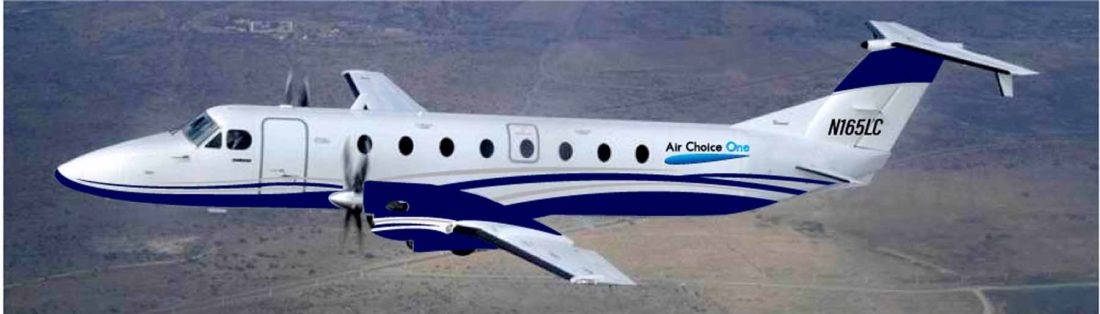
Air Choice One operated a small fleet of turboprop aircraft, mainly the Cessna 208B Grand Caravan (its primary aircraft) and a small number of Beechcraft 1900C planes for short regional routes.
These aircraft were used for short-haul flights to smaller regional airports before the airline ceased operations in 2022.
No, Air Choice One was not part of any major airline alliance like Star Alliance, oneworld, or SkyTeam.
It operated as an independent regional airline in the U.S. and did not have global alliance membership or full alliance partnerships.
No, Air Choice One does not operate international flights. It was a regional U.S. airline that only flew domestic routes within the United States, mainly between small cities and hubs like St. Louis and Chicago.
Air Choice One is no longer operating, so you cannot book tickets with them anymore, and their flights were previously booked online through travel websites or the airline’s official site by selecting routes, dates, and paying for the ticket. Since the airline ceased operations in 2022, all booking options are now closed.
Yes, you should book Athens flights online because it’s usually cheaper, faster, and gives you more flight options compared to airport or travel agents. Just make sure you book through a trusted airline or reputable site, double-check passenger details, baggage rules, and cancellation policy before payment to avoid issues.
Yes, there can be booking or convenience fees when you book flights through airline websites or travel sites, and they may be added at checkout depending on the platform, payment method, or route. These fees are usually shown before payment, but the final price can also increase due to taxes, baggage charges, seat selection, or service fees from the booking site or airline.
Yes, you can usually reserve seats in advance when booking your flight or later through “Manage Booking”, but it may be free or paid depending on the airline and ticket type; if you don’t choose a seat, the airline will automatically assign one during check-in.
You can check flight availability by entering your departure, destination, and travel dates on an airline website or travel booking site, where you’ll see all available flights, timings, and prices in real time. You can also use the airline app or search engines like Google Flights to compare options before booking.
Yes, you can book through travel agents, and they can handle your flight search, booking, and payment for you, sometimes even finding package deals or offering support with changes and cancellations. However, prices may include extra service fees and changes can be slower compared to booking directly with the airline, so it’s important to compare options before confirming.
Yes, group bookings are available when you are traveling with multiple passengers, usually 10 or more on the same itinerary, and airlines or travel agents often offer special fares, flexible payment options, and coordinated seat arrangements for such bookings.
You can confirm your booking by checking the confirmation email or SMS sent by the airline or travel site, which includes your PNR or e-ticket number, and then verifying it on the airline’s website or app under “Manage Booking” where it should show as confirmed or ticketed.
Yes, some airlines allow you to hold a reservation without immediate payment for a limited time, but this depends on the airline, fare type, and route, and the booking is usually cancelled automatically if payment is not completed within the hold period.
Most airlines and booking sites accept credit and debit cards (Visa, Mastercard, Amex), along with UPI, net banking, and digital wallets like Google Pay or PayPal, depending on the country and platform. Some also offer EMI or bank transfer options, but availability varies by airline and booking site.
Air Choice One did not use multiple fare types like “Basic,” “Flex,” or “Business”—it generally offered only one standard fare class per flight due to its small regional aircraft and short-haul operations. Passengers typically received the same level of service and seating options, with differences mainly in baggage rules and add-ons rather than fare categories.
Air Choice One did not offer separate child or senior citizen discounts like some larger airlines; instead, it used standard fares for all passengers, with pricing mainly based on route and availability rather than age-based concessions.
Air Choice One did not commonly offer promo codes or discount coupons, as it was a small regional airline with fixed fares and limited promotional campaigns. Any occasional deals were usually handled through travel partners or seasonal offers rather than regular promo code systems.
For American Airlines, the standard checked baggage limit is 1 bag up to 50 lbs (23 kg) in Economy/Main Cabin, with a maximum size of 62 linear inches (158 cm) (length + width + height).
If you fly in Business, First, or Premium cabins, the weight limit increases to 70 lbs (32 kg) for eligible checked bags, but oversize/overweight fees apply if you exceed these limits.
The standard checked baggage weight limit on most airlines is 23 kg (50 lbs) per bag for economy class, while premium cabins often allow up to 32 kg (70 lbs) per bag, though limits can vary by airline and route so it’s always best to check your specific booking details.
The standard checked baggage size limit on most airlines is 62 linear inches (158 cm total), calculated by adding length + width + height of the bag. Anything larger than this is usually considered oversized and may incur extra fees depending on the airline.
You can find the cheapest fares by being flexible with your travel dates and nearby airports, since flying mid-week or off-peak is often cheaper. Use fare comparison sites like Google Flights or Skyscanner, set price alerts, and book during the recommended booking window (about 1–3 months for domestic flights) to catch price drops early.
Yes, airlines sometimes offer last-minute deals, but they are not guaranteed and are less common than people think—prices usually go up closer to departure as airlines expect urgent travelers to pay more. In some cases, you may still find discounts if seats are unsold or demand is low, especially on flexible dates or less busy routes.
The standard carry-on allowance on most airlines is 1 cabin bag plus 1 personal item, with the carry-on typically limited to about 7–10 kg (15–22 lbs) and size around 55 × 40 × 20 cm (22 × 16 × 8 in), though exact limits vary by airline and fare type. Always check your airline’s specific rules before travel as budget carriers may have stricter limits.
The standard checked baggage size limit on most airlines is 62 linear inches (158 cm total), calculated by adding length, width, and height of the bag together, and anything larger is usually treated as oversized and may incur extra fees depending on the airline and route.
Yes, most airlines charge extra baggage fees if your bag exceeds the allowed weight, size, or number of checked bags included in your fare. The cost varies by airline and route and is usually higher at the airport than if pre-booked online.
Prohibited items in baggage usually include explosives and flammable items (like fireworks, fuel), sharp weapons (knives, blades), firearms without approval, compressed gases, toxic or corrosive chemicals, and lithium batteries above allowed limits, while some items like liquids over 100 ml are restricted in carry-on bags. Rules can vary by airline and security authority, so always check before packing.
Yes, you can usually carry sports equipment like golf clubs, skis, surfboards, or bicycles, but they must be packed properly and may count as checked baggage, often with extra size or handling fees depending on the airline. Each airline has specific rules on size, weight, and packaging, so it’s best to check before traveling.
Fragile items are generally allowed in both carry-on and checked baggage, but airlines recommend carrying them in your hand luggage whenever possible, as checked baggage is handled roughly and damage is not usually covered unless properly declared or insured. If you must check them in, they should be well-packaged and cushioned, but responsibility for damage is often limited by the airline.
Baggage fees are usually non-refundable if you already used the baggage allowance, but you may get a refund if you cancel the flight within the airline’s refund policy window or if the airline cancels your flight. Always check the specific airline’s terms before booking.
If your baggage is delayed, the airline will usually locate it and deliver it to your address or airport hotel at no extra cost once it arrives. You should immediately report it at the baggage desk, keep your claim reference, and some airlines may provide essential item compensation while you wait.
You should arrive at the airport at least 2–3 hours before a domestic flight and 3–4 hours before an international flight, so you have enough time for check-in, security, and boarding without stress. If you only have carry-on baggage or online check-in done, you may need slightly less time, but arriving early is always safer.
Yes, strollers are usually allowed free of charge, and most airlines let you either check them in for free or gate-check them at the aircraft door when traveling with an infant or young child, though rules can vary slightly by airline and stroller size.
You should arrive at the airport 2–3 hours before a domestic flight and 3–4 hours before an international flight to allow time for check-in, security, and boarding without stress. If you’ve already checked in online and only have carry-on baggage, you may still want to arrive at least 1.5–2 hours early to avoid delays.
Yes, Air Choice One did offer online check-in through its website, where passengers could check in using their PNR or booking details and get a boarding pass, usually available up to a certain time before departure.
Yes, you can usually check in at the airport counter by showing your ID and booking details, where airline staff will assist with check-in, baggage drop, and issuing your boarding pass. However, counter check-in closes earlier than departure time, so you must arrive within the airline’s cutoff time.
If you miss a connecting flight on the same ticket due to delay or airline issue, the airline will usually rebook you on the next available flight at no extra cost and may also provide assistance like meals or hotel if needed. If you miss it due to your own delay, you may have to pay a change fee or buy a new ticket, depending on the fare rules.
Boarding usually begins 30–45 minutes before departure for domestic flights and 45–60 minutes before international flights, depending on the airline and airport. The exact time is shown on your boarding pass, and gates typically close 10–20 minutes before departure, so it’s important to arrive early.
If you miss your flight, the ticket may be lost or marked as a no-show, and you might have to pay a change fee or buy a new ticket, depending on your fare rules. Some airlines may help rebook you on the next available flight, but this is usually only guaranteed for flexible or refundable tickets.
Yes, priority boarding is usually available as a paid add-on or included in higher fare classes and loyalty status, allowing passengers to board the aircraft earlier than general economy groups, which helps secure overhead bin space and settle in faster before takeoff.
Yes, you can usually select your seat during online or airport check-in, but availability depends on your airline and fare type—some seats may be free, while preferred or extra-legroom seats may require a fee or earlier purchase.
Yes, mobile boarding passes are accepted by most airlines and airports today, and you can simply scan the QR code from your phone at security and boarding. However, acceptance can vary by airline, airport, or country, so in rare cases you may still be asked to print your pass or use a kiosk if mobile scanning isn’t supported.
The check-in deadline is usually 45–60 minutes before departure for domestic flights and about 60–120 minutes for international flights, depending on the airline and airport, and you must complete check-in before this cutoff or you may not be allowed to board.
Yes, Air Choice One used to provide special assistance services, including wheelchair support, help for passengers with reduced mobility, and boarding assistance, but these services needed to be requested in advance while booking or through customer support; since the airline has ceased operations (2022), these services are no longer available today.
Yes, many airlines allow unaccompanied minors to travel using a special service, where children are assisted by airline staff during check-in, boarding, and connections, but it must be booked in advance and usually comes with age limits, fees, and specific route restrictions depending on the airline.
Yes, pets are allowed on some airlines, usually small dogs or cats in an approved carrier that fits under the seat in the cabin, while larger pets may need to travel in the cargo hold depending on airline rules, weight limits, and route restrictions, so you must always check the specific airline’s pet policy before booking.
Yes, most airlines do provide medical assistance onboard and at the airport, including wheelchair support, help for passengers with reduced mobility, and access to trained cabin crew for basic first-aid if needed during the flight, but services must usually be requested in advance and may require medical clearance for certain conditions.
Yes, pregnant women can usually travel by flight, but most airlines allow it without a medical certificate only up to a certain stage (often around 28–36 weeks, depending on the airline and pregnancy type). After that, a doctor’s clearance may be required, and travel may be restricted for safety reasons.
Yes, most airlines and airports provide assistance for disabled passengers, including wheelchair support, help with check-in, security, boarding, and baggage handling, usually free of cost. You can request this service while booking your ticket or later through the airline’s website or customer support, preferably at least 48 hours before travel.
Yes, in-flight entertainment (IFE) is usually available on many long-haul and full-service flights, offering movies, TV shows, music, and games through seatback screens or your personal device via onboard Wi-Fi, but it may not be available on all short-haul or low-cost flights depending on the airline and aircraft.
Yes, meals or snacks may be provided on flights, but it depends on the airline and flight duration—full-service airlines usually offer complimentary meals on medium and long-haul flights, especially internationally, while low-cost airlines often only sell food onboard or provide very limited free snacks on short flights.
State Farm doesn’t have a fixed “online cancellation policy.” You can cancel anytime by contacting your local agent, calling State Farm, or sending a written request by mail, and the cancellation can usually take effect immediately or on a future date you choose; there is typically no cancellation fee, and you may get a refund for any unused premium if you paid in advance.
Yes, on most full-service airlines you can request special meals (like vegetarian, vegan, Jain, halal, kosher, gluten-free, or diabetic meals) when booking your ticket or at least 24–48 hours before departure, and they are usually provided at no extra cost, though availability depends on the airline and route.
You can usually change your flight without a fee only if your ticket allows it, such as in flexible or refundable fares, airline loyalty/member benefits, or during special policies like schedule changes or waivers issued by the airline; otherwise most basic economy or discounted tickets charge a change fee plus any fare difference, so the best option is to check your fare rules or contact the airline directly as soon as possible.
Cancellation policies for flights in India depend on the airline and fare type, but generally you can get a full refund if you cancel within 24 hours of booking (and the flight is at least 7 days away), while a new rule also allows a 48-hour free cancellation or change window for eligible bookings; after that, airlines charge cancellation fees based on fare rules, and non-refundable tickets may still refund taxes but deduct penalties and fees, with refund timelines now more strictly regulated.
Yes, Air Choice One change fees depend on your fare type and timing, but generally the airline allows changes with a fee plus any fare difference, and some tickets may qualify for a free change if you modify within 24 hours of booking (when applicable) and meet the fare conditions.
Refunds usually take about 7–20 business days to process after cancellation, depending on the airline, payment method, and bank; credit card refunds are often faster, while debit cards or international payments may take longer, and some airlines may first process the refund internally before your bank credits it.
For most electronically filed U.S. tax returns, once your refund status shows “Accepted,” the IRS typically issues approval and sends the refund within about 21 days, especially if you chose direct deposit; however, it can take longer if your return needs extra review, has errors, or is affected by identity verification or credits like the Earned Income Tax Credit.
If the airline cancels your flight, you are generally entitled to a full refund or a free rebooking on an alternative flight, depending on your preference; in many cases you may also receive compensation or additional assistance like meals, hotel stay, or transport if the cancellation causes long delays or an overnight wait, but exact benefits depend on the airline’s policy and applicable aviation regulations.
Tax refund timing depends on the country and filing method, but in general electronic returns with direct deposit are usually processed in about 2–3 weeks, while paper returns can take 6–8 weeks or longer; delays can happen if your return needs extra verification, corrections, or is flagged for review.
Yes, in many cases airlines issue travel credits or vouchers instead of cash refunds when you cancel a non-refundable ticket, and these credits can usually be used for future bookings within a set validity period, but eligibility depends on the fare rules—flexible or refundable tickets are more likely to get a full cash refund, while cheaper fares often convert to credit with possible change fees deducted.
In most cases, airline tickets are non-transferable, meaning you cannot give or sell your ticket to another person because the name on the ticket must match the passenger’s ID; however, some airlines may allow name corrections for minor spelling errors, so if someone else needs to travel, you usually have to cancel or change the booking and rebook it in their name (if the fare rules allow it).
If your flight is delayed, airlines typically provide assistance based on the length of the delay—this may include updates, meals, refreshments, and in some cases hotel accommodation for long overnight delays, while significant delays or cancellations may also allow you to rebook on another flight or request a refund, depending on the airline policy and applicable regulations.
Air Choice One (like most airlines) follows standard FAA aviation safety regulations, which include strict aircraft maintenance schedules, regular inspections before and after flights, and certified pilot and crew training; pilots and cabin crew also follow safety checklists, emergency procedures, and continuous monitoring systems to ensure safe operations at every stage of the flight.
For air travel, you typically need a valid government-issued photo ID (such as a passport for international flights, or a passport/driver’s license/national ID for domestic flights depending on the country), and the name on your ID must match your ticket exactly; additional documents like visas or travel permits may be required for international travel based on your destination.
There is no clear evidence that Air Choice One offers its own separate travel insurance product at the time of booking; instead, like many small regional airlines, insurance (if available) is typically provided through third-party partners or booking agents, and it is usually optional and not directly built into the airline’s core services.
Air Choice One customer service can be reached through several options: you can call their reservations and support phone number at +1-855-551-1040, email them at [email protected], or contact them through their official website for booking help, changes, refunds, and general inquiries.
Tax refund timing depends on where you filed, but generally e-filed returns with direct deposit are refunded in about 2–3 weeks, while paper filings can take 6–8 weeks or longer; delays may happen if the return needs extra review, corrections, or identity verification.
It usually takes about 2–3 weeks for an e-filed tax return with direct deposit to receive your refund, while paper-filed returns can take around 6–8 weeks or more, depending on processing time, accuracy of the return, and whether the tax authority needs additional verification or review.
Airbnb cancellation policies depend on the type of stay and the host’s chosen policy, but for short stays (under 28 nights) they usually include Flexible, Moderate, Limited, or Firm policies, which decide how long before check-in you can cancel for a full refund—ranging from up to 24 hours after booking or several days before check-in; longer stays (28+ nights) have separate monthly rules, and in most cases, the earlier you cancel, the higher your refund, while last-minute cancellations may result in partial refunds or no refund.
Most airlines allow special exception cancellations in serious situations like death, critical illness, or medical emergencies, where you may receive a full refund or waiver of cancellation fees if you provide valid documentation (such as a death certificate or medical certificate); however, approval is handled case-by-case and depends on the airline’s policy and fare type, so it’s usually best to contact the airline immediately to request a compassionate or medical waiver.
It usually takes about 2–3 weeks if you file electronically and choose direct deposit, while paper filings can take 6–8 weeks or longer; delays can happen if the return needs extra verification, corrections, or additional review.