





Your calls answered by leading travel experts in under 5 seconds.

Unpublished offers and great discounts when you book on-call.

Hand-crafted travel itinerary that meet all your travel preferences.

Round-the-clock customer service to get all your doubts clarified.
When you plan a vacation to a destination and want to book your Cape Air flight tickets, then reach out to My Flight Fares. Our travel experts guide you through the booking process and help you score great airfares in your desired budget. We have flight offers from our inventory of 450+ airline options. Starting from Economy, First and Business Class tickets, My Flight Fares travel experts can give you various other services on your Cape Air bookings like extra luggage, priority check-in, in-flight meals, and more.
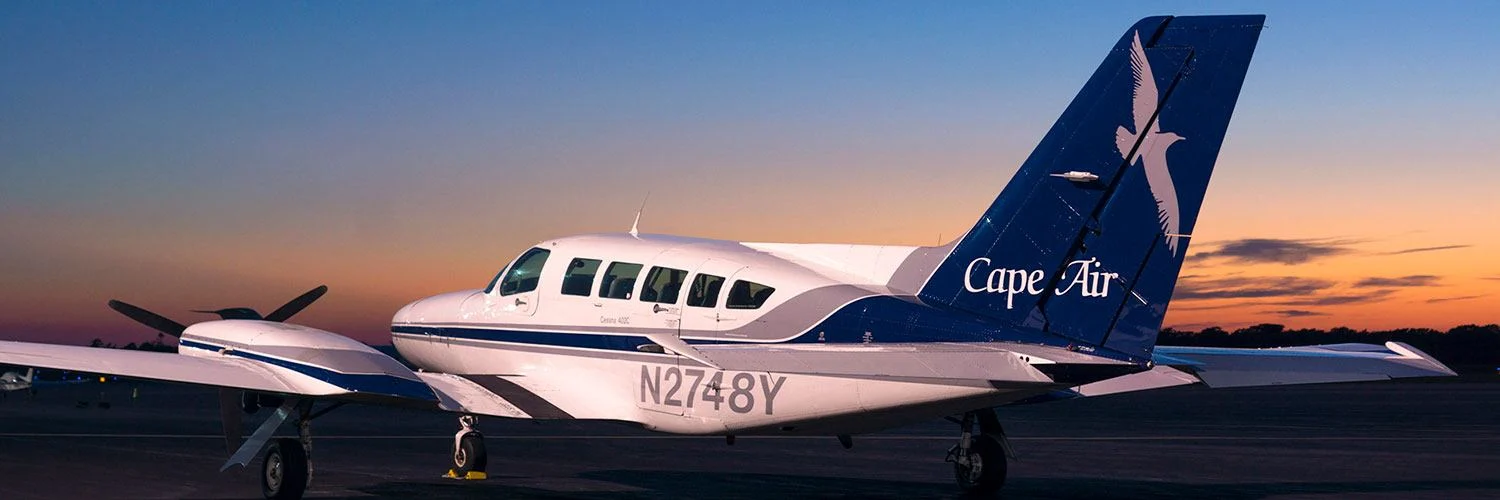
Cape Air is known as one of the 'World's Top 10 Small Airlines'. It is an independent regional carrier in the United States, with the hub airport as Barnstable Municipal Airport in Hyannis, Massachusetts. The popular routes covered by Cape Air include Billings, Boston, Hyannis, St. Louis, San Juan. The airline has a fleet size of 94 aircraft.
You can check in for a Cape Air flight either online (web or mobile) starting about 24–48 hours before departure, or at the airport counter, but even if you check in online you still need to see an agent at least 30 minutes before departure (45 minutes at some major airports) so they can weigh passengers and bags and complete the process.
Your e-ticket for a Cape Air flight is usually sent to your email right after booking (check your inbox and spam folder), and you can also retrieve it by logging into your booking on the airline’s website using your confirmation number or by contacting their customer support if you can’t find it.
You can check your air ticket booking by visiting your airline’s website (for example, Cape Air), going to the “Manage Booking” or “My Trips” section, and entering your booking reference (PNR) and last name; alternatively, you can use major travel platforms like MakeMyTrip or Yatra if you booked through them, or call the airline’s customer support.
No — on Cape Air you can’t select a seat in advance; they use small 9-passenger aircraft and seats are usually assigned at boarding or arranged by staff at the airport (often based on weight and balance for safety).
You can check your flight details by opening the confirmation email or e-ticket you received after booking, or by logging into the “Manage Booking” section on your airline’s website (such as Cape Air) using your PNR/booking reference and last name; you can also view details through travel apps like MakeMyTrip or Yatra if you booked through them.
After you book a flight, your ticket (e-ticket) is automatically sent to your email as a confirmation—check your inbox and spam folder, and if you can’t find it, log into the airline’s website (like Cape Air) or the platform you used (such as MakeMyTrip) with your booking reference (PNR) to download or view it again.
You can check if your flight is confirmed by opening your booking confirmation email or e-ticket and looking for a status like “Confirmed,” or by entering your PNR/booking reference on the airline’s website (such as Cape Air) under “Manage Booking”; you can also verify it on apps or sites like MakeMyTrip if you booked through them.
Cape Air’s baggage allowance is quite limited due to its small aircraft: you get 1 free small bag (up to 45 linear inches) + 1 personal item (up to 36 inches), and most bags are checked at the gate and returned planeside; you can also bring additional checked bags (usually up to 50 lbs / 23 kg each) for a fee, with a maximum of about 70 lbs per bag, and anything larger or heavier may be refused due to space constraints.
No — on Cape Air flights there’s usually no complimentary food, as it’s a short-haul, no-frills airline; you may be able to buy light snacks and drinks onboard or add meals during booking, but options are limited and vary by route.
Cape Air operates under both, but most of its scheduled commuter passenger service is conducted under FAA Part 135, while some larger aircraft operations or specific routes may be run under FAA Part 121 depending on aircraft type and service structure.
Statistically, the riskiest parts of a flight are takeoff and landing, especially the landing approach, because the aircraft is closest to the ground, operating at lower speeds, and has less time and altitude to recover from any problem; however, modern aviation is very safe overall, and incidents during cruise are extremely rare.
Cape Air pilots typically make about $30 to $60 per duty hour, with newer first officers on the lower end and captains on the higher end, while overall averages are around $40–$55 per hour depending on experience and position. Some senior captains can go a bit higher with overtime and incentives, but entry-level pay is closer to the low $30s per hour.
Most Cape Air flights use very small aircraft, mainly the Cessna 402 with 9 seats, and some newer planes like the Tecnam P2012 can have about 11 seats total (including crew configuration), so you’re usually on a 9-passenger plane with a 1–1 seating layout.
Cape Air is known for operating small commuter flights to short, often remote or island routes (like in New England, the Caribbean, and parts of the Midwest), using tiny 9–11 seat aircraft that can land at very short runways; it’s valued for frequent schedules, point-to-point service instead of big hubs, and essential connectivity to places larger airlines don’t serve.
No — Cape Air flights are not single-pilot in normal operations; they typically use at least one pilot, and often two pilots (captain and first officer) depending on the route, aircraft, and FAA rules, because they operate under commercial commuter regulations rather than private flying.
Cape Air primarily operates small piston-engine commuter aircraft, mainly the Cessna 402 (9 seats) and the newer Tecnam P2012 Traveller (up to 11 seats), plus a few Britten-Norman Islanders for island routes; these are twin-engine, short-range planes designed for very short regional hops and small airports.
Yes — Cape Air planes do have bathrooms (lavatories), but they are very small and basic and usually found at the rear of the aircraft; typically there is only one shared lavatory per plane, designed just for essential use during short regional flights.
The main reservation number for Cape Air is +1-855-CAPE-AIR (+1-855-551-1040) in the U.S., and this is the number you use for booking, managing reservations, or checking flight details.
You can book Cape Air flights in a few simple ways: the easiest is to go to their official website, enter your departure city, destination, dates, and passenger details, then choose a flight and pay to confirm your ticket; you can also book by calling their reservation number +1-855-CAPE-AIR (+1-855-551-1040) or by visiting an airport ticket counter where they operate. After booking, you’ll get an e-ticket in your email with your confirmation (PNR), which you use for check-in and managing your trip.
To book an airline reservation, you can either use an airline’s official website (like Cape Air), a travel app such as MakeMyTrip or Yatra, or call the airline directly; you just enter your travel dates, route, passenger details, choose a flight, and complete payment, after which you’ll receive a confirmation email with your PNR and e-ticket.
Yes, you can usually change a Cape Air flight, and they don’t charge a standard change fee, but you will still have to pay any fare difference if the new flight costs more, and changes depend on your fare type and timing (same-day changes are often easier, while date changes in advance may cost extra if prices differ).
Cape Air tickets can be refundable or non-refundable depending on the fare you buy: if you purchased a refundable fare, you can get your money back for unused travel (usually minus small service fees), but if you bought a value/non-refundable ticket, it is generally not refundable and may only be used as travel credit if you cancel before departure; if you simply don’t show up, the ticket usually loses all value.
Yes, you can usually reschedule an already booked flight on Cape Air by going to “Manage Reservations” on their website or calling their support; most changes are allowed before departure, but you may need to pay any fare difference if the new flight is more expensive, and some discounted tickets may have stricter rules or limited change options.
Cape Air cancellation policy depends on your fare type: refundable tickets can be fully refunded (minus possible small fees) if you cancel before departure, while non-refundable tickets are usually not refunded and may only be converted into future travel credit if cancelled on time; however, if you don’t cancel and simply miss the flight, the ticket value is typically lost. Cancellations must generally be done before the scheduled departure, and rules can vary slightly based on how and where you booked.
You can get a **full refund on Cape Air only if you booked a refundable fare or cancel within any applicable grace/24-hour window (if offered at booking); otherwise, most non-refundable tickets won’t return cash and will instead give you travel credit minus any fees, depending on the fare rules.
Yes, you can cancel a flight on Cape Air and get a refund only if your ticket is refundable or eligible under a 24-hour cancellation policy (if applicable); otherwise, most standard tickets are non-refundable and you’ll usually receive travel credit instead of cash, depending on your fare rules and timing of cancellation.
Yes — you can get a refund if you cancel a flight, but it depends on your ticket type and timing. In most cases, you’ll get a full cash refund only if your ticket is refundable or you cancel within the 24-hour cancellation window (when booked in advance); otherwise, for non-refundable tickets, airlines usually give travel credit instead of money back, unless the airline itself cancels or significantly changes your flight, in which case you are typically entitled to a full refund.
No — Cape Air does not offer first class or business class. All their flights use a single small-economy cabin with standard seating only, since the aircraft are tiny 9–11 seat planes designed for short regional routes, so every passenger gets the same type of seat with no upgraded cabin sections.
Cape Air is a small-to-mid-sized regional airline with about 80–90 aircraft, serving roughly 40–50 destinations mainly in the U.S., Caribbean, and Micronesia, and carrying a few hundred thousand passengers per year; it’s much smaller than major airlines and focuses on short, commuter-style routes using 9–11 seat planes rather than large commercial jets.
Yes, Cape Air is a U.S.-based regional airline, headquartered in Massachusetts, and it operates domestic flights within the United States as well as some international and island routes in places like the Caribbean and Micronesia.
No — Cape Air does not provide complimentary meals, snacks, or drinks onboard because its flights are very short and the aircraft are small with no galley; passengers are generally advised to bring their own snacks or beverages for the trip, and at most you might see limited paid options depending on the route.
Yes, Cape Air does fly internationally, mainly to nearby destinations in the Caribbean like Puerto Rico, the U.S. Virgin Islands, the British Virgin Islands, St. Kitts, Nevis, Anguilla, and St. Barths, so these are short regional international routes rather than long-haul overseas flights.
Cape Air flights are very short, typically ranging from about 20 minutes to 2 hours depending on the route, since they mainly operate regional and island-hopping trips rather than long-distance flights.
Cape Air flies very small commuter aircraft, mainly the Cessna 402 (9 seats) and the Tecnam P2012 Traveller (about 9–11 seats), plus a few Britten-Norman Islanders for island routes; these are twin-engine, short-range planes designed for short regional and island-hopping flights rather than large commercial jets.
FAA Part 135 for most of its operations, since Cape Air runs small commuter flights with 9–11 seat aircraft; however, it can also operate certain routes or aircraft types under FAA Part 121 depending on service and equipment, so it effectively uses both rules but is primarily a Part 135 operator.
Cape Air has a generally good safety record for a small regional carrier, with operations closely regulated under FAA standards and no major systemic safety issues, but like all commuter airlines using very small aircraft, it has had a few accidents and incidents over decades (including some serious but rare events) mostly linked to weather, pilot error, or operational factors rather than aircraft design flaws. Overall, its long-term track record includes many years of safe daily operations and thousands of flights, but not a “perfect” accident-free history, which is typical for Part 135 regional aviation.
Most Cape Air flights have 9 seats on their main aircraft (like the Cessna 402), and some newer planes like the Tecnam P2012 have up to 11 seats including crew configuration, so in general you’ll almost always be on a very small 9–11 passenger aircraft designed for short regional routes.
Yes, Cape Air is a real, fully licensed U.S. regional airline that has been operating since 1989, flying scheduled passenger routes mainly with small 9–11 seat aircraft across parts of the U.S., Caribbean, and Micronesia under FAA regulation.
Cape Air pilots typically make about $30–$60 per duty hour on average, with first officers usually on the lower end (~$30–$50/hr) and captains closer to $45–$80/hr depending on experience and seniority. In yearly terms, that often works out to roughly $60,000–$120,000+ per year, with senior captains sometimes earning more through overtime and higher schedules.
Cape Air is operated by its parent company Hyannis Air Service, Inc., which was founded by pilot Dan Wolf in 1989 and still oversees the airline’s operations; today it is run by an executive leadership team (CEO and management staff), but ownership is closely tied to the company’s original founders and structure rather than a large airline group or major global carrier.
Yes, you can cancel and get a refund only if your ticket allows it—on airlines like Cape Air, refundable fares or cancellations made within the allowed window (like a 24-hour rule, if applicable) can be refunded in cash, but most cheaper or non-refundable tickets usually only give travel credit instead of a money refund, unless the airline cancels or significantly changes your flight.
Cape Air is primarily owned and operated by Hyannis Air Service, Inc., an employee-owned company based in Massachusetts. It was founded in 1989 by pilot Dan Wolf along with partners, and while Wolf served as CEO for many years (and remains a board member), the airline is now led by a professional executive team (currently CEO Mike Migliore as of recent leadership updates) and is partly employee-owned rather than controlled by a large parent airline group.
The cancellation policy for Cape Lodge depends on how far in advance you cancel: generally, you can cancel up to 14 days before arrival with a small administration fee, but cancellations within 14 days mean you forfeit your deposit and close-to-arrival cancellations (around 10 days or less) usually mean no refund at all; special seasonal bookings like holidays may have stricter rules with longer notice periods.
To email a refund request to Cape Air, you should send your message to [email protected], which is the official email used for ticket refund and e-ticket issues. Include your full name, booking reference (PNR), flight details, and reason for refund so their accounting team can process it, and if you booked through a travel agent or third-party site, you may also need to contact them directly for the refund.
Yes, in most cases you can change a booked flight, including on airlines like Cape Air, but it depends on your fare type and timing—you can usually modify the date, time, or route through “Manage Booking” or customer support, but you may have to pay a fare difference and possibly a small change fee, while some cheap tickets may have limited or no change options.
Yes, refundable flights are generally fully refundable, meaning you can get your money back if you cancel before departure, though some airlines may deduct a small service or processing fee; however, the exact rules depend on the fare conditions and timing, so always check the ticket terms because even refundable fares can have exceptions like no refund after a no-show or after flight departure.
Yes, you can usually cancel a flight for medical reasons, but the outcome depends on the airline and fare rules: most airlines, including Cape Air, may offer a refund, travel credit, or fee waiver if you provide valid medical documentation (like a doctor’s note or hospital certificate), even if your ticket is normally non-refundable, but approval is not automatic and is handled case by case under “exceptional circumstances” policies.
Yes, you can change a Cape Air flight, and in most cases there is no change fee, but you must pay any fare difference if the new flight costs more; you can do this through “Manage Reservations,” and same-day changes are often the easiest if seats are available.
The new flight cancellation rules (India, DGCA 2026) mainly say that passengers now get a 48-hour “look-in” window after booking, during which they can cancel or change tickets without extra charges, as long as the flight is not too close to departure (generally at least 7 days for domestic and 15 days for international flights). After this 48-hour window, normal airline cancellation rules apply, but airlines must now also process refunds faster (around 7–14 days depending on payment method) and cannot force passengers into unwanted credit shells in many cases.
Yes, Cape Air does offer online check-in, usually starting about 24–48 hours before departure, but even if you check in online you still must go to the airport counter and recheck with an agent at least 30 minutes before departure because they weigh passengers and bags for small aircraft operations.
For Cape Air, mobile boarding passes are generally not used or not widely supported, and in most cases you will still receive a printed boarding pass at the airport check-in counter, even if you check in online; this is mainly because their small aircraft require manual weight and passenger verification at the airport before boarding.
Yes — you can check a bag on Cape Air, and most passengers are allowed at least one checked bag (usually up to 50 lbs / 23 kg), but because the planes are very small, all bags are carefully limited by size, weight, and available cargo space, and anything large or heavy may be restricted or charged extra or even moved to a later flight if space is tight.
You should arrive at the airport for Cape Air at least 1.5 to 2 hours before departure, and check in no later than 30 minutes before takeoff (45 minutes at some airports) because their small aircraft require passenger and baggage weighing and early boarding procedures.
Cape Air operates very small commuter aircraft designed for short regional routes, mainly the Cessna 402 (9 seats) and the Tecnam P2012 Traveller (9–11 seats), plus a few Britten-Norman Islanders for short island flights; all of these are twin-engine, piston aircraft built for short takeoffs, small airports, and quick 20- to 120-minute hops rather than large commercial jet travel.
Yes, Cape Air is an American regional airline headquartered in Massachusetts, operating domestic U.S. routes as well as some nearby international island destinations in the Caribbean and other regions.
Cape Air flies out of multiple small regional hubs and airports across the U.S. and nearby regions, mainly including Boston (Logan Airport), New York (JFK, White Plains, Islip), Cape Cod (Hyannis, Nantucket, Martha’s Vineyard), plus airports in Maine, Vermont, New Hampshire, Montana, Puerto Rico, and the Caribbean; it focuses on short routes connecting these smaller cities rather than large international hubs.
Yes, if you check in online for a flight with Cape Air, you usually still don’t get a full mobile boarding pass—instead you receive a check-in confirmation and then pick up a printed boarding pass at the airport counter, since they require in-person verification and passenger/baggage weighing before boarding small aircraft.
For Cape Air, you usually can’t rely only on your phone, because even if you check in online, you’ll typically need to get a printed boarding pass at the airport counter; mobile-only boarding passes are generally not accepted since staff must verify passengers and weigh bags before boarding their small aircraft.
You get a mobile boarding pass by checking in through an airline’s website or app after you enter your booking details, then selecting “Get boarding pass” or “Send to phone,” which saves it to your wallet or email; however, some airlines like Cape Air may still require you to collect a printed pass at the airport instead of using a fully mobile version.
On Cape Air, you can usually take 1 free personal item + 1 small carry-on, and then 1 checked bag (up to about 50 lbs / 23 kg) is typically included or available depending on your fare, with extra bags allowed for a fee if space permits; because the planes are very small, all bags are strictly limited by weight and sometimes moved to the cargo hold even if they seem carry-on sized.
On Cape Air, your total luggage allowance is usually about 1 checked bag up to 50 lbs (23 kg) plus a small personal item, and in some cases additional bags are allowed for fees, but everything is strictly limited by weight and aircraft space, since their planes are very small; oversized or heavy bags (over 70 lbs) are not accepted at all.
Yes, you can safely carry your phone charger in your hand luggage, and in fact it’s recommended because chargers, cables, and power adapters are allowed in both carry-on and checked bags, but keeping them in your hand luggage is better since lithium batteries and electronic accessories are easier to access and less likely to be damaged or lost.