





Your calls answered by leading travel experts in under 5 seconds.

Unpublished offers and great discounts when you book on-call.

Hand-crafted travel itinerary that meet all your travel preferences.

Round-the-clock customer service to get all your doubts clarified.
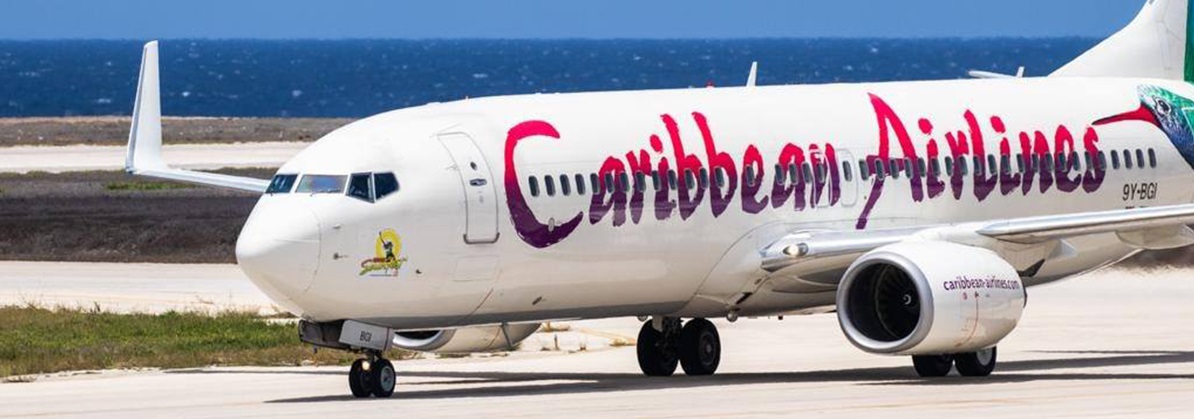
When you plan a vacation to a destination and want to book your Caribbean Airlines flight tickets, then reach out to My Flight Fares. Our travel experts guide you through the booking process and help you score great airfares in your desired budget. We have flight offers from our inventory of 450+ airline options. Starting from Economy, First and Business Class tickets, My Flight Fares travel experts can give you various other services on your Caribbean Airlines bookings like extra luggage, priority check-in, in-flight meals, and more.
Caribbean Airlines has been in operation since 2006 and is the national airline of Trinidad and Tobago. Caribbean Airlines is headquartered in Piarco, Trinidad, and Tobago and has its major hub airports as Piarco International Airport, Norman Manley International Airport. The airline offers various in-flight amenities including excellent entertainment options and delish dishes to choose from that are prepared by onboard chefs available on the airline. The airline also offers cargo services in various cities including Miami, Port of Spain, and Guyana.
On Caribbean Airlines, the checked baggage allowance depends on your fare and route, but most Economy passengers typically get 1 to 2 checked bags free (up to 23 kg / 50 lb each) on international flights, while Business Class can allow 2 to 3 checked bags, also usually capped at 23 kg per bag.
Checked bag rules on airlines like Cape Air (and most carriers) generally include limits on weight (usually around 23 kg/50 lbs per bag), size (combined linear dimensions), and number of bags based on your fare, plus restrictions on items like flammable materials, lithium batteries, and valuables, and if you exceed limits you may face extra fees or have your bag delayed or not accepted.
The Caribbean Airlines check-in policy allows passengers to check in online, via mobile, or at the airport, with online/mobile check-in opening about 24 hours before departure and closing around 3 hours before flight time; at the airport, you should arrive early—about 2–4 hours before departure depending on domestic or international travel—and check-in counters usually close 60 minutes before departure, after which boarding passes are no longer issued and seats may be reassigned.
For Caribbean Airlines, the carry-on weight limit is 10 kg (about 22 lbs) for the main cabin bag, plus one small personal item like a handbag or laptop bag.
Yes, Caribbean Airlines includes a free carry-on for all passengers—you’re allowed 1 carry-on bag (up to 10 kg / 22 lb) plus 1 personal item (like a laptop bag or purse) at no extra cost on most fares and routes.
On most airlines, a “list” (usually referring to basic/economy or lowest fare tickets) typically gets no free checked bags, meaning you only get a carry-on and personal item, and you must pay for any checked luggage; however, higher fare classes or frequent flyer status can include 1–2 free checked bags depending on the airline and route.
Caribbean Airlines is majority owned by the Government of Trinidad and Tobago, which holds about 88% of the airline, while the Government of Jamaica owns a smaller minority stake of around 12%.
A checked bag on Caribbean Airlines typically costs about US$25 to US$45 for the first bag when pre-paid online, and can go up to around US$50–$60 at the airport, depending on your route, fare type, and destination (Caribbean, North America, or South America all differ slightly). The exact price is per bag, each way, and extra or overweight bags cost more, so it’s always cheaper to pre-pay during booking or online check-in rather than at the airport.
Caribbean Airlines is generally considered a fairly reliable regional airline, but not among the most punctual globally. Its reliability is mixed: safety standards are strong and regulated, but delays and cancellations can happen fairly often, especially on long or multi-leg Caribbean routes where weather, airport congestion, and aircraft rotations affect schedules. Recent performance data shows many flights are on time around 80–95% depending on route, which is decent but not perfect, with some routes experiencing moderate delays or cancellations during peak or weather disruptions.
On Royal Caribbean, the 3:1:1 rule refers to TSA liquid restrictions for carry-on bags when boarding flights to or from your cruise: you can bring liquids in containers of 3.4 oz (100 ml) or less, all placed in 1 clear quart-sized bag, 1 bag per passenger; it’s not a cruise-specific rule but a security rule you must follow when flying to your embarkation port.
Royal Caribbean doesn’t have strict airline-style baggage dimensions, but there are practical limits based on airline travel and port screening: checked bags generally follow airline standards of about 62 linear inches (length + width + height) and up to ~23 kg/50 lbs per bag when flying to the port, while onboard the ship itself there’s no official size limit as long as your luggage fits in your cabin (usually under beds or in closets).
On Caribbean Airlines, the number of free checked bags depends on your fare and route: most Economy passengers get 1 free checked bag (up to 23 kg / 50 lb) on international flights, while some higher fares or specific routes (like certain North American connections or promotions) may include 2 free checked bags, and Business Class usually gets 2–3 free bags depending on the ticket type and destination.
You can get Royal Caribbean luggage tags from your cruise documents (eDocs) after online check-in—just log into your booking, open your cruise “Travel Documents,” and download/print the PDF where the tags are included; you fold and attach them to your bags before arriving at the port. If you don’t have a printer, you can get free generic tags at the cruise terminal from porters on embarkation day, who will label your bags there instead.
The $99.75 charge on Royal Caribbean is usually not a real fee—it is a temporary credit card authorization hold placed when you set up your onboard account (SeaPass) to cover expected onboard spending like drinks, Wi-Fi, shopping, or excursions.
The carry-on size on Caribbean Airlines is a maximum of 114 cm (45 inches total linear dimensions: length + width + height), including handles and wheels, and the typical bag dimensions are about 56 × 36 × 23 cm (22 × 14 × 9 inches).
Yes — on most routes with Caribbean Airlines, you do get at least 1 free checked bag, but it depends on your fare and route.
For a Caribbean Airlines flight, you should arrive at the airport about 2 hours before a domestic or regional Caribbean flight and 3 hours before an international flight (like to North or South America), since check-in counters usually close about 1 hour before departure and boarding begins earlier than that. Arriving early helps with baggage drop, security, and any potential delays, especially at busy airports.
You’re allowed 1 free carry-on bag + 1 personal item per passenger on Caribbean Airlines. Caribbean Airlines
On Caribbean Airlines, extra baggage costs depend on route and weight, but generally: a second checked bag costs about USD $35–$55, additional bags can be around USD $130–$175 each, and overweight or oversized bags are usually about USD $50–$75 per bag, with domestic flights sometimes charged per kg (around TTD $3/kg in Trinidad & Tobago) instead of flat fees.
Yes — it is almost always cheaper to pay for extra baggage online in advance than at the airport on airlines like Caribbean Airlines.
Caribbean Airlines is owned by the Government of Trinidad and Tobago, which holds the majority stake (around 80–90%), with a smaller minority share historically linked to the Government of Jamaica; it operates as a state-owned national carrier rather than a privately owned or foreign-controlled airline.
For Caribbean Airlines, the size limits are: a carry-on bag up to 114 cm (45 inches total: length + width + height) with typical dimensions around 56 × 36 × 23 cm (22 × 14 × 9 inches), plus a personal item like a handbag or laptop bag that fits under the seat; for checked bags, the limit is usually 157 cm (62 inches total linear dimensions) and up to 23 kg (50 lb) per bag, with extra fees for overweight or oversized luggage.
On Caribbean Airlines, most Economy fares include 1 free checked bag up to 23 kg (50 lb), while higher fares like Flex or Business can include 2 free checked bags (sometimes more in Business), but the exact allowance depends on your ticket type and route, and Lite fares may not include any free checked bag at all.
On Caribbean Airlines, prohibited items include explosives, flammable liquids, gases, fireworks, and chemicals, plus weapons, self-defense sprays (like pepper spray), and sharp or dangerous items; also banned are loose lithium batteries/power banks in checked baggage, e-cigarettes in checked bags, and any item that could endanger the aircraft, along with anything illegal under local or international aviation rules.
You can usually check in for Caribbean Airlines online starting about 24 to 48 hours before departure, and it closes about 1 hour before the flight (domestic) or up to 2 hours before (international); airport check-in opens earlier, but online check-in is only available within that 1–2 day window before your flight.
Caribbean Airlines flight attendants typically earn around USD $35,000 to $50,000 per year on average, which works out to roughly $20–$25 per hour for entry/mid levels, while experienced crew can make closer to $60,000+ annually with allowances and overtime depending on seniority and routes.
On Caribbean Airlines, an extra checked bag usually costs about USD $35–$55 for a second bag if pre-paid, and higher amounts for more bags—around $130+ for a third bag and $170+ for a fourth, while overweight or oversized bags cost about $50–$75 extra per bag, depending on route and whether you pay online or at the airport (airport prices are higher).
For most international airlines (including Caribbean routes), extra baggage is usually charged around USD $15–$45 per kg depending on the airline, route, and region, with long-haul flights often closer to $20–$35 per kg for India/Caribbean-type routes and higher for Europe or North America; some airlines instead charge per bag rather than per kg, so the exact rate always depends on your ticket and destination.
On Caribbean Airlines, most Economy passengers get 1 free checked bag (up to 23 kg / 50 lb), while some fares like Classic/Flex include 2 free checked bags and Business Class can include 2–3, but the exact number depends on your ticket type and route.
For cheap fares (like Caribbean Airlines “Lite” type tickets or budget economy fares), the baggage policy is usually very minimal: you typically get 1 free carry-on + 1 personal item only, and no free checked bag included, meaning you must pay extra for any checked luggage, with fees depending on route and bag weight/size.
The amount you get refunded when you cancel a flight depends on your fare type, timing, and airline rules, not a fixed percentage: refundable tickets usually give a full refund minus small fees, while non-refundable tickets often give only taxes back or a travel credit instead of cash, and in some cases (like cancellations close to departure or no-shows) you may lose almost the entire fare; rules vary by airline and situation, so the exact refund can range from full amount to almost zero depending on your ticket conditions.
The Caribbean Airlines change fee depends on your fare type, but generally there is no change fee for flexible/Main or higher fares, while you only pay the fare difference if the new flight is more expensive; however, cheaper Saver or promotional tickets may not allow changes or may charge a fee plus fare difference, and same-day or special situations (like airline schedule changes) can also waive fees.
Yes, there can be a cancellation fee when you cancel a flight, but it depends on your fare type and airline rules—flexible or refundable tickets often have little to no fee (you get most or all of your money back), while cheaper non-refundable tickets may charge a cancellation fee or give only a travel credit instead of cash, and if you cancel very close to departure or don’t show up, you usually lose the full fare.
The penalty for cancelling a flight depends on your fare and timing, but generally it can range from a fixed cancellation fee (often $50–$200 on many airlines) plus the fare difference, to losing the entire ticket value for non-refundable fares, while refundable or flexible tickets may have little or no penalty; in some cases, you may instead receive a travel credit rather than cash, especially for cheaper promotional fares.
For cheap fares (“Lite” type tickets) on Caribbean Airlines, the cancellation fee is usually not a fixed small charge—it’s often very strict or non-refundable, meaning you may lose most or all of the ticket value; if cancellation is allowed, fees can be around $50 for domestic flights or $100–$200+ (sometimes more) for international routes, depending on timing and conditions, and in many cases you only get taxes back or a partial credit instead of cash.
Yes, you can get a refund from Cheap Caribbean, but it depends on the type of booking you made—most standard or “non-refundable/Deal” packages only give travel credit or partial refunds, while only specific plans (like refundable deposits or “Cancel for Any Reason” protection) allow a full cash refund, usually within strict conditions like canceling within 24 hours or meeting insurance terms.
With Royal Caribbean Travel Protection, the cancellation policy is much more flexible than standard rules: if you cancel for a covered reason (like illness or emergency), you can get up to 100% of your prepaid cruise cost back in cash, and if you cancel for any other reason, you typically receive up to 90% as future cruise credit instead of cash; it also helps waive some non-refundable penalties depending on timing and conditions.
On Royal Caribbean, there is no separate “refundable charge” fee—instead, you either choose a refundable fare (higher price overall) or a non-refundable deposit fare (cheaper upfront but deposit is lost if you cancel). Typically, the refundable option costs about $100–$500+ more per person depending on cruise length and cabin, but it protects your deposit so you can cancel and get it back under normal rules, whereas non-refundable deposits are usually forfeited if you cancel.
Refunds from Caribbean Airlines usually take about 7–14 business days after the refund is approved and processed, but in some cases (especially with banks or international payments) it can take up to 30 days to appear in your account, since your bank controls the final posting time.
Yes, Royal Caribbean can offer full refunds, but only in specific cases: you usually get a 100% refund if you cancel very early (before final payment deadlines) on refundable fares, or if Royal Caribbean cancels your cruise or makes major schedule changes; after final payment, most bookings follow a penalty schedule where refunds decrease closer to departure and can become zero for last-minute cancellations, so full refunds are not guaranteed unless you meet those conditions or have refundable booking or travel protection.
On Royal Caribbean, refunds are usually processed on their end within 7 to 14 business days after approval, but once issued, it can take an additional 7–10 days to appear in your account, and in some cases up to 30 days total depending on your bank or card provider.
On Caribbean Airlines, you are allowed 1 free carry-on bag (up to 10 kg / 22 lb and 114 cm total dimensions) plus 1 personal item like a laptop bag or purse that fits under the seat, and if your carry-on is overweight, oversized, or extra, it may be checked into the hold and charged a fee at the airport.
For Caribbean Airlines, an overweight checked bag (23–32 kg / 50–70 lb) usually costs about USD $50–$75 per bag on international routes, and around TTD $3 per kg on some domestic routes (like Trinidad & Tobago), while anything above 32 kg (70 lb) is generally not accepted as checked baggage and may need to be shipped separately or repacked.
Caribbean Airlines pilots typically earn about USD $50,000 to $90,000 per year for first officers and around $120,000 to $180,000+ per year for captains, depending on experience, aircraft type (ATR vs Boeing 737), and seniority within the airline.
On Caribbean Airlines, the change fee depends on your fare type, but in general it’s about USD $0–$150+, where flexible fares often have no change fee (you just pay fare difference), while cheaper promotional or “Lite” tickets may charge a fee plus the difference in fare, and in some cases lower fares may not allow changes at all; the total cost always depends on route, timing, and how close you are to departure.
Changing a flight can cost anywhere from $0 to over $500 or more per ticket, depending on the airline, fare type, and how close you are to departure; in many cases you pay a change fee (about $0–$300+) plus any fare difference, which is usually the biggest cost, and cheap or basic economy tickets often end up costing the most or may not allow changes at all.
Yes, it can cost a lot or very little depending on your ticket, but most of the time changing a flight date involves two costs: a change fee (often $0–$300+) plus any fare difference, and the biggest expense is usually the fare difference if the new flight is more expensive; cheap or basic tickets often have higher penalties or may not allow changes at all, while flexible tickets can sometimes be changed for free except for the fare difference.
For Royal Caribbean, there is usually no simple “flat change fee” like airlines, but instead a $100 per person change fee may apply if you modify your cruise booking (like changing sail date or ship after booking conditions apply), plus you must pay any fare difference; in many cases, especially closer to sailing, it can be cheaper to cancel and rebook, and non-refundable deposits or late changes can also increase penalties significantly.
You can avoid or reduce flight change fees by booking flexible or refundable fares, using airlines that allow free changes within a 24-hour booking window, joining frequent flyer programs with change-fee waivers, or choosing airlines that offer free same-day changes or travel credits instead of penalties; another option is travel insurance or “cancel for any reason” coverage, which can reimburse change costs in certain situations.
Usually, no — you’re typically allowed 1 carry-on bag plus 1 personal item (like a laptop bag or small backpack), but not two full hand luggage bags; the personal item must fit under the seat, while only one larger carry-on goes in the overhead bin, though exact rules can vary slightly by airline and fare type.
The carry-on weight limit on Caribbean Airlines is 10 kg (22 lb) per passenger for the main cabin bag, plus one small personal item that must fit under the seat, and if your carry-on exceeds 10 kg it may be checked into the hold with extra fees or restrictions depending on size and space.
No, Caribbean Airlines is not a budget airline—it is considered a full-service (network) airline, meaning it offers standard airline services like multiple fare types, loyalty program, checked baggage options, and onboard service, even though it also has some cheaper fare categories like “Lite” that remove extras to lower the price.
Caribbean Airlines has a strong safety rating and is generally considered a safe airline, with a 7/7 safety score on major airline rating systems, full IATA IOSA certification, and compliance with international aviation standards. It is also not on any EU or major aviation blacklist and follows ICAO safety rules, which are used globally.
Caribbean Airlines has a fleet of about 19–20 aircraft in active service (around 20 total, including planned/parked aircraft), mainly consisting of Boeing 737s, ATR turboprops, and a few Dash 8 aircraft used for regional and international routes.
Caribbean Airlines is generally ranked as a mid-tier regional airline globally, meaning it is not in the top global “premium airlines” lists but is considered solid and safe within the Caribbean and regional aviation sector. It consistently holds a 7/7 safety rating and IOSA certification, placing it among safe but average-performing international airlines rather than luxury or top-10 global carriers.
Caribbean Airlines is about 19 years old as a modern airline, because it was founded in September 2006 and began operations on 1 January 2007 after replacing BWIA West Indies Airways, so in 2026 it is roughly 19–20 years old (even though its predecessor airline dates back much further to 1939).
Caribbean Airlines’s most popular routes are mainly high-frequency regional island hops and major North American connections. The busiest include Port of Spain–Tobago (very frequent daily shuttle), Port of Spain–Toronto, Port of Spain–New York (JFK), Port of Spain–Miami, Georgetown–Toronto, and Bridgetown–New York, along with strong inter-Caribbean routes like Trinidad–Barbados, Trinidad–Guyana, and Jamaica–New York, since these connect large diaspora and business travel markets.
Yes, you can select your seat on Caribbean Airlines, and it can be done during booking, through “Manage Booking,” online check-in, or at the airport, but availability depends on your fare type—some lower fares charge a fee or assign seats automatically at check-in, while higher fares often include free seat selection.
The cheapest days to fly to the Caribbean are usually midweek, especially Tuesday and Wednesday, because demand is lower and airlines often reduce prices to fill seats, while weekends like Friday and Sunday are typically the most expensive due to high leisure travel demand; in some recent pricing trends, Friday can also occasionally be cheap, but overall Tuesday–Wednesday flights are still the most consistently low-cost option for Caribbean routes.
Yes, Caribbean Airlines does allow pets, but only in limited ways—dogs and cats can travel in the aircraft hold as checked baggage or as cargo, not in the passenger cabin, except for certified service dogs (and in some cases approved assistance animals), and pets must meet size, weight (up to about 32 kg including kennel), and documentation rules with advance booking and fees.
To book air tickets for pets, you usually contact the airline directly after booking your own flight (or during booking if the airline allows it) and request a pet reservation, because airlines like Caribbean Airlines don’t let pets be added automatically online; you must provide your pet’s details, choose whether it travels as checked baggage or cargo, pay the pet fee, and submit required documents like vaccination and health certificates before approval.
Yes, you can bring your dog to the Caribbean, but it depends on the destination country’s rules and usually requires advance approval, a health certificate from a vet, up-to-date rabies vaccination, and sometimes import permits or quarantine on arrival; airlines like Caribbean Airlines may allow dogs to travel as checked baggage or cargo (not in-cabin except service dogs), so you must also book pet travel with the airline before flying.
To buy an air ticket for a dog, you first book your own flight, then contact the airline (like Caribbean Airlines) to add your pet as checked baggage or cargo, because pet bookings can’t usually be done fully online; you’ll need to provide your dog’s weight, kennel size, and health/vaccination documents, pay the pet transport fee, and ensure the crate meets airline safety standards before approval.