





Your calls answered by leading travel experts in under 5 seconds.

Unpublished offers and great discounts when you book on-call.

Hand-crafted travel itinerary that meet all your travel preferences.

Round-the-clock customer service to get all your doubts clarified.
When you plan a vacation to a destination and want to book your China Airlines flight tickets, then reach out to My Flight Fares. Our travel experts guide you through the booking process and help you score great airfares in your desired budget. We have flight offers from our inventory of 450+ airline options. Starting from Economy, First and Business Class tickets, My Flight Fares travel experts can give you various other services on your China Airlines bookings like extra luggage, priority check-in, in-flight meals, and more.
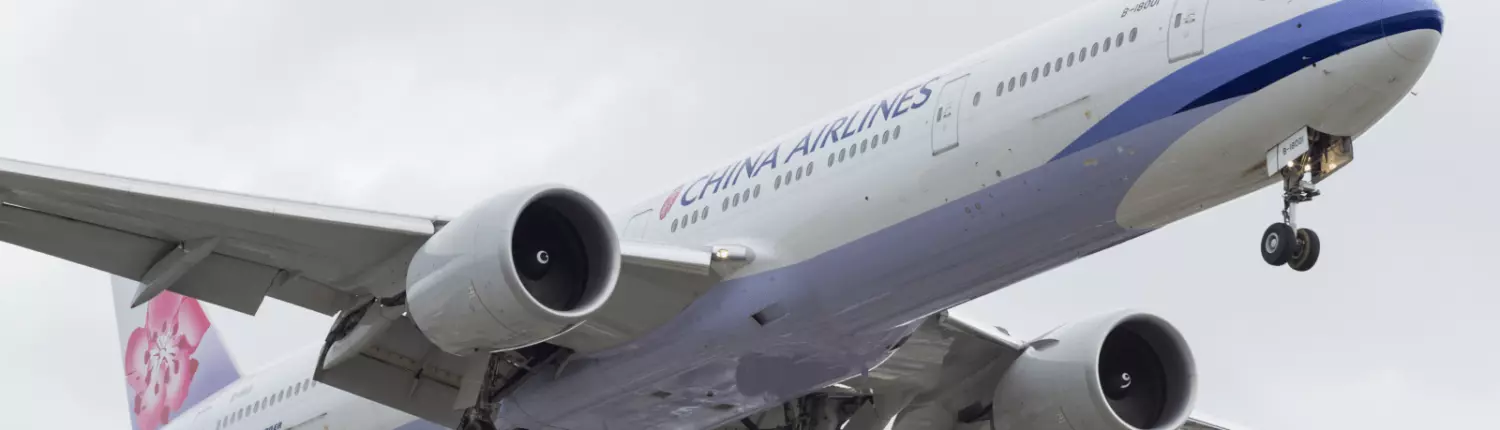
China Airlines is a state-owned national carrier of the Republic of China. The headquarters of the airline is in CAL Park, Dayaun District, Taiwan. Taiwan Taoyuan International Airport and Kaohsiung International Airport are the hub airports of China Airlines. It has a fleet size of 89 aircraft. The focus cities are Hong Kong, Kaohsiung, and Taipei-Songshan.
You can check your Air China booking by going to their official website or mobile app and using the “Manage Booking / Retrieve Booking” section, where you enter your booking reference (PNR), ticket number, and your last name exactly as on the ticket; once submitted, you can view flight details, seat selection, and check-in options if available.
Yes, you can check your flight booking online by visiting your airline’s official website or app and entering your booking reference (PNR) and last name, which lets you view itinerary details, seat selection, and check-in status without needing to call or visit the airport.
You can verify your Air China ticket online by visiting the official Air China website or app and using the “Manage Booking” or “Ticket Verification” option, where you enter your ticket number or booking reference (PNR) along with your name to confirm that the ticket is valid, check flight details, and ensure it has been properly issued.
You can select seats on China Airlines for free mainly during online check-in (usually 48 hours before departure)—at that time, standard seats and many preferred seats are available at no charge depending on your fare type, while earlier seat selection on the website or app may be paid unless your ticket includes free seat choice; just log in to “Manage Booking” or check in online and pick from the available seat map.
To avoid paying for seat selection, the easiest way is to wait until online check-in opens (usually 24–48 hours before departure) and then pick from the free seats that are still available, or choose a fare class that already includes free seat selection; otherwise, earlier seat selection during booking is often paid, especially for preferred or extra-legroom seats.
For Air China, online check-in usually opens about 48 hours before departure for domestic flights and about 36 hours before departure for international flights, and it typically closes around 1–3 hours before departure depending on the route, so the exact window depends on your flight type and airport rules.
You can check if your air ticket is confirmed by visiting the airline’s official website or app and entering your booking reference (PNR) and last name in the “Manage Booking” section, where a confirmed ticket will show your flight details, seat assignment (if any), and ticket status, and you can also verify it by calling the airline or checking the confirmation email you received after purchase.
Your booking confirmation is usually sent to the email address you used when booking the ticket, often as an e-ticket or confirmation PDF, and you can also find it in the airline’s website or app under “Manage Booking” by entering your PNR (booking reference) and last name if you can’t locate the email.
You can contact China Airlines customer service through their 24/7 phone hotlines (varies by country, e.g., US: +1-855-551-1040), their official website “Contact Us” page with AI chat support, or by submitting a customer feedback form online, and they also provide email and local office support depending on your region.
Yes, you can check in for an Air China flight using their mobile app, where you can enter your booking details, select seats (if available), and generate your boarding pass during the online check-in window (typically about 36–48 hours before departure), though in some cases you may still need to pick up or confirm the boarding pass at the airport depending on the route or airport rules.
Your reservation number (PNR) is usually in the booking confirmation email or SMS sent after you purchase the ticket, often labeled as “Booking Reference” or “PNR,” and it can also be found in the airline or travel agency app under “Manage Booking,” or on your e-ticket/itinerary receipt.
You can check your China Airlines flight status by going to their official website or app and using the “Flight Status” section, where you enter your flight number, route, or date to see real-time updates like departure time, arrival time, delays, or gate info; you can also check your booking details separately in “Manage Booking” using your PNR and last name.
Yes, China Airlines has an official mobile app called the China Airlines App, which you can use to book flights, check in online, get mobile boarding passes, view flight status, manage bookings, and select seats, all from your phone.
You can email China Airlines customer service at their official support address [email protected], which is used for general inquiries and assistance, or you can also use region-specific emails listed on their Contact Us page depending on your country for faster responses.
No, China Airlines is not a 5-star airline. It is currently rated as a 4-Star Airline by Skytrax, which means it is considered a high-quality full-service airline but not in the top “5-star elite” group like airlines such as Singapore Airlines or Qatar Airways.
All the major Chinese airlines—Air China, China Southern, and China Eastern—are considered safe to fly, as they all meet strict international safety standards (IOSA certification and CAAC regulation) and have strong safety ratings overall. In most independent rankings, Air China and China Southern often score slightly higher or are more consistently rated “7/7” for safety, while China Eastern is also safe but has had more scrutiny due to past incidents, though it has since improved safety systems and oversight significantly.
Yes, but most China Airlines tickets (including Air China and other Chinese carriers) are not fully refundable by default—they depend on your fare type. Generally, cheaper economy fares are non-refundable or only partially refundable (taxes may be returned), while flexible or higher-class fares can be refunded with a cancellation fee or sometimes fully refunded; refunds must be requested through the airline or booking platform, and rules vary based on timing, route, and ticket conditions shown in your booking.
Yes, China Airlines cabin crew and customer service staff generally speak English, especially on international flights and at major airports, so passengers can comfortably communicate in English for boarding, in-flight service, and basic assistance, though accents or fluency levels may vary depending on the route and staff.
China Airlines is primarily owned by the government of Taiwan (Republic of China) through state-linked entities, especially the China Aviation Development Foundation (CADF) and other public-sector shareholders, making it a majority state-owned carrier rather than a privately owned airline.
Yes, China Airlines is fairly strict with hand-carry rules, especially on international flights, and they closely check both weight (usually around 7 kg per piece in economy) and size limits; bags that exceed limits may be required to be checked in at the gate, and items like liquids must follow standard security rules (100 ml containers in a clear bag), so it’s best to stay within the allowance to avoid extra fees or delays.
Yes, you can choose your seat on China Airlines international flights, but it depends on your fare type—you can pre-select seats for a fee anytime after booking (up to about 360 days before departure), or get free seat selection during online check-in (usually 48 hours before departure) for many standard and flexible fares; premium or “Flex” tickets may also include free seat selection earlier.
For China Airlines, baggage rules depend on your route and ticket, but generally: in economy class on international flights (like to/from the USA/Canada/Europe), you get 2 checked bags of up to 23 kg each, with each bag’s total dimensions not exceeding 158 cm (length + width + height), plus a carry-on bag (about 7 kg) and a small personal item; premium economy and business class get higher weight limits (28–32 kg per bag), and extra or overweight baggage usually incurs additional fees, so the exact allowance always depends on your fare type shown in your booking.
You can choose your seat on China Airlines by going to the airline’s website or app and using “Manage Booking” with your PNR and last name, where you can select from the seat map after booking (sometimes for a fee depending on fare), or you can wait until online check-in opens (around 48 hours before departure) to pick a seat for free from the remaining available options; airport check-in also allows seat assignment if any are still open.
No — seat selection is not always free on China Airlines. For most economy tickets, you usually have to pay to pre-select a seat in advance, but you can often choose a standard or preferred seat for free only during online check-in (about 48 hours before departure) or if your fare is a higher “Flex” type or elite membership; otherwise, earlier selection (especially extra legroom seats) is typically chargeable.
Yes, you can choose your flight seat after booking on China Airlines by going to “Manage Booking” on their website or app using your PNR and last name, where you can view the seat map and select an available seat—though whether it’s free or paid depends on your fare type, and if you don’t select earlier, you can often still pick a seat for free during online check-in about 48 hours before departure if seats are available.
To select seats during flight booking, you typically choose your preferred seat on the seat map shown right after entering passenger details, where you can click an available seat and confirm it before payment (or skip it if your fare includes free selection), and if you don’t choose then, you can still select seats later through “Manage Booking” or during online check-in before departure, depending on airline rules.
To avoid seat selection fees, you can wait until online check-in opens (usually 24–48 hours before departure) and choose from the remaining free seats, or book a fare that already includes free seat selection (like flexible, premium economy, or elite status tickets), since airlines typically charge only for early or preferred seat choices; just keep in mind that popular seats may already be taken by then.
Yes, you can choose your seats on China Airlines, but it depends on your ticket type—you can pre-select seats after booking (sometimes with a fee) via “Manage Booking,” or get free seat selection during online check-in about 48 hours before departure if your fare allows it; higher fare classes or elite members may also get free seat selection earlier.
For China Airlines, seat selection fees usually range from about USD $15 to $60 for standard and preferred seats, while extra legroom or exit-row seats can cost roughly USD $55 to $160 depending on the route and fare type; long-haul flights (like to/from the US or Europe) tend to be on the higher end, and economy “Basic” fares are the ones most likely to be charged, while flexible fares or online check-in may allow free seat selection for regular seats.
A preferred seat on China Airlines is a standard economy seat located in more desirable areas of the cabin—such as the front rows of economy for quicker boarding and exit, or seats with slightly better legroom or location (like window/aisle in quieter sections)—and while the seat itself is not upgraded in comfort, it gives you convenience benefits, though it usually comes with an extra fee unless included in your fare or selected during free online check-in.
Yes — China Airlines seats are generally considered comfortable, especially compared to many other full-service airlines in economy, with decent padding, around 31–32 inch legroom on long-haul aircraft and a fixed-shell design in Premium Economy that gives more personal space; most passengers find Economy “good enough for long flights” and Premium Economy noticeably more comfortable for sleeping, though some travelers say the shell-style seats feel a bit firm and not as soft as competitors, so comfort is solid overall but not luxury-level like Business Class.
Yes, checking in early can help you get better seat options because more seats are still available when online check-in opens, so you’re more likely to find preferred choices like window or aisle, while late check-in usually means only less desirable or scattered seats remain, though the exact benefit still depends on your fare class and how many seats were already pre-selected by other passengers.
Yes — China Airlines is generally considered a good airline, especially among Asian full-service carriers. It is rated around a 4-star airline by Skytrax, with passengers often praising its comfortable seats, decent legroom, good in-flight meals, and friendly cabin crew, especially on long-haul routes, while common downsides include paid seat selection, occasional delays, and mixed customer service experiences depending on route. Overall, it’s viewed as a solid, reliable choice—better than many average airlines, but not in the ultra-luxury top tier like Singapore Airlines or Qatar Airways.
Air China is generally considered a safe airline, but a “mixed or average” one in terms of comfort and service. It is a major flag carrier with strong international safety standards and no major safety concerns, so you can rely on it for safe travel, but passenger reviews often mention inconsistent service, average comfort, limited English support, and delays on some routes, while others find it perfectly fine for the price and long-haul connections.
According to recent AirlineRatings-style safety rankings, the top 10 safest airlines in the world are generally listed as Qantas, Air New Zealand, Qatar Airways, Etihad Airways, Singapore Airlines, Emirates, All Nippon Airways (ANA), Cathay Pacific, Virgin Australia, and EVA Air, based on factors like incident records, safety audits, fleet age, and operational standards, though exact order can vary slightly each year depending on updates and evaluation criteria.
Yes — on China Airlines economy class, you normally get complimentary meals and drinks on international flights, including a hot main dish plus sides like fruit or dessert, along with beverages such as water, juice, tea, coffee, and sometimes soft drinks or alcohol depending on the route . The meal is included in your ticket (not extra), and the quality is generally considered decent for a full-service airline, especially on long-haul flights.
China Airlines economy legroom is generally average and fairly comfortable for long-haul travel. Most wide-body aircraft offer about 31–32 inches (79–81 cm) of seat pitch and around 17–18 inches width, which is similar to many full-service international airlines and enough for most passengers to sit comfortably, though taller travelers may still find long flights a bit tight compared to premium economy options.
Yes—China Airlines is fairly strict with hand-carry baggage rules, especially on international flights. They enforce the standard limits of about 7 kg per cabin bag plus size restrictions (around 56 × 36 × 23 cm), and if your bag is over the limit or too large, they may ask you to check it in at the counter or even at the gate. However, many passengers say they are mostly strict when bags look obviously heavy or oversized, so staying within limits is the safest way to avoid issues.
If you’re looking for the airline with the most economy legroom in the world, the clear leaders are Japan Airlines (JAL), All Nippon Airways (ANA), and Emirates, all offering about 34 inches of seat pitch, which is among the most spacious in standard economy worldwide. Right behind them are airlines like JetBlue (~32–34 inches, best in the U.S.), Singapore Airlines, and Cathay Pacific (~32 inches), which are also known for above-average comfort.
China Airlines (often people say “China Airlines,” not “China Airways”) is a Taiwanese full-service airline, and overall it’s considered a solid mid-to-upper tier international carrier. Most passengers describe it as safe, reliable, and comfortable enough for long-haul travel, with decent legroom, good meals, and friendly crew, but not ultra-luxury; economy is standard (around 31–32 inches legroom), Premium Economy is noticeably better, and Business Class is quite good, though service and English fluency can be a bit inconsistent depending on the route.
On planes, it’s best to avoid alcohol (especially more than one drink), coffee or tea made with tap water, and carbonated drinks like soda if you’re sensitive to bloating, since cabin air is very dry and these can dehydrate you or feel worse at altitude; instead, water or sealed bottled drinks are usually the safest and most comfortable choice during a flight.
Yes — drinks are free on China Airlines, including in economy class on international flights. You can usually get complimentary non-alcoholic drinks like water, juice, tea, coffee, and soft drinks, and on many long-haul routes they also offer free alcoholic drinks such as beer, wine, and basic spirits with meal service.
Air China fares can seem cheaper on some routes because it often uses a hub-and-connection model (through Beijing/Shanghai) with high passenger volume, operates a large state-backed fleet with cost efficiencies, and frequently offers lower base fares with fewer included extras (like paid seat selection or add-on services), plus strong competition on international routes helps keep prices down—so the lower price usually reflects a different cost structure and service packaging rather than lower safety or quality.
China Airlines (Taiwan-based, not Air China) has a mixed but overall improved safety record today. In the past—especially between the 1990s and early 2000s—it had several serious accidents, including fatal crashes that gave it a poor reputation at the time. However, after major safety overhauls following a 2002 crash, its safety performance has improved significantly, with no fatal accidents since 2002 and compliance with international safety audits (IOSA), and it is currently rated a 4-star airline with a solid modern safety profile.
The richest airline in the world (by revenue and overall financial strength) is generally considered to be Delta Air Lines, which consistently generates the highest annual revenue among global carriers, often exceeding $50–60+ billion per year, thanks to its large U.S. domestic network and strong international operations; other financially powerful airlines include American Airlines, United Airlines, Emirates, and Lufthansa Group, but Delta usually leads in overall earnings and financial scale.
Yes — it is generally safe to fly on Chinese airlines, including Air China, China Southern, and China Eastern, because they all meet international aviation safety standards, are regulated by the Civil Aviation Administration of China (CAAC), and participate in global safety audit programs like IOSA; while service quality can vary between airlines and routes, their safety records today are considered solid and comparable to other major international carriers.
Yes — you can generally trust China Airlines (the Taiwan-based carrier) as a safe, legitimate full-service airline. It had a poor safety reputation decades ago, but after major reforms, it has had no fatal accidents since 2002 and meets international safety standards (IOSA and global aviation audits), which is why it is now rated around a 4-star airline and widely considered safe by aviation experts.
China Airlines is generally ranked as a “4-Star Airline” by Skytrax, which is an international airline quality rating system, placing it in the good full-service airline category (above average, but not ultra-luxury 5-star level).
Yes — China Airlines does accept pets, but with strict rules: it allows only cats and dogs as checked baggage (cargo hold), not in the cabin, except for certified service dogs traveling with passengers with disabilities, which can stay in the cabin for free.
Yes, you can usually carry your pet dog on an international flight, but it depends on the airline and country rules: most airlines allow small dogs in the cabin if they fit in an approved carrier under the seat, while larger dogs must travel in the cargo hold as checked baggage or cargo, and you’ll also need advance booking, a health certificate, vaccination records, and sometimes import permits depending on the destination country’s regulations.
Yes — China Airlines is fairly strict with carry-on baggage, especially in economy. They enforce the 7 kg weight limit and 56 × 36 × 23 cm size limit, and if your bag is clearly over, they may ask you to repack or check it in at the counter or gate, particularly on full flights or smaller aircraft; however, enforcement can vary, and many passengers say it’s usually fine as long as the bag doesn’t look obviously heavy or oversized.
No — you generally cannot buy a separate airline seat for a pet dog on international flights. Most airlines require small dogs to stay inside an approved carrier under the seat in front of you the entire flight, and even if you pay for a seat, the dog still can’t sit on it like a human passenger.
Flying a dog internationally usually costs a few hundred dollars for small pets in the cabin and anywhere from $1,000 to $6,000+ for larger dogs in cargo, depending on the airline, route, and destination country rules. Cabin travel is the cheapest option (about $100–$200 per leg airline fee plus vet documents), while cargo travel adds much higher costs for crate size, handling, health certificates, and import requirements, often pushing the total into the thousands for long-distance moves like Europe, Asia, or Australia.
no dangerous chemicals, no weapons/sprays, no large batteries, and no valuables in checked bags.
Yes — China Airlines is generally a good airline, especially for international travel. It is rated around a 4-star airline by Skytrax, meaning it offers solid safety, decent comfort, good in-flight meals, and professional cabin crew, particularly on long-haul flights, though it is not considered ultra-luxury like top 5-star airlines such as Singapore Airlines or Qatar Airways.
If your China Airlines carry-on is over 7 kg, staff may weigh it at check-in or the gate, and you could be asked to repack, move items to checked baggage, or pay an excess baggage fee; if you can’t adjust it, they will usually gate-check your bag into the cargo hold for an additional charge.