





Your calls answered by leading travel experts in under 5 seconds.

Unpublished offers and great discounts when you book on-call.

Hand-crafted travel itinerary that meet all your travel preferences.

Round-the-clock customer service to get all your doubts clarified.
When you plan a vacation to a destination and want to book your Gulf Air flight tickets, then reach out to My Flight Fares. Our travel experts guide you through the booking process and help you score great airfares in your desired budget. We have flight offers from our inventory of 450+ airline options. Starting from Economy, First and Business Class tickets, My Flight Fares travel experts can give you various other services on your Gulf Air bookings like extra luggage, priority check-in, in-flight meals, and more.
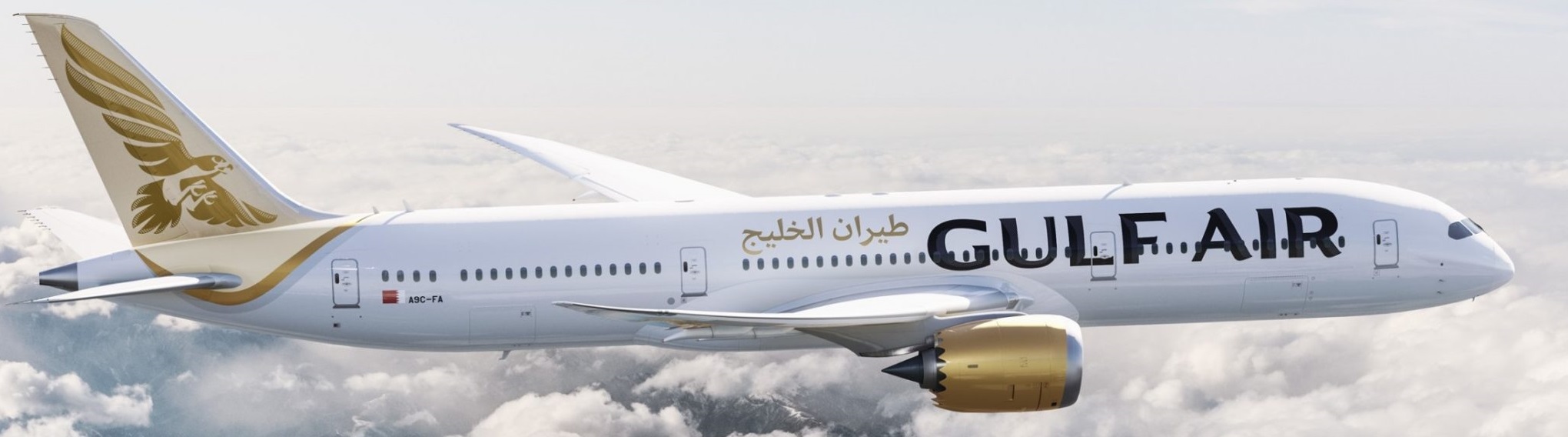
Gulf Air is a flag carrier airline of the kingdom of Bahrain headquarters in Manama, Bahrain. The main hub airport is Bahrain International Airport. It has a fleet size of 30 aircraft.
Yes, you can check your Gulf Air ticket online by going to the airline’s “Manage Booking” section, entering your booking reference (PNR) and last name, and viewing your itinerary, flight details, and ticket status; you can also make changes or download your e-ticket if needed.
To check flight details using your ticket number, go to the airline’s “Manage Booking” or “Check My Trip” page, enter your ticket number or booking reference (PNR) along with your last name, and you’ll see your flight itinerary, departure times, seat assignment, and fare details. Some airlines also allow this via their mobile app or customer service hotline.
The PNR number on a Gulf Air ticket is your Passenger Name Record, a unique 6-character booking code (letters and/or numbers) used to access your reservation in the airline’s system; you’ll find it on your e-ticket confirmation email or itinerary receipt, and you use it on the airline’s “Manage Booking” page along with your last name to view or modify your flight details.
You can verify your ticket confirmation by visiting the airline’s “Manage Booking” or “My Trips” page, entering your booking reference (PNR) and last name, and checking that your flight details, passenger name, and itinerary match what you purchased. Alternatively, you can confirm by checking your e-ticket email or calling the airline’s customer service.
To check your ticket confirmation, go to the airline’s “Manage Booking” or “My Trips” page, enter your booking reference (PNR) and last name, and view your flight details, passenger information, and itinerary. You can also verify confirmation through your e-ticket email or by calling the airline’s customer service.
You can find your flight PNR (Passenger Name Record) on your e-ticket or booking confirmation email; it’s usually a 6-character code of letters and/or numbers. You can also see it on printed tickets, travel agency receipts, or the airline’s “Manage Booking” page when you log in with your details.
You can check in online by visiting the airline’s official website or mobile app, selecting “Check-In” or “Manage Booking”, and entering your booking reference (PNR) and last name. Then you can choose seats, add baggage if needed, and download or print your boarding pass, typically starting 24 hours before domestic flights and up to 2–3 hours before international flights.
You can confirm your flight ticket is valid by checking your e-ticket or confirmation email, where you should see a booking reference (PNR), ticket number, and full itinerary, then verifying it on the airline’s “Manage Booking” page using your PNR and last name; if the booking shows your flight details and status as confirmed, your ticket is successfully issued.
You can find your booking reference (PNR) in your flight confirmation email or e-ticket receipt, usually as a 6-character code made of letters and numbers, and it may also appear on printed tickets, travel agency invoices, or when you log into the airline’s “Manage Booking” page with your details.
Your flight booking reference (PNR) is usually in your confirmation email or e-ticket, shown as a 6-character code of letters and numbers, and you can also find it on travel agency receipts or by logging into the airline’s “Manage Booking” page where your reservation details are displayed.
PNR on your ticket stands for Passenger Name Record. It’s a unique 6-character code (letters and/or numbers) that identifies your flight booking in the airline’s system, allowing you to check your reservation, select seats, check in, or make changes. You’ll find it on your e-ticket, booking confirmation email, or printed ticket.
PNR on your flight ticket stands for Passenger Name Record, which is a unique 6-character booking code used by the airline to access your reservation; you can use it along with your last name on the airline’s website or app to view flight details, check in, select seats, or manage your booking.
You can check your Gulf Air ticket by going to their “Manage Booking” page on the Gulf Air website, entering your booking reference (PNR) and last name, and viewing your flight details, passenger information, seat assignments, and e-ticket status. You can also check via the Gulf Air mobile app or by calling their customer service.
To check your flight details with your PNR, go to the airline’s “Manage Booking” or “My Trips” page, enter your PNR (6-character booking code) and your last name, and you’ll see your flight itinerary, departure and arrival times, seat assignment, and ticket status. You can also use the airline’s app or call customer service for assistance.
You can find your PNR (Passenger Name Record) on your flight confirmation email or e-ticket, usually shown as a 6-character code of letters and numbers; it may also appear on printed tickets, travel agency receipts, or when you log into the airline’s “Manage Booking” page using your booking details.
Yes, you can check your e-ticket online by going to the airline’s “Manage Booking” or “My Trips” page, entering your booking reference (PNR) and last name, and viewing your full itinerary and ticket status; you can also access it through the airline’s mobile app or your confirmation email.
You can track your flight ticket by going to the airline’s “Manage Booking” or “My Trips” page, entering your PNR (booking reference) and last name, where you can see your flight status, schedule changes, seat details, and ticket confirmation; some airlines also let you track updates through their mobile app or SMS/email alerts.
You can find your e-ticket in the confirmation email sent by the airline after booking, on your airline account under “Manage Booking” or “My Trips”, or on a travel agency/booking platform receipt if you booked through a third party. It usually includes your PNR, flight details, and ticket number.
You can verify your flight ticket by going to the airline’s “Manage Booking” or “My Trips” page, entering your PNR (booking reference) and last name, and confirming that your itinerary, passenger name, and flight details appear correctly; you can also verify it through your e-ticket email or by contacting the airline directly.
You know your ticket is confirmed when you receive an e-ticket or booking confirmation email that includes a PNR (booking reference) and ticket number, and when you can successfully view your itinerary on the airline’s “Manage Booking” page using those details; if both show your flight information correctly, your booking is confirmed.
You can check your flight ticket number by looking at your e-ticket or booking confirmation email, where it is usually listed alongside your name and flight details. You can also find it in the airline’s “Manage Booking” or “My Trips” section by entering your PNR and last name, or on a printed ticket if you received one.
The PNR number on a Gulf Air flight ticket is your Passenger Name Record, a unique 6-character alphanumeric code that identifies your booking in the airline’s system; you use it with your last name on the airline’s “Manage Booking” page to view your itinerary, check flight status, select seats, or make changes.
Yes, Gulf Air has a mobile app where you can check your booking, view your e-ticket, manage seats, and get flight updates by entering your PNR (booking reference) and last name.
To book a Gulf Air ticket online, go to the Gulf Air official website or app, enter your departure city, destination, travel dates, and passenger details, choose a flight and fare type, then complete payment using a credit/debit card or supported online payment method; after payment, you’ll receive an e-ticket and booking reference (PNR) by email.
The Gulf Air booking reference number is your PNR (Passenger Name Record), a unique 6-character code that identifies your reservation; you’ll find it on your e-ticket or confirmation email, and you use it on Gulf Air’s website or app along with your last name to check your booking, select seats, or manage your flight.
No, Gulf Air is not a 5-star airline according to Skytrax; it is generally rated as a 4-star airline, meaning it offers good service, comfort, and onboard experience, but it is not in the top “5-star” category like a few premium global carriers.
Yes, Gulf Air tickets can be refundable, but it depends on your fare type—flexible fares usually allow full or partial refunds with a fee, while cheaper or promotional fares may be non-refundable or only eligible for credit vouchers; you can check the exact rules in your booking conditions or via “Manage Booking.”
Gulf Air is generally considered good, offering reliable service, comfortable seats, modern aircraft, and decent in-flight amenities. It’s not among the ultra-luxury 5-star airlines, but it maintains a solid safety record and satisfactory passenger experience, making it a reliable choice for travel in the Middle East and beyond.
As of 2026, the CEO of Gulf Air is Waleed Al Alawi, who oversees the airline’s operations, strategy, and international growth from its headquarters in Bahrain.
For Gulf Air, extra baggage fees depend on how you buy it and your route, but typically an extra 23 kg bag costs about USD 135–170 online or at offices, and about USD 170 at the airport, meaning roughly USD 5–7 per kg if calculated; overweight bags (23–32 kg) may also cost around USD 50 extra per bag in some cases, so it’s cheaper to prepay online than pay at the airport.
Emirates is generally considered better overall for long-haul travel, offering more modern aircraft, stronger in-flight entertainment, larger global network, and higher service consistency, while Gulf Air is a smaller, more regional carrier that can be good for Middle East connections and sometimes lower fares but with fewer routes and less premium consistency; so Emirates is usually preferred for comfort and global reach, while Gulf Air can be a practical budget-friendly alternative depending on your route and price.
Yes, Gulf Air is considered safe to fly. It operates under international aviation regulations, holds IOSA (IATA Operational Safety Audit) certification, and maintains a modern fleet of aircraft. While it isn’t rated among the very top 5-star airlines, it has a solid safety record with no major recent accidents, making it a reliable choice for travel.
The top 3 Gulf airlines are usually considered Emirates, Qatar Airways, and Etihad Airways, known for their long-haul networks, premium service, and modern fleets; a fourth often mentioned is Gulf Air, which is smaller but still an important regional carrier in the Middle East.
Salaries at Gulf Air vary by job role, but typical ranges are: cabin crew around BHD 600–850 per month (≈ USD 1,600–2,250), pilots can earn roughly BHD 4,000–5,500+ per month (≈ USD 10,000–14,500+), and ground staff roles are usually much lower, around BHD 400–1,000 depending on position and experience; overall the airline offers a competitive tax-free salary in Bahrain plus benefits like travel perks and allowances.
Yes, Gulf Air is strict about hand luggage limits. For Economy passengers, the carry-on allowance is usually 7kg, plus a small personal item, and for Business/First Class it’s 2 pieces up to 9kg each. Bags must meet size restrictions (typically 55×40×20cm), and exceeding these limits may require you to check the bag and pay extra fees.
Yes, Gulf Air is generally considered a quality airline, known for good service, a modern fleet, comfortable cabins, and a solid safety record. While it is usually rated below top-tier carriers like Qatar Airways and Emirates, it is still regarded as a reliable full-service airline, particularly for travel within the Middle East, Europe, and Asia.
Yes, Gulf Air serves alcoholic beverages on most international flights, including beer, wine, and spirits, as part of its full-service offering, although availability can vary by route, cabin class, and local regulations.
Qatar Airways is generally considered better than Gulf Air in terms of overall service, cabin comfort, in-flight entertainment, global network, and awards, consistently ranking as a 5-star airline. Gulf Air is reliable and safe but smaller, more regional, and with fewer premium amenities, so it’s better for budget-conscious or regional travel, while Qatar Airways excels on long-haul international flights.
No, Gulf Air is not closed; it is still operating flights as Bahrain’s national carrier, serving regional and international destinations across the Middle East, Europe, and Asia. Any news about closures or suspensions typically refers to temporary route adjustments, not a shutdown of the airline.
On Gulf Air, Economy Class passengers are allowed 30kg of checked baggage on most international flights, while Business Class passengers can usually check 40–50kg. Hand luggage limits are 7kg for Economy and 2 pieces up to 9kg each for Business, with strict size restrictions. Exact allowances can vary by route and fare type.
A special meal on Gulf Air is a meal prepared to meet specific dietary, religious, or medical needs, such as vegetarian, vegan, Hindu, Muslim (Halal), kosher, gluten-free, diabetic, low-sodium, or child meals. These meals usually need to be requested in advance, typically at least 24–48 hours before departure, through Manage Booking or customer service.
Yes, you can carry perfume on a Gulf Air flight, but it must follow airport liquid restrictions: containers should be 100ml (3.4oz) or less, placed in a clear, resealable plastic bag with other liquids, gels, or aerosols, and must be kept in carry-on baggage. Larger bottles should go in checked luggage.
Yes, Gulf Air is generally considered safe to travel with. It operates under international aviation regulations, maintains IOSA (IATA Operational Safety Audit) certification, and flies a modern fleet, including aircraft such as the Boeing 787 Dreamliner and Airbus A321neo. It has a solid modern safety record and is regarded as a reliable full-service airline.
Yes, on Gulf Air flights, complimentary drinks are generally provided to all passengers, including soft drinks, water, tea, and coffee. Alcoholic beverages are served free in Business and First Class on most international flights, while Economy passengers may receive non-alcoholic drinks, depending on the route.
In Gulf Air Economy Class, the typical allowance is about 30 kg of checked baggage on most international routes, plus 1 piece of hand luggage up to 7 kg (and sometimes a small personal item, depending on the fare). Exact limits can vary by route and ticket type, so it’s always best to check your booking details for the final allowance.
Gulf Air is generally considered safe but is not usually given a specific global “safety ranking” by major rating systems like Skytrax, which focus more on service than safety. In terms of operational safety, it meets international standards, holds IOSA certification, and has a good modern safety record with no recent major accidents, placing it broadly in the same safety category as other established full-service Middle Eastern airlines, though not highlighted as a top-ranked safety leader in global comparisons.
Gulf Air has had a mixed financial history, but in recent years it has been closer to break-even or modestly profitable in some reporting periods after government restructuring and cost-cutting, rather than consistently making strong profits; like many state-owned airlines, its financial performance can fluctuate depending on fuel costs, demand, and government support, so it is not considered a highly profitable global airline but is more stable than in the past.
Gulf Air Economy is generally considered reasonably comfortable for a full-service airline, with standard seat pitch, decent recline, and good cabin service, but comfort varies by aircraft—newer planes like the Boeing 787 Dreamliner are noticeably more spacious and quieter than older aircraft, so long-haul comfort can range from good to average depending on the route.
Yes, on Gulf Air you can choose your seat either during booking or later via the airline’s “Manage Booking” page. Some preferred or extra-legroom seats may require an additional fee, while standard Economy seats are usually selectable for free, depending on your fare type and route.
No, Gulf Air does not currently offer free WiFi on its flights. Some aircraft may have paid WiFi or mobile data services, but it is generally not complimentary, and availability can vary by plane and route.
Gulf Air may provide a free hotel stay in Bahrain for long layovers through its Stopover Paid by Carrier (STPC) program, but it only applies if your ticket, route, and layover meet eligibility rules, and you usually need to request it in advance; the hotel and transfers are arranged by the airline.
Airlines most often rated for the most comfortable Economy Class seats are Singapore Airlines, Qatar Airways, Emirates, ANA, and Japan Airlines, mainly because they offer better legroom, seat width, cushioning, and overall cabin design compared to most other carriers, though actual comfort still depends on the specific aircraft and seat configuration on your route.
Yes, Gulf Air does serve food on almost all flights. Economy passengers typically get a complimentary hot meal on medium and long-haul routes (with options like chicken, beef, and vegetarian dishes), while shorter flights usually offer a light snack or sandwich, and drinks are also provided. Business class gets a more premium, multi-course dining service with wider choices.
On Gulf Air flights, liquids in carry-on baggage must be in containers of 100ml (3.4oz) or less, all placed in a single clear, resealable plastic bag of about 1liter capacity. Larger amounts must go in checked baggage, and exceptions apply for medications, baby food, or special dietary liquids.
On Gulf Air, Economy Class passengers are generally allowed 30kg of checked baggage and 1 carry-on up to 7kg, while Business Class passengers typically get 40kg or 2 pieces up to 32kg each plus larger carry-on allowances; exact limits can vary by route and fare type.
On Gulf Air, Economy Class is usually allowed about 30 kg of checked baggage, while Business Class is typically 40 kg or 2 pieces up to 32 kg each, plus around 7 kg carry-on in Economy (more in Business), though exact limits can vary by fare and route.
Extra baggage on Gulf Air usually costs around USD 5–7 per kilogram if purchased in advance online, with typical fees for an additional 23kg bag ranging USD 135–170, while paying at the airport is often more expensive.
Flying Gulf Air offers full-service amenities, including complimentary meals and drinks, generous baggage allowance, seat selection, in-flight entertainment on long-haul flights, a modern fleet, and a solid safety record, plus regional connectivity across the Middle East, Europe, and Asia.
You can add extra baggage on Gulf Air by going to the airline’s official website or mobile app, opening “Manage Booking,” entering your PNR and last name, and selecting the option to purchase additional checked baggage in kilograms or extra pieces, which is cheaper if done before departure (up to 24 hours prior); you can also add it through their call center or ticket office, while paying at the airport is usually more expensive and depends on availability.
Yes, on Gulf Air you can choose your seat during booking or later via Manage Booking, with standard Economy seats usually free and some preferred or extra-legroom seats requiring an additional fee.
Yes, on Gulf Air you can usually add or change seat selection after booking through Manage Booking or the airline app, where you can pick available seats anytime before check-in; standard seats are often free, while preferred or extra-legroom seats may require an additional fee depending on availability and fare type.
Yes, when you check in online with Gulf Air, you can usually select or change your seat from the available options; some preferred or extra-legroom seats may require an additional fee, while standard seats are typically free.
Yes, on Gulf Air you can choose your Economy seat either during booking, via Manage Booking, or at online check-in, though some preferred or extra-legroom seats may require an additional fee, while standard seats are usually free.
The number of seats on Gulf Air depends on the aircraft type, because it operates different models, but for example: the Airbus A320 has about 136 seats, the A321 can have around 169–192 seats, and the Boeing 787-9 Dreamliner has about 282–292 seats, so the airline’s total seat capacity varies widely across its fleet rather than having one fixed number.