





Your calls answered by leading travel experts in under 5 seconds.

Unpublished offers and great discounts when you book on-call.

Hand-crafted travel itinerary that meet all your travel preferences.

Round-the-clock customer service to get all your doubts clarified.
When you plan a vacation to a destination and want to book your Skymark Airlines flight tickets, then reach out to My Flight Fares. Our travel experts guide you through the booking process and help you score great airfares in your desired budget. We have flight offers from our inventory of 450+ airline options. Starting from Economy, First and Business Class tickets, My Flight Fares travel experts can give you various other services on your Skymark Airlines bookings like extra luggage, priority check-in, in-flight meals, and more.
Skymark Airlines is one of the most well-known Japanese low-cost airlines with headquarters in Tokyo, Japan, The hub airports of the airline are Haneda Airport and Kobe Airport. With its fleet size of 29 in-service aircraft, Skymark Airlines travels to 11 destinations.
Yes, Skymark Airlines is still fully operating in 2026; it continues to run regular domestic flights across Japan, including major routes like Tokyo (Haneda), Osaka (Kobe), Sapporo, and Okinawa, and it is even expanding with additional flights and newer Boeing 737 aircraft entering service, so it remains an active and functioning airline.
Yes, Skymark Airlines is generally considered a low-cost or hybrid low-cost carrier in Japan—it offers cheaper fares than full-service airlines like ANA or JAL, but still includes some amenities like assigned seating and reasonable baggage allowances, making it more of a “value airline” rather than an ultra-budget carrier.
Yes, Skymark Airlines is generally considered a reliable and fairly punctual low-cost carrier in Japan, with a strong safety record, modern Boeing 737 fleet, and better on-time performance than many budget airlines; while it doesn’t offer luxury service, it is known for consistent operations, making it a solid and dependable choice for domestic travel.
Yes, Skymark Airlines is generally a budget-friendly airline in Japan, offering lower fares than full-service carriers like ANA and JAL, especially on domestic routes such as Tokyo–Osaka or Tokyo–Okinawa; it’s not the absolute cheapest ultra-low-cost option, but it provides a good balance of low prices and decent comfort with fewer extra fees than some budget airlines.
Yes, Sky Airline is a real airline; Sky Airline is a Chile-based low-cost carrier that operates domestic flights within Chile and international routes across South America, using a fleet mainly of Airbus A320neo and A321neo aircraft.
Skymark Airlines is generally not ranked among global top premium airlines, but within Japan it is often viewed as a solid mid-tier low-cost carrier, typically scoring better than many budget airlines on punctuality and safety, while sitting below full-service airlines like ANA and JAL in comfort and service; in most passenger rankings it lands in the “good budget airline” category rather than a top global airline list.
There isn’t one universally “least trusted” airline because ratings vary by region, safety record, and customer experience, but airlines that often receive the lowest customer satisfaction scores tend to be ultra-low-cost carriers with frequent complaints about delays, cancellations, and fees—for example some regional budget airlines in different countries (like certain no-frills carriers in Europe, Asia, or South America) are often rated poorly on review sites; however, it’s important to separate customer service ratings from safety, since even poorly rated airlines can still meet strict international safety standards.
On Skymark Airlines, you can usually check in up to 20 kg of checked baggage for free per passenger, with no limit on the number of bags as long as the total weight stays within 20 kg and each bag meets size limits (up to about 50 × 60 × 120 cm). If you exceed 20 kg, you’ll pay excess fees starting at about ¥2,000 per 10 kg, and no single bag can exceed 32 kg or it may be rejected.
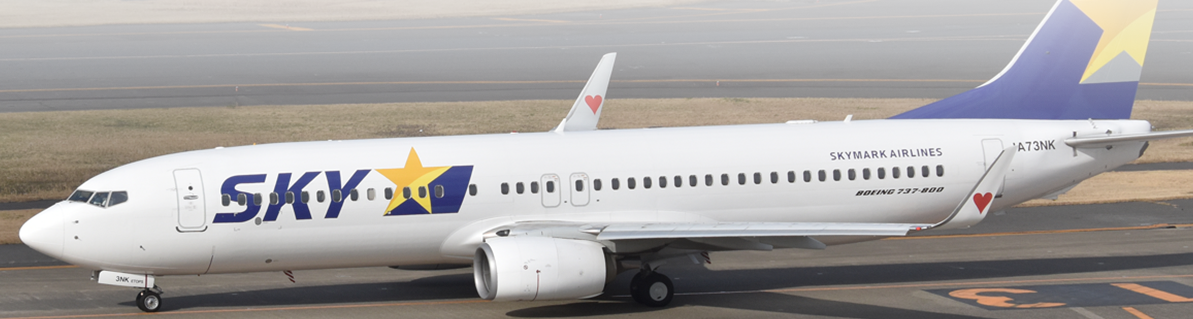
Skymark Airlines operates a simple all-Boeing fleet mainly made up of Boeing 737 aircraft, specifically the 737-800 for most flights and also newer 737 MAX 8 jets being introduced, which are used for domestic routes across Japan like Tokyo, Osaka, Sapporo, and Okinawa, and it previously operated older aircraft like the Boeing 767 but now focuses entirely on the 737 family for efficiency and consistency.
Skymark Airlines is mainly owned by a mix of Japanese institutional investors, private equity funds, and major aviation-related companies—with key shareholders including Suzuyo & Co., ANA Holdings (minor stake), and investment funds like Integral Corporation–related groups and DBJ-backed funds; overall, it is a publicly traded airline on the Tokyo Stock Exchange, so ownership is spread across institutions and public shareholders rather than a single individual or company controlling it.
If you mean Sky Airline, it’s generally considered a decent low-cost airline—good for cheap fares and modern aircraft like the A320neo, but it’s basic with paid extras, and reviews are mixed due to service variability, delays, and added fees; it’s fine for budget travel, but not at the level of full-service airlines in comfort or consistency.
On Sky Airline, food is generally not included for free, since it’s a low-cost carrier, but you can buy snacks and drinks onboard; some fares or longer international routes may include limited complimentary items, but in most cases meals and beverages are paid extras.
Skymark Airlines doesn’t manufacture planes—it is an airline, not an aircraft maker. It operates planes made by manufacturers like Boeing, mainly the Boeing 737-800 and newer Boeing 737 MAX 8 for domestic routes in Japan, while aircraft manufacturing is done by companies like Boeing or Airbus, not Skymark itself.
Skymark Airlines is primarily a domestic airline in Japan, operating routes between cities like Tokyo, Osaka, Sapporo, and Okinawa, and it generally does not operate regular international flights, though it may occasionally operate charter services or limited seasonal routes depending on demand.
Yes, Skymark Airlines allows a personal item such as a small bag, handbag, or laptop bag in addition to your carry-on luggage, as long as it can fit under the seat in front of you and the combined carry-on allowance (typically around 10 kg total for cabin baggage) is not exceeded.
If you mean Skymark Airlines, it doesn’t make models at all—it’s an airline, not a manufacturer; but if you’re referring to Skymarks model airplanes (die-cast aircraft models), they are generally considered good mid-range quality collectibles, known for accurate aircraft shapes and affordable pricing, though they are less detailed than premium brands like GeminiJets or Herpa.
Yes, Skymark Airlines is considered a low-cost (or value) airline in Japan, offering cheaper domestic fares than full-service carriers like ANA or JAL while still including assigned seating and some basic services, making it a budget-friendly but not ultra–no-frills carrier.
No, Skymark Airlines does not have a traditional business class; instead it operates a single-class economy-style cabin, but it offers a “premium” seat option on some aircraft with extra legroom and wider seats for an additional fee, which is still not a separate business class product.
Sky Airline operates a fleet of roughly 30–40 aircraft, mainly Airbus A320neo and A321neo jets, with the exact number changing as it expands and replaces older leased planes, but it is one of the larger low-cost carriers in South America with a steadily growing modern fleet.
Skymark Airlines is known for being a Japanese low-cost domestic airline that offers affordable fares while still keeping assigned seating and relatively good punctuality, and it stands out for operating a simple all-Boeing 737 fleet focused on major domestic routes like Tokyo, Osaka, Sapporo, and Okinawa, making it a budget-friendly alternative to ANA and JAL.
Yes, Skymark Airlines has a mobile app that lets you book flights, manage reservations, check flight status, and access booking details, mainly designed for domestic travel within Japan and available in Japanese with limited English functionality.
On Skymark Airlines, checked baggage is usually free up to 20 kg per passenger, and if you exceed that limit you pay excess baggage fees that typically start around ¥2,000 per 10 kg (or part thereof) depending on the route, with each bag also required to stay within size limits and not exceed 32 kg per piece.
Yes, Skymark Airlines is generally considered a good low-cost airline in Japan, known for reliable operations, decent punctuality, clean Boeing 737 aircraft, and affordable fares; it doesn’t offer luxury services, but it’s often viewed as a solid and dependable budget alternative to ANA and JAL for domestic travel.
Sky Airline is generally considered a decent budget airline in South America—good for low fares and modern aircraft like the A320neo, but it’s a no-frills carrier, so you pay extra for baggage, seat selection, and food, and reviews are mixed with some complaints about delays and customer service; it’s fine for affordable travel, but not a premium experience.
On Sky Airline, food is generally not included for free because it’s a low-cost carrier, but passengers can buy snacks and drinks onboard, and on some longer international routes there may be limited complimentary items depending on the fare, though most meals are paid extras.
On Skymark Airlines, checked baggage is usually free up to 20 kg total per passenger, and if you exceed that limit you pay excess fees that are typically around ¥2,000 per 10 kg (or part thereof) depending on the route, with each bag also subject to size and weight limits (generally up to 32 kg per piece).
Skymark Airlines is generally considered reliable and punctual for a low-cost carrier, with a strong safety record and efficient domestic operations in Japan; while it doesn’t offer premium services like ANA or JAL, it’s known for consistent on-time performance, clean aircraft, and dependable scheduling, making it a solid choice for budget domestic travel.
Yes, Sky Airline is a budget (low-cost) airline, meaning it offers low base fares but charges extra for services like checked baggage, seat selection, and onboard meals, making it a cheaper but more basic option compared to full-service airlines.
Skymark Airlines is a publicly traded Japanese airline owned by a mix of institutional investors, with the largest shareholders including Suzuyo & Co. and Suzuyo Holdings, followed by ANA Holdings and other investment funds rather than a single owner or parent company.
Skymark Airlines is based in Japan, with its main headquarters at Tokyo International Airport (Haneda), Tokyo, and it operates primarily domestic flights across Japan from major hubs like Tokyo (Haneda), Kobe, and Fukuoka.
At Tokyo’s Haneda Airport, Skymark Airlines primarily uses Terminal 1 for domestic flights, where most of its check-in counters and boarding gates are located, but terminal assignments can vary by route or airport, so it’s always best to confirm on your booking before travel.
Skymark Airlines is generally considered a good low-cost airline in Japan, known for reliable operations, strong on-time performance, clean Boeing 737 aircraft, and affordable fares, though it offers a simple no-frills experience compared to full-service carriers like ANA or JAL, making it a solid budget choice rather than a premium airline.
Yes, Skymark Airlines includes free checked baggage up to 20 kg per passenger on most tickets, as long as each bag meets size and weight limits, and anything over that allowance is charged as excess baggage.
To check in for a Skymark Airlines flight, you can go to the airport and use an automatic check-in machine or counter with your reservation number or e-ticket, complete the process, and get your boarding pass, and you must finish check-in at least 20 minutes before departure before going through security and the gate.
Skymark Airlines was founded in 1996 by Hideo Sawada, who was the chairman and a key investor at the time, leading a consortium that included travel company H.I.S. and leasing firm Orix, and the airline later had different leadership and investors after restructuring and bankruptcy changes over the years.
Skymark Airlines is a Japanese low-cost airline that operates domestic passenger flights mainly within Japan using Boeing 737 aircraft, offering affordable fares with a simple, no-frills service model while still providing assigned seating and a reliable, punctual travel experience compared to full-service carriers like ANA and JAL.
Yes, Skymark Airlines offers seat selection, usually allowing passengers to choose their seats for free at booking or during check-in depending on availability, while some preferred or extra-legroom seats may come with an additional fee.
Sky Airline is generally considered a decent low-cost carrier—good for cheap fares and modern aircraft like the Airbus A320neo, but it’s a no-frills airline so you pay extra for baggage, seat selection, and meals, and customer reviews are mixed due to occasional delays and service variability, making it fine for budget travel but not a premium experience.
Yes, Sky Airline is a budget (low-cost) airline, meaning it offers low base fares but charges extra for things like checked baggage, seat selection, and onboard meals, making it an affordable but no-frills option for travel in South America.
Skymark Airlines is generally considered reliable and fairly punctual, with a strong safety record and consistent domestic operations in Japan; while it doesn’t offer luxury service like ANA or JAL, it’s known for dependable schedules, clean Boeing 737 aircraft, and good on-time performance for a low-cost carrier.
Yes, most Skymarks model aircraft are officially licensed products made under agreements with airlines and sometimes aircraft manufacturers, meaning they use authorized liveries and branding for realism, although they are more entry-level collectible models compared to higher-detail premium brands.
Skymark Airlines went through a major crisis in 2015 when it filed for bankruptcy protection after large losses from an expensive aircraft expansion plan and cancelled Airbus orders, but it was successfully restructured in 2016 under new investors, streamlined its fleet to Boeing 737s, returned to profitability, and later even relisted on the Tokyo Stock Exchange in 2022, so today it is fully operating again as a stable low-cost domestic airline in Japan.
Sky Airline is generally considered reasonably reliable for a low-cost carrier, with a modern fleet and decent safety record, but its reliability can be mixed when it comes to delays, schedule changes, and customer service, so it’s fine for affordable travel in South America but not as consistently dependable as full-service airlines.
To check your flight booking, go to your airline’s website or app and open “Manage Booking” or “My Trips,” then enter your booking reference (PNR) and last name to view details like flight time, seat, baggage, and status; if you booked through a travel agency or third-party site, you’ll need to check their confirmation email or account instead.
Yes, Skymark Airlines is a Japanese airline based in Tokyo that operates mainly domestic flights across Japan, including routes between cities like Tokyo, Osaka, Sapporo, and Okinawa.
On Sky Airline, baggage is not always included in the cheapest fares—basic tickets usually include only a small personal item, while carry-on and checked baggage are added for an extra fee or included only in higher fare bundles, so the exact allowance depends on the ticket type you buy.
Yes, on most airlines a small backpack will count as a personal item if it fits under the seat in front of you, typically around 40 × 30 × 15 cm, but if it’s larger or fully packed it may be treated as your main carry-on instead; on carriers like Sky Airline, they can be quite strict, so size and weight really matter.
Skymark Airlines is a Japanese low-cost carrier that operates domestic flights across Japan using Boeing 737 aircraft, offering affordable fares with a simple no-frills service while still providing assigned seating and generally good punctuality compared to other budget airlines.
On Skymark Airlines, the baggage policy includes free checked baggage up to 20 kg per passenger, with no limit on number of bags as long as the total stays within 20 kg and each bag fits within size limits (about 50 × 60 × 120 cm); carry-on baggage is also allowed up to about 10 kg total (including one cabin bag plus a personal item), and anything over the limits is charged as excess baggage.
Yes, Skymarks model aircraft are generally made of plastic rather than full die-cast metal, although some versions may include small metal parts or internal weights for stability; they are designed as affordable, pre-assembled display models, so they are lighter and less detailed than fully metal premium brands.
No, Skymarks model airplanes do not require glue because they come fully pre-assembled and ready to display right out of the box, so you just unbox them and attach any optional stand if included.
On Sky Airline, most tickets are non-refundable because it is a low-cost carrier, so you usually only get taxes back or a travel credit if you cancel, while refundable or flexible fares can be canceled for a partial or full refund depending on the fare rules, and if the airline cancels your flight you’re generally entitled to a full refund or rebooking.
Airline cancellation policies vary by fare type: most full-service airlines allow refunds for flexible tickets or give credit minus a fee, while low-cost carriers usually sell non-refundable fares that only return taxes or offer travel credit, but in all cases you’re typically entitled to a full refund or free rebooking if the airline cancels or significantly changes your flight, and some regions (like the EU) also provide passenger rights protections for delays and cancellations.
Sky Airline is generally considered a decent low-cost airline in South America, known for affordable fares and a relatively modern Airbus A320neo fleet, but it is a no-frills carrier so passengers often pay extra for baggage, seat selection, and meals, and reviews are mixed due to occasional delays and customer service issues, making it good for budget travel but not a premium experience.
Sky Airline is based in Chile, where it operates as a low-cost carrier offering domestic flights within Chile and international routes across South America.