





Your calls answered by leading travel experts in under 5 seconds.

Unpublished offers and great discounts when you book on-call.

Hand-crafted travel itinerary that meet all your travel preferences.

Round-the-clock customer service to get all your doubts clarified.
When you plan a vacation to a destination and want to book your South African Airways flight tickets, then reach out to My Flight Fares. Our travel experts guide you through the booking process and help you score great airfares in your desired budget. We have flight offers from our inventory of 450+ airline options. Starting from Economy, First and Business Class tickets, My Flight Fares travel experts can give you various other services on your South African Airways bookings like extra luggage, priority check-in, in-flight meals, and more.
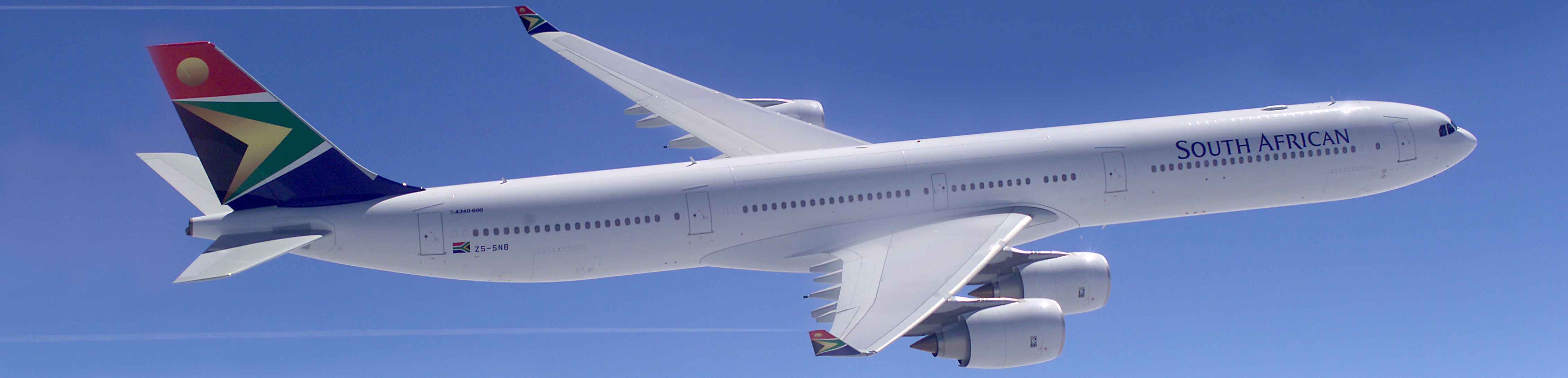
South African Airways is South Africa's flag carrier with its headquarters in Johannesburg. The airline links 40 local destinations internally and with other international destinations in Asia, Europe, North & South America, and Oceania. It has various subsidiaries, including Mango & SAA Cargo. The current in-service fleet size of South African Airways is 12 aircraft that serve 59 destinations.
You can contact South African Airways through several channels: call their customer service at +1-855-551-1040 (within South Africa) or +1-855-551-1040 (international), email via their contact form on flysaa.com, or reach them on social media (Twitter/Facebook). You can also visit their local ticket offices or airport counters for in-person assistance.
To book a flight in South Africa, you typically need a valid ID or passport (for domestic or international travel, respectively), passenger details (full name as on ID, date of birth, contact info), travel dates and destinations, and a payment method (credit/debit card, EFT, or travel voucher). Some airlines may also ask for frequent flyer numbers or special service requests during booking.
For South African Airways, online check-in usually opens 24 hours before departure and closes about 2 hours before an international flight and 1 hour before a domestic flight, while airport check-in counters typically open about 2–3 hours before departure, so it’s best to check in early to avoid queues and missing cut-off times.
Yes, South African Airways does offer support via WhatsApp in some regions and campaigns, but the availability can change—its official contact options are mainly through its website live chat and call centers, and any WhatsApp number should be confirmed on the official site to avoid scams; the safest way to check current WhatsApp support is via https://www.flysaa.com under “Contact Us.”
Yes, South African Airways offers a mobile app called SAA App, available for iOS and Android, which lets you book flights, check in, access boarding passes, manage bookings, and receive flight updates. It’s free to download, though you need a valid SAA booking or account to use most features.
In South Africa, pensioners sometimes do get discounted flights, but it is not a standard universal rule across all airlines; discounts depend on the specific airline, route, and promotional offers. Some carriers like South African Airways may occasionally run special fares or senior discounts through promotions or travel partners, but these are not guaranteed year-round. It’s always best to check directly with the airline or compare fares at the time of booking.
To check in online with South African Airways, go to their official website or mobile app, select “Check-In”, enter your booking reference and last name, choose your seat and baggage options, and then download or print your boarding pass. Online check-in usually opens 24 hours before departure and closes 1–2 hours prior depending on domestic or international flights.
Yes, South African Airways is flying again after its restructuring and government-supported revival. It now operates domestic and select international routes, including destinations in Africa, Europe, and Asia, though its network is smaller than pre-2020 levels and continues to expand gradually.
South African Airways is headquartered in Johannesburg, South Africa, with its main office at O.R. Tambo International Airport. This serves as its primary hub for domestic and international flights, while it also maintains offices and ticketing locations in other major cities across South Africa and abroad.
Yes, it is generally safe to fly with South African Airways, as it operates under strict international aviation safety standards and is regulated by South Africa’s civil aviation authority; despite past financial and operational restructuring, the airline continues to follow standard maintenance, pilot training, and safety procedures, so its safety level is comparable to other established international carriers.
From South Africa, some of the cheapest destinations are typically nearby African countries, due to short flight times and lower fares. Popular budget-friendly options include Namibia, Zimbabwe, Mozambique, Botswana, and Eswatini for regional trips, or Mauritius for a slightly longer but still affordable island getaway; exact prices depend on the season, airline, and promotions.
As of 2026, South Africa is not on any global COVID-19 “red list”, since most countries have lifted strict travel bans and entry restrictions. However, travel rules can change for health, security, or political reasons, so it’s always best to check the official government or airline websites before planning your trip.
Yes, South African Airways has had a few crashes in its history, though its modern operations have a strong safety record. Notable incidents include the 1987 Flight 295 crash over the Indian Ocean, which was a cargo flight disaster killing all 159 on board, and several non-fatal accidents. Overall, SAA adheres to international aviation safety standards, and fatal accidents are rare in recent decades.
On South African Airways, baggage allowance depends on your class and route. For most economy passengers, the standard is 1 carry-on bag (up to 7kg/15lb) and 2 checked bags (up to 23kg/50lb each) on international flights; business class often allows more weight or additional pieces. Always check your ticket and route, as allowances can vary for domestic, regional, or promotional fares.
Yes, South African Airways is back in business after its financial restructuring and government-supported revival, operating both domestic flights within South Africa and selected international routes to Africa, Europe, and Asia, though its network is smaller than pre-2020 and gradually expanding.
Yes, generally South African Airways (SAA) is more expensive than FlySafair, because SAA is a full-service carrier offering included baggage, meals, and more flexible tickets, while FlySafair is a low-cost airline focusing on budget fares with extra charges for luggage, meals, and seat selection. Exact prices depend on route, timing, and promotions.
Yes, flying with South African Airways is generally considered safe, as it complies with international aviation safety standards, undergoes regular aircraft maintenance, and employs trained pilots and crew. While it has had historic accidents decades ago, its modern operations maintain strong safety records comparable to other established international airlines.
Yes, on South African Airways, meals are included on most medium- and long-haul flights, especially in economy and business class on international routes. Short domestic flights may offer snacks or buy-on-board options, depending on flight duration and fare type.
Leggings are generally better for flying because they are stretchy, comfortable, and lightweight, allowing easier movement and sitting for long periods. Jeans are durable but less flexible and can feel restrictive, especially on long flights, so leggings or soft travel pants are usually preferred for comfort.
Yes, it is generally safe for white travelers to visit South Africa, but like any destination, safety depends on location, awareness, and precautions. Urban areas and tourist spots are usually safe, while some neighborhoods may have higher crime rates. Standard travel safety measures—avoiding isolated areas at night, not displaying valuables, and using reputable transport—are recommended for all travelers regardless of race.
South African Airways is considered a full-service carrier with a solid reputation, offering comfortable seating, meals, and checked baggage on most flights, plus a network connecting domestic and international destinations. While it has had financial and operational challenges, its safety record and service standards remain strong, making it a reliable choice compared to low-cost alternatives in the region.
The safest South African airlines are generally considered to be South African Airways (SAA) and Comair-operated British Airways (South Africa), as both adhere to strict international safety standards, rigorous pilot training, and regular aircraft maintenance. Low-cost carriers like FlySafair and Kulula also have good safety records, but full-service carriers often have more extensive oversight and longer operational histories.
It depends on what you value: South African Airways (SAA) is better if you want full-service perks like meals, checked baggage, flexible tickets, and international connectivity, while FlySafair is better for budget-conscious travelers seeking low fares, punctual domestic flights, and simple travel. Comfort and service favor SAA; price and simplicity favor FlySafair.
Yes, South African Airways has had a few plane crashes in its history, the most notable being Flight 295 in 1987, a cargo flight that crashed over the Indian Ocean, killing all 159 people on board. Other incidents include non-fatal accidents and runway excursions, but in recent decades, SAA has maintained a strong safety record and operates under international aviation safety standards.
South African Airways is not currently ranked among the top global airlines in major world airline rankings because it has a much smaller network and reduced operations after its restructuring, but historically it was considered one of Africa’s leading carriers; today it is generally viewed as a mid-tier international airline—reliable for safety and service, but behind top global airlines in size, punctuality, and network reach.
South African Airways generally has average to above-average passenger ratings, typically around 3 to 4 stars out of 5 on major review platforms, where it is praised for friendly service, decent comfort, and full-service inclusions, but sometimes criticized for limited routes, delays, and inconsistent scheduling after its restructuring; overall, it is seen as a reliable but not top-tier global airline.
Yes, South African Airways is generally considered good, especially as a full-service carrier in Africa. It offers meals, checked baggage, and international connectivity, maintains strong safety standards, and has a professional crew, though it may face occasional delays or route limitations due to restructuring. It’s reliable for travelers seeking comfort over budget pricing.
The safest African airlines are widely considered to be South African Airways, Ethiopian Airlines, Kenya Airways, and Air Mauritius, as they follow strict international safety standards, modern fleet maintenance, and thorough pilot training. Among them, Ethiopian Airlines and South African Airways have the strongest global safety reputations and consistent regulatory compliance.
South African Airways operates a mixed fleet of narrow-body and wide-body aircraft for domestic, regional, and international routes. Its main planes include Boeing 737-800s for domestic and short-haul flights, Boeing 787 Dreamliners for long-haul international routes, and Airbus A320 family aircraft for regional services, providing a balance of range, capacity, and passenger comfort.
The idea that “many whites are leaving South Africa” is often overstated, but some people of all backgrounds—including white South Africans—do emigrate mainly due to economic factors, job opportunities abroad, concerns about crime and safety, education options, and lifestyle preferences, rather than a single cause; emigration has also fluctuated over time and is influenced by global demand for skilled workers, so it’s part of a broader pattern of skilled migration rather than a uniform or uniquely racial trend.
In South Africa, white people are generally referred to as “White South Africans” or simply “Whites”. Historically, during apartheid, they were sometimes classified more specifically by ancestry as Afrikaners (descendants of Dutch, German, or French settlers, typically Afrikaans-speaking) or English-speaking South Africans (of British descent), reflecting cultural and linguistic distinctions within the white population.
There isn’t a single “most aggressive” animal, but in South Africa some of the most dangerous and aggressive when provoked include the hippopotamus, which is highly territorial and responsible for many attacks on humans, along with the Cape buffalo, known for unpredictable charging behavior when injured or threatened; among predators, animals like the lion and leopard can also be extremely dangerous, but they usually avoid humans unless disturbed or cornered.
To manage your South African Airways booking online, go to SAA Manage Booking, enter your booking reference (PNR) and last name, then you can view or change flight details, select seats, add baggage, request special services, or download your itinerary and boarding pass if check-in is open.
Whether you can get a full refund depends on the airline and fare rules: with most airlines, you only get a full refund if you booked a refundable fare or the airline cancels/changes your flight significantly, while if you cancel voluntarily on a non-refundable ticket you usually get only taxes back or a partial credit; always check your specific ticket conditions before cancelling.
For South African Airways, online check-in usually opens 24 hours before departure and closes about 2 hours before international flights and 1 hour before domestic flights, while airport check-in counters typically open about 2–3 hours before departure, so it’s best to check in early to avoid queues and missing cut-off times.
Yes, when booking a South African Airways flight, you can select your seat online during the booking process or later via Manage Booking on their website or app. Some seats may incur an extra fee, especially for extra legroom or preferred locations, while standard economy seats are often included in your fare.
Yes, on most medium- and long-haul South African Airways flights, meals and beverages are included in the ticket price for both economy and business class. On shorter domestic flights, food may be limited to snacks or buy-on-board options, depending on flight duration and fare type.
On South African Airways, baggage allowance depends on route and class, but typically Economy passengers get 1–2 checked bags of up to 23 kg each on international flights, plus 1 carry-on bag up to 7 kg, while Business Class usually allows more checked baggage (often 2–3 bags of 32 kg each) and the same or higher cabin allowance, with exact limits varying by ticket type and destination.
For South African Airways, online check-in opens 24 hours before your flight for most routes. Airport check-in counters typically open 2–3 hours before domestic or regional flights and 3 hours before international flights, giving you ample time for baggage drop and security screening.
South African Airways cabin crew salaries vary by experience and rank, but on average flight attendants earn around ZAR 15,000–25,000 per month (roughly USD 800–1,400), with additional pay for overtime, international flights, and per diem allowances. Senior or long-serving crew may earn more, and benefits like travel perks and medical coverage are usually included.
With South African Airways, a full refund is only guaranteed if you purchased a fully refundable ticket or if the airline cancels your flight. For standard non-refundable tickets, you usually receive taxes and fees back, or a credit for future travel, but not the full fare. Always check your fare conditions before cancelling.
Yes, you can cancel a South African Airways flight through their website, mobile app, or call center. Refunds depend on your ticket type: fully refundable tickets get a full refund, while non-refundable tickets usually receive taxes/fees or a travel credit. Cancellation fees may apply.
In South Africa, refund policies depend on the company or service provider, not a single national rule: for flights, airlines like South African Airways follow their fare rules where fully refundable tickets can be refunded in full, while non-refundable tickets usually only return taxes or offer credit, and refunds are typically processed within a few days to a few weeks depending on payment method and bank processing times; consumer purchases in general are also governed by the Consumer Protection Act, which allows refunds in cases of defective goods or unfair practices, but not automatic refunds for change-of-mind purchases.
You can bring any amount of money into South Africa, but if you are carrying more than ZAR 25,000 in cash (or equivalent in foreign currency), you must declare it to South African Customs when you arrive, and for large amounts you may be asked to show proof of the source; there’s no upper limit, but undeclared large cash amounts can be confiscated or investigated.
In South Africa, the time a refund takes to reflect depends on the payment method and the company processing it. Airline or travel refunds, like with South African Airways, usually take 7–30 business days to appear in your account, while credit card refunds may take 1–2 billing cycles. Banks or card issuers can sometimes delay processing beyond the company’s refund confirmation.
If you are emigrating from South Africa, you can take up to ZAR 1 million in cash without prior approval under South African Reserve Bank rules, but larger amounts require a permit. Additionally, you can transfer unrestricted foreign currency abroad through authorized dealers (banks) once your emigration clearance and tax compliance are confirmed.
Financial emigration from South Africa typically takes 6 to 12 months, depending on how quickly you submit all required documents, get tax clearance from SARS, and complete the South African Reserve Bank (SARB) procedures. Delays often occur if paperwork is incomplete, there are outstanding tax obligations, or bank processing is slow.
In South Africa, individuals can transfer money internationally, but the limits depend on your tax status and approval: generally, you can move up to ZAR 1 million per year as a Single Discretionary Allowance (SDA) without tax clearance, and up to ZAR 10 million per year as a Foreign Investment Allowance (FIA) with SARS tax clearance and bank approval; amounts above that require full emigration approval and South African Reserve Bank authorisation.
On South African Airways, baggage allowance depends on your route and ticket class, but typically Economy Class allows 1–2 checked bags of up to 23 kg each plus 1 carry-on bag up to 7 kg, while Business Class usually allows 2–3 checked bags of up to 32 kg each plus cabin baggage, with exact rules varying by domestic, regional, or international flights.
For South African Airways international flights, Economy Class passengers usually get 2 checked bags of up to 23kg each and 1 carry-on bag up to 7kg, while Business Class passengers typically get 2–3 checked bags of up to 32kg each plus 1–2 carry-on items. Exact allowances can vary by route and fare type, so it’s best to check your ticket details before flying.
Yes, on South African Airways you can take a carry-on bag, usually 1 cabin bag up to 7 kg in Economy plus a small personal item (like a handbag or laptop bag), and Business Class passengers may be allowed additional or slightly heavier cabin baggage depending on the route and fare type.
Carry-on luggage rules in South Africa depend on the airline rather than the country itself, but most South African carriers like South African Airways and FlySafair generally allow 1 cabin bag up to about 7–8 kg plus a small personal item (handbag or laptop bag), with typical size limits around 55 × 40 × 20 cm, and liquids must follow international rules of 100 ml per container in a clear 1-litre bag, while anything oversized or overweight may need to be checked in.
Adding a checked bag on South African Airways costs roughly ZAR 300+ for domestic flights, ZAR 1,000–1,200+ for regional African flights, and USD 100–400 for long-haul international flights, with cheaper rates if purchased online in advance.
The best airlines to fly to South Africa depend on your budget and route, but top long-haul options include Emirates, Qatar Airways, Turkish Airlines, and Ethiopian Airlines, which are known for strong service, good connections, and competitive prices; for direct or premium travel, South African Airways also offers nonstop routes from select cities and a more local full-service experience.
The cheapest months to visit South Africa are usually May, June, and September, when it’s the low or shoulder season, meaning lower demand, cheaper flights, and better hotel deals, while still offering good weather in many regions, especially for wildlife viewing and city travel.
In South Africa, common ways to say hello include “Hello” in English, “Hallo” in Afrikaans, and “Sawubona” in Zulu, which is a traditional greeting meaning “I see you” and is often used formally or socially.
The official currency in South Africa is the South African Rand (ZAR), which is the best to use for everyday transactions. Credit and debit cards are widely accepted in cities and tourist areas, but cash in Rand is preferred for markets, taxis, or remote locations.
You shouldn’t miss highlights like Cape Town’s Table Mountain and V&A Waterfront, the scenic Garden Route, Kruger National Park for safaris, the Cape Winelands (Stellenbosch and Franschhoek), and Johannesburg’s cultural sites like Soweto, as these give you a mix of nature, wildlife, history, and city life that best represents South Africa.
To survive a long flight to South Africa, stay hydrated, move and stretch regularly, wear comfortable clothes, bring snacks and entertainment, use a neck pillow and eye mask for rest, and adjust your sleep schedule gradually to reduce jet lag, while keeping essential items like your passport, medications, and travel documents within easy reach.
To avoid paying for seat selection, check in as early as possible—many airlines, including South African Airways, assign free seats automatically during online check-in. Choosing standard economy or random seat assignment instead of premium or extra-legroom seats also helps avoid fees.
Yes, most airlines, including South African Airways, allow you to pay for seat selection after booking through their Manage Booking page or mobile app, though fees may be higher closer to departure and some premium seats may sell out.
Yes, South African Airways is generally reliable, offering a full-service experience with meals, baggage, and safety compliance, though it may sometimes face delays or limited route options due to restructuring; overall, it maintains a solid reputation for safety and service in Africa.
Yes, on South African Airways you can usually select standard economy seats for free during online check-in, while premium, extra-legroom, or preferred seats may require an additional fee.
South African Airways’ problems came from a mix of long-term financial losses, heavy debt, inefficient operations, and political interference in management decisions, which made it difficult to run profitably even before the COVID-19 pandemic; the airline was then pushed into business rescue in 2019–2021, and COVID-19 further reduced demand and revenue, forcing a major restructuring, route cuts, and government-backed recovery plan to stabilize operations.
To add a pet to your South African Airways booking, you usually need to contact the airline directly after booking (via customer service or “Manage Booking”), because pet space is limited and must be approved in advance; you’ll need details like your pet’s type, weight, and carrier dimensions, and approval depends on availability, route rules, and whether the pet is traveling in the cabin or as checked cargo.
Yes, South African Airways allows small pets in the cabin on certain flights, provided the pet is in an approved carrier that fits under the seat, meets weight restrictions, and is booked in advance. Policies vary by route, so confirmation with the airline is required before travel.
To book a flight for your pet with South African Airways, you usually first book your own ticket, then contact the airline directly to add the pet because space is limited; you’ll need to provide your pet’s species, weight, and carrier size, and the airline will confirm whether it can travel in the cabin or as checked cargo, along with the applicable fees and documents required for your route.
Flying with a dog on South African Airways typically costs around ZAR 500–1,500 for in-cabin pets depending on size and route, and ZAR 2,000–5,000 or more if the dog travels as checked baggage or cargo, with fees varying by weight, carrier dimensions, and whether the flight is domestic, regional, or international.
Yes, South Africa is generally pet-friendly, with many hotels, lodges, and restaurants allowing pets, especially in urban and tourist areas. Outdoor spaces, national parks, and some beaches welcome dogs on leashes, but restrictions may apply in wildlife reserves, public transport, and certain accommodations, so it’s best to check policies before traveling.