





Your calls answered by leading travel experts in under 5 seconds.

Unpublished offers and great discounts when you book on-call.

Hand-crafted travel itinerary that meet all your travel preferences.

Round-the-clock customer service to get all your doubts clarified.
When you plan a vacation to a destination and want to book your TAM Airlines flight tickets, then reach out to My Flight Fares. Our travel experts guide you through the booking process and help you score great airfares in your desired budget. We have flight offers from our inventory of 450+ airline options. Starting from Economy, First and Business Class tickets, My Flight Fares travel experts can give you various other services on your TAM Airlines bookings like extra luggage, priority check-in, in-flight meals, and more.
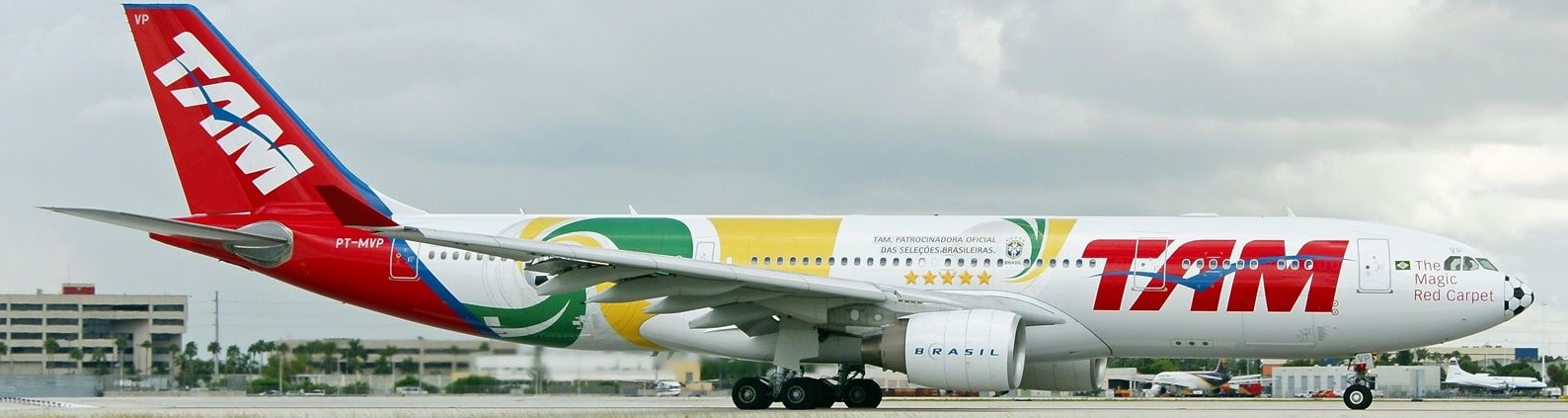
TAM Airlines was a national flag carrier of Brazil, headquartered in Sao Paulo, Brazil. TAM Airlines was the largest airline in Brazil and Latin America. It has its base in Sao Paulo and used to service destinations in the United States of America, South America, and Europe. It used to operate to destinations like Barcelona, Paris, London, Lisbon, Madrid, Miami, New York, and much more. In August 2010, it merged with LAN airline to form the LATAM Airlines group.
Have a travel plan, choose My Flight Fares, and book your cheap TAM Airlines ticket with us right away!
No, TAM Airlines no longer exists as a separate brand; it merged with LAN Airlines in 2012 to form LATAM Airlines Group, and all flights now operate under the LATAM brand.
TAM Airlines, before merging into LATAM, was Brazil’s largest airline and was known for its extensive domestic network, reliable service, and modern fleet, particularly its strong presence on domestic Brazilian routes and popular long-haul flights to the U.S. and Europe.
TAM Airlines was generally considered a reliable full-service airline in Latin America, known for decent onboard service, a strong domestic Brazilian network, and relatively modern aircraft, but it also received mixed feedback on things like delays and customer service consistency; since 2012 it no longer exists as a separate brand because it merged into LATAM Airlines, which continues to operate with similar standards.
The most serious TAM crash was TAM Airlines Flight 3054 (2007) in São Paulo, caused by a combination of factors including a wet runway, improper thrust lever positioning on landing, and pilot handling errors, which led the Airbus A320 to fail to stop and overrun the runway, crashing into a building and fuel station, resulting in a major tragedy that also prompted significant aviation safety improvements in Brazil.
Yes, after the TAM Flight 3054 crash in 2007, the airline faced multiple lawsuits from victims’ families seeking compensation for wrongful death and damages. Brazilian authorities also conducted investigations, and civil and criminal proceedings targeted both the airline and regulatory bodies for safety lapses and operational errors, though outcomes varied case by case.
TAM Airlines was founded in 1961, so it would have been 65 years old in 2026, though it no longer operates under the TAM name because it merged with LAN Airlines in 2012 to form LATAM Airlines Group.
In the context of the airline, TAM originally stood for “Transportes Aéreos Marília”, the airline’s name when it was founded in Brazil. In a general business context unrelated to the airline, TAM often refers to Total Addressable Market, which is the overall revenue opportunity available for a product or service.
Before merging into LATAM, TAM Airlines flew to numerous domestic destinations across Brazil and several international routes, including the United States (Miami, New York), Europe (Madrid, Frankfurt, London), South America (Buenos Aires, Santiago, Lima), and select Caribbean destinations, focusing on both domestic connectivity and key long-haul international markets.
No, TAM Airlines is no longer in operation under its original name; it merged with LAN Airlines in 2012 to form LATAM Airlines Group, and all flights now operate under the LATAM brand.
No, there were no survivors of TAM Airlines Flight 3054 (2007)—all 187 people on board and 12 people on the ground were killed in the crash at São Paulo’s Congonhas Airport.
TAM Airlines Flight 402 crashed on October 31, 1996, near São Paulo, Brazil, due to a faulty thrust reverser on one of the engines, which deployed in flight shortly after takeoff. This caused loss of control of the McDonnell Douglas DC-10, leading to the aircraft stalling and crashing, killing all 99 people on board.
There is no airport called “TAM Airport”; TAM Airlines was just a Brazilian airline, and it operated mainly out of airports like São Paulo–Congonhas Airport (CGH) and São Paulo–Guarulhos International Airport (GRU), along with other major airports across Brazil and internationally before merging into LATAM Airlines.
TAM Airlines merged with LAN Airlines in 2012 to form the LATAM Airlines Group, creating the largest airline group in Latin America, with operations across Brazil, Chile, and many international destinations.
In the airline context, TAM originally stood for “Transportes Aéreos Marília”, which was the small Brazilian regional airline that later grew into TAM Airlines before merging into LATAM.
Before merging into LATAM, TAM Airlines operated a fleet primarily composed of Airbus and McDonnell Douglas aircraft, including Airbus A320 family planes for domestic and regional routes, Airbus A330s for long-haul international flights, and some older McDonnell Douglas DC-9s and DC-10s in earlier decades, gradually modernizing its fleet toward an all-Airbus lineup by the 2010s.
In a business context, TAM stands for Total Addressable Market, which is the maximum total revenue a company could earn if it captured 100% of demand for its product or service in a specific market, and it’s used to measure growth potential and market size.
A “TAM employee” usually refers to someone who works for TAM Airlines (now LATAM Airlines), meaning they are part of the airline’s staff such as pilots, cabin crew, ground staff, or corporate employees, though in modern usage it’s more accurate to say they are LATAM employees since TAM no longer operates as a separate company.
TAM (Total Addressable Market) is important for startups because it shows the maximum revenue opportunity for their product, helping founders and investors judge whether an idea is worth pursuing, how big it can grow, and how much funding it might justify; a large TAM often signals strong long-term potential, while a small TAM can limit scalability and investor interest.
TAM Airlines merged with LAN Airlines in 2012, and the combined company was later rebranded as LATAM Airlines Group, which is now the main airline brand operating across Latin America.
Before merging into LATAM, TAM Airlines offered Economy Class and Business Class (Executive Class), with Economy focused on standard seating and services, while Business Class provided more spacious seats, premium meals, lounge access, and priority services on both domestic and international flights.
TAM Airlines Flight 402 crashed on 31 October 1996 shortly after takeoff from São Paulo–Congonhas Airport, when the aircraft suffered an uncommanded deployment of a thrust reverser on one engine, causing a sudden loss of control; the plane rolled, stalled, and crashed into a residential area about 25 seconds after liftoff, killing all 95 people onboard and 4 people on the ground.
No, TAM Airlines is no longer operating as a separate airline; it merged with LAN Airlines in 2012 to form LATAM Airlines Group, and all flights now operate under the LATAM brand.
Yes, working as a TAM (Technical Account Manager) is generally considered a good career, especially in tech and SaaS companies, because it combines technical expertise with client-facing work, often offers strong pay, career growth into solutions architecture or sales engineering, and high demand in the job market, though it can also be demanding due to customer responsibility and on-call support expectations.
In business terms, TAM (Total Addressable Market) is neither revenue nor profit—it’s a market size metric that estimates the maximum potential revenue a company could generate if it captured 100% of its target market. Actual revenue or profit depends on the company’s market share, costs, and operations.
In business metrics, TAM (Total Addressable Market) is usually bigger than SAM (Serviceable Available Market), because TAM represents the entire potential market for a product or service, while SAM is the portion of that market that a company can realistically serve based on its product, geography, or capacity.
The main advantages of calculating TAM (Total Addressable Market) are that it helps startups and businesses estimate market potential, prioritize opportunities, attract investors, plan growth strategies, and set realistic revenue targets; it also clarifies the scale of the opportunity before investing resources, guiding product development and marketing decisions.
TAM Airlines was a Brazilian airline (originally “Transportes Aéreos Marília”) that operated as a major carrier in South America, but it no longer exists as a separate airline because it merged with LAN Airlines in 2012 to form LATAM Airlines Group, which now operates all former TAM flights under the LATAM brand.
TAM Airlines Flight 3054 crashed on July 17, 2007 in São Paulo mainly due to a combination of pilot error and aircraft configuration issues, where one thrust lever was left in the “climb” position while the other was in “idle” during landing on a wet runway, causing the Airbus A320 to lose braking effectiveness, overrun the runway at Congonhas Airport, and crash into buildings; the accident led to major changes in runway safety and airline procedures in Brazil.
Yes, TAM Airlines is now part of LATAM Airlines Group; TAM merged with LAN Airlines in 2012, and since then all flights operate under the LATAM brand, so TAM no longer exists as a separate airline.
Before merging into LATAM, TAM Airlines offered two main classes: Economy Class, with standard seating and service, and Business Class (Executive Class), with larger or reclining seats, premium meals, lounge access, priority check-in, and extra baggage allowance. There was no separate Premium Economy cabin.
In the airline context, TAM stands for “Transportes Aéreos Marília,” which was the original name of the Brazilian airline when it started in 1961 before it grew into TAM Airlines and later merged into LATAM.
If you mean a TAM (Technical Account Manager) in tech companies, the benefits include a high-paying, in-demand role that combines technical skills with client management, strong career growth into solutions architecture or engineering leadership, and the chance to work closely with enterprise clients and cutting-edge products, though it can also involve high responsibility and occasional on-call support.
No, TAM Airlines is no longer operating under that name; it merged with LAN Airlines in 2012 to form LATAM Airlines Group, and all flights now operate under the LATAM brand.
Flight cancellations due to a cyclone depend on its exact path, intensity, and airport location, so airlines only cancel or delay flights when conditions become unsafe; if Cyclone Tam is expected to affect your route or departure airport, airlines may delay, reschedule, or cancel flights for safety, but there’s no automatic cancellation for all flights unless the storm directly impacts operations. It’s best to check your airline’s app or website and monitor official weather updates from the aviation authority or airport.
“TAM” can have different full forms depending on the context: in airlines it stands for Transportes Aéreos Marília (the original name of TAM Airlines in Brazil), while in business it commonly means Total Addressable Market, which refers to the maximum revenue opportunity for a product or service.
Yes, TAM Airlines is now part of LATAM Airlines Group; it merged with LAN Airlines in 2012, and since then all flights operate under the LATAM brand, so TAM no longer exists as a separate airline.
No, TAM Airlines is no longer around as a separate airline; it merged with LAN Airlines in 2012 to form LATAM Airlines Group, and all former TAM flights now operate under the LATAM brand.
LATAM Airlines retired its Airbus A350 fleet mainly due to financial restructuring after the COVID-19 pandemic, high operating costs, and a shift toward fleet simplification with more fuel-efficient, smaller aircraft like the Boeing 787 and Airbus A321XLR that better match reduced demand and long-term network planning, allowing the airline to cut costs and optimize operations.
There were two major TAM crashes, and the causes were different: Flight 3054 (2007) crashed in São Paulo mainly due to pilot configuration errors during landing on a wet runway plus runway safety issues, causing the aircraft to overrun and hit buildings, while Flight 402 (1996) crashed shortly after takeoff because of a sudden thrust reverser failure that led to loss of control; both accidents were investigated extensively and led to major aviation safety changes in Brazil.
No, TAM Airlines is no longer flying under its original name; it merged with LAN Airlines in 2012 to form LATAM Airlines Group, and all flights now operate under the LATAM brand.
There is no airport called “TAM Airport.” TAM Airlines was a Brazilian airline, and it operated mainly from airports like São Paulo–Congonhas Airport (CGH) and São Paulo–Guarulhos International Airport (GRU), along with other domestic and international airports, before merging into LATAM Airlines.
No, TAM Airlines is no longer in operation as a separate airline; it merged with LAN Airlines in 2012 to form LATAM Airlines Group, and all flights now operate under the LATAM brand.
The most notable TAM crash, TAM Airlines Flight 3054 (2007), occurred at São Paulo–Congonhas Airport (CGH) in Brazil when the Airbus A320 overran the wet runway and crashed into nearby buildings.
TAM Airlines was known for being Brazil’s largest airline before its merger into LATAM, with a strong domestic network, extensive South American connectivity, and international flights to the U.S. and Europe, as well as a reputation for operating a large, modern Airbus-based fleet and playing a major role in shaping Latin American aviation before becoming part of LATAM Airlines Group in 2012.
Yes, after major accidents like TAM Flight 3054 (2007), the airline faced multiple lawsuits from victims’ families and civil claims for compensation, along with legal investigations in Brazil into safety procedures and airport infrastructure issues, though TAM itself later became part of LATAM Airlines Group in 2012, and many legal processes continued under the merged company or involved settlements over time.
TAM Airlines was founded in 1961, so it would have been 65 years old in 2026, though it no longer operates under that name because it merged with LAN Airlines in 2012 to form LATAM Airlines Group.
The most well-known TAM crash, TAM Airlines Flight 3054 (2007), happened at São Paulo–Congonhas Airport (CGH) in Brazil, when the aircraft overran the wet runway and crashed into nearby buildings after landing.
In the airline context, TAM stands for “Transportes Aéreos Marília,” which was the original name of the Brazilian airline that later became TAM Airlines before merging into LATAM.
TAM Airlines was based in São Paulo, Brazil, operating mainly out of São Paulo–Congonhas Airport (CGH) and São Paulo–Guarulhos International Airport (GRU) before it merged with LAN Airlines in 2012 to form LATAM Airlines Group.
TAM Airlines was a Brazilian airline, based in Brazil (with its main operations centered in São Paulo) before it merged into LATAM Airlines Group in 2012.
No, TAM Airlines is no longer flying as a separate airline; it merged with LAN Airlines in 2012 to form LATAM Airlines Group, and all flights now operate under the LATAM brand.
No, TAM Airlines is no longer around as an independent airline; it merged with LAN Airlines in 2012 to form LATAM Airlines Group, and all its former routes now operate under the LATAM brand.
Yes, TAM and LATAM are essentially the same airline today in the sense that TAM merged with LAN Airlines in 2012 to form LATAM Airlines Group, so TAM no longer operates separately and its flights now run under the LATAM brand.
In customer service, TAM usually stands for Technical Account Manager, a role where the person acts as a bridge between a company and its customers by providing technical support, helping solve complex issues, and ensuring the customer gets the most value from the product or service.
TAM Airlines was founded in 1961 in Brazil, originally starting as a small regional air taxi service before growing into one of the country’s largest airlines and later merging into LATAM Airlines Group in 2012.
Flight attendants sit on their hands during landing (the “bracing position”) to keep their body stable, reduce movement, and protect themselves in case of a sudden impact or emergency, while also helping them stay alert and ready to act quickly if evacuation is needed.
Many airlines have been discontinued over time, but a well-known recent example is Swoop, a Canadian ultra-low-cost airline that stopped operating in 2023 and was merged into WestJet; others include TAM Airlines, which merged into LATAM in 2012, and Jet Airways in India, which suspended operations in 2019.
One of the saddest plane crashes in aviation history is the Tenerife airport disaster (1977), when two Boeing 747s collided on the runway, killing 583 people, making it the deadliest accident involving a single location and runway collision. Other tragic crashes include Japan Airlines Flight 123 (1985) with 520 fatalities, and TAM Airlines Flight 3054 (2007) in Brazil, which killed 199 people, highlighting both scale and human loss.
TAM Airlines was merged into LATAM Airlines Group in 2012, so it no longer exists as a separate airline brand; its planes, routes, staff, and operations were integrated into LATAM, which now continues all former TAM services under one unified name.