





Your calls answered by leading travel experts in under 5 seconds.

Unpublished offers and great discounts when you book on-call.

Hand-crafted travel itinerary that meet all your travel preferences.

Round-the-clock customer service to get all your doubts clarified.
When you plan a vacation to a destination and want to book your Transavia Airlines flight tickets, then reach out to My Flight Fares. Our travel experts guide you through the booking process and help you score great airfares in your desired budget. We have flight offers from our inventory of 450+ airline options. Starting from Economy, First and Business Class tickets, My Flight Fares travel experts can give you various other services on your Transavia Airlines bookings like extra luggage, priority check-in, in-flight meals, and more.
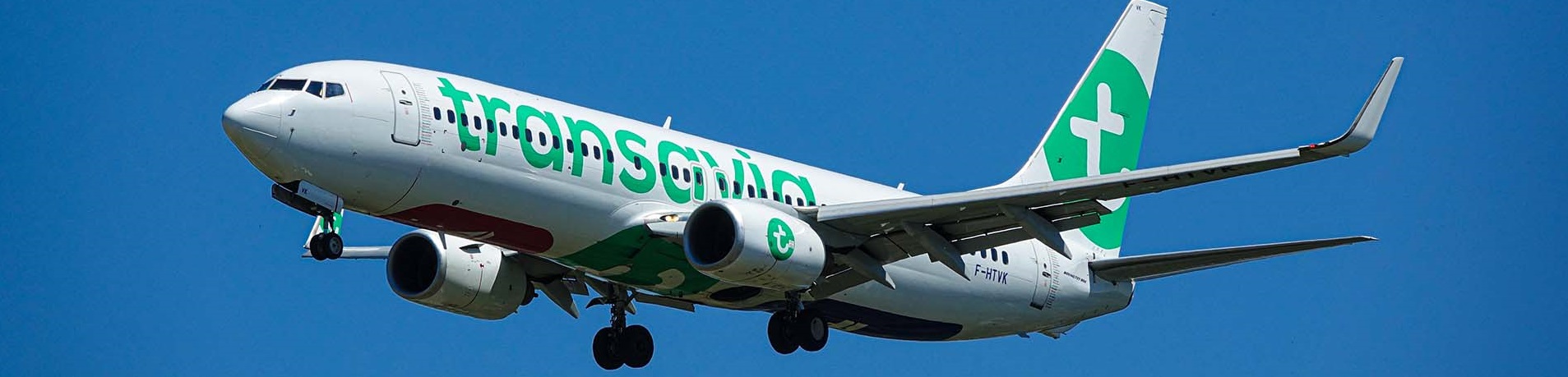
Transavia Airlines or Transavia is a low-cost carrier of Dutch found in 1966. It is a subsidiary of KLM and has a current fleet size of 42 in-service aircraft that fly to 88 destinations worldwide. The airline has its headquarters in the Netherlands and the main operating bases as Amsterdam Airport Schiphol, Eindhoven Airport, and Rotterdam The Hague Airport.
For Transavia, online check-in usually opens 30 hours before departure and closes about 4 hours before the flight, while airport check-in counters typically close around 40–60 minutes before departure depending on the airport and destination.
On Transavia, you generally can’t book a cat directly online with your ticket—you first book your flight, then you request pet travel approval separately through their customer service or “special assistance” channel, because only a limited number of cats are allowed in the cabin per flight and approval depends on availability, carrier rules, and destination restrictions.
To change your flight date, go to the airline’s website or app, open the “Manage Booking” or “My Trips” section, enter your booking reference and last name, then select the option to change dates; be aware that change fees and fare differences may apply depending on your ticket type and airline policy.
Yes, Transavia is a budget airline offering low fares with a no-frills model, where extras like checked baggage, seat selection, and meals are usually paid separately.
Yes, Transavia is generally considered a trusted airline; it is part of the Air France–KLM Group, follows European safety regulations, and has a solid operational record, though as a low-cost carrier, amenities are basic compared to full-service airlines.
Yes, Transavia is part of the Air France–KLM Group, with KLM holding a majority stake in its Dutch operations.
Most tickets on Transavia are non-refundable, meaning you usually won’t get your money back if you cancel, but you may be able to get partial refunds (like taxes) or change your flight for a fee depending on your fare type and conditions.
Yes, Transavia operates an all-Airbus fleet, primarily using Airbus A320-200 and A321-200 aircraft for short- and medium-haul flights across Europe and nearby regions.
There are a few common reasons Transavia might not let you check in: you may be trying outside the allowed check-in window (usually 30 hours to 4 hours before departure), your booking might be incomplete or require payment for extras like baggage, your travel documents may be missing or invalid, or there could be an issue flagged by security or the airline.
Transavia is quite strict with carry-on rules: typically, passengers are allowed one small cabin bag (max 55×40×25cm) plus a personal item, and weight limits are enforced; bags exceeding size or weight limits usually must be checked in for a fee.
KLM is a full-service airline offering more amenities like free meals, checked baggage, loyalty program benefits, and a wider route network, while Transavia is a budget carrier with lower fares, a no-frills model, and extra charges for baggage, meals, and seat selection.
Yes, Transavia is considered safe and operates under strict European aviation safety standards (EASA rules) as part of the Air France–KLM Group, with regular maintenance and oversight similar to other major European airlines.
No, Transavia does not offer premium economy; it is a low-cost carrier with a single-class cabin where passengers can pay extra for services like seat selection, baggage, and priority options, but there are no separate cabin classes.
Transavia is a mid-sized European airline—it’s smaller than full-service carriers like KLM but operates a large fleet of Airbus aircraft across many European and Mediterranean destinations, making it significant in the low-cost segment.
Transavia generally has an average punctuality record—like many low-cost carriers, it can experience delays due to weather, airport congestion, or operational issues, but it is not unusually delayed compared to similar European budget airlines.
No, Transavia does not allow ticket resale to another person, since tickets are non-transferable for security reasons, but you may be able to change your flight date or request a partial refund of taxes depending on your fare conditions.
Transavia is considered a reliable budget airline—good for travelers seeking low fares and short- to medium-haul flights within Europe, but it offers minimal onboard amenities, charges extra for baggage and meals, and provides a basic service compared to full-service carriers like KLM.
Transavia operates an all-Airbus fleet, mainly using the Airbus A320-200 and A321-200 for short- and medium-haul flights across Europe and nearby regions.
Yes, Transavia does fly to the UK, operating routes mainly between the Netherlands or France and airports like London and other regional UK destinations, depending on seasonal schedules and demand.
Yes, Transavia is fairly strict about baggage rules—cabin bag size and weight limits are enforced, and oversized or extra bags usually incur fees or must be checked in, which is common for low-cost airlines.
At Transavia, bag drop usually closes about 40 to 60 minutes before departure depending on the airport and destination, so you need to arrive early enough to complete check-in, security, and baggage drop before that cutoff.
At Transavia, a standard carry-on allowance is usually up to about 10 kg for the cabin bag, plus a small personal item, though exact limits can vary slightly depending on your fare type and route.
It depends on what you value—Transavia is often seen as a bit more relaxed and consistent in service, while Ryanair usually has cheaper fares and a much larger route network but stricter rules and more add-on fees, so Transavia can feel “better” for comfort, while Ryanair often wins on price.
Yes, Transavia offers extra legroom seats for an additional fee, usually located near emergency exits or the front of the cabin, which provide more space than standard economy seats but still within its single low-cost cabin setup.
Yes, Transavia is generally considered a trusted airline because it operates under strict European aviation safety regulations as part of the Air France–KLM Group, with a solid safety record, though it offers basic, low-cost service rather than premium comfort.
Transavia uses only Airbus aircraft, primarily the A320-200 and A321-200, and does not operate Boeing planes.
Yes, Transavia has a good safety record and operates under strict European aviation standards (EASA rules) as part of the Air France–KLM Group, with no major safety issues reported in its modern operations.
You might not be able to check in with Transavia if it’s outside the allowed check-in window (usually 30 hours to 4 hours before departure), your booking is incomplete or unpaid, required travel documents are missing, or the airline has flagged your reservation for an issue such as visa or security checks.
Transavia is generally good for budget-conscious travelers, offering reliable, safe flights across Europe with low fares, though comfort and amenities are minimal, and extras like baggage, meals, and seat selection cost extra, so it’s best for no-frills travel rather than luxury or long-haul comfort.
Like any airline, Transavia occasionally cancels flights, usually due to weather, operational issues, or air traffic control restrictions, but cancellations are relatively rare and the airline typically notifies passengers in advance with options to rebook or receive compensation according to EU regulations.
Yes, Transavia is quite strict with hand luggage rules—cabin bags must fit the allowed dimensions and weight limits, and if your bag is too large or heavy, it will usually be moved to the hold with an extra fee.
It depends on your priorities: Ryanair-cost airline"] usually offers the lowest fares and a huge route network but has stricter baggage rules and more add-on fees, while Transavia
Transavia is from the Netherlands, though it also has a French division operating under the same brand within the Air France–KLM Group.
Yes, Transavia is a cheap (low-cost) airline, offering low base fares on European routes while charging extra for services like checked baggage, seat selection, and onboard food.
For Transavia, the standard cabin baggage limit is usually one small bag up to 10kg plus a personal item, while checked baggage allowances vary by fare type and must be purchased separately, typically ranging from 15kg to 30kg per bag.
For Transavia, there usually isn’t a separate “carry-on fee” if your fare includes it, but in many basic fares you must pay extra (about €12.99–€27 online) to add a larger cabin bag (55×40×25 cm), and if you don’t pre-book it and show up at the airport, it can cost around €60–€70 to have it gate-checked into the hold instead.
Yes, Transavia is generally considered reliable, operating under strict European safety regulations as part of the Air France–KLM Group, with a solid safety record and typical low-cost punctuality levels, meaning occasional delays but overall dependable service.
At Transavia, if your checked bag is overweight you usually pay a fee based on extra kilos—typically around €15 per extra kg at the airport, and this is added on top of your booked baggage allowance, which is why overweight luggage can become quite expensive if not pre-booked.
Transavia is owned by the Air France–KLM Group, with its Dutch operations overseen by KLM as part of the group’s low-cost strategy.
Yes, Transavia is a low-budget carrier, offering cheap base fares with a no-frills model where extras like checked baggage, seat selection, and meals are paid separately.
On Transavia, a standard cabin bag is allowed up to 10kg, plus one small personal item like a handbag or laptop bag, with strict enforcement of size and weight limits.
Yes, Transavia is part of the Air France–KLM Group","European airline group"], with KLM holding a majority stake and overseeing its Dutch operations.
No, Transavia and Air France are different airlines, but both are owned by the same parent group, the Air France–KLM Group—Air France is a full-service airline, while Transavia is its low-cost carrier.
Transavia is fairly strict with hold luggage: your checked bag must stay within the pre-booked weight (usually 15–30 kg), and anything over is charged per extra kilo (often around €10–€15 per kg at the airport), with no flexibility at the counter, so it’s best to pre-book the correct allowance in advance.
Transavia is based in the Netherlands and is owned by the Air France–KLM Group, with its Dutch operations mainly overseen by KLM.
Transavia is a budget (low-cost) airline, offering affordable fares on short- and medium-haul flights across Europe, with a no-frills model where extras like baggage, seat selection, and meals are paid separately.
Usually, no full refund is given by Transavia because most tickets are non-refundable, but you may still get a partial refund of taxes or fees in some cases, and you can sometimes change your flight for a fee or receive a travel credit depending on your fare type.
At Transavia, checked baggage prices vary by route and timing but typically start around €10–€30 when added online for a 15–20 kg bag, with higher fees if added later or at the airport, and extra charges apply for overweight or additional bags.
Transavia is generally considered a good budget airline for short European flights, offering low fares and decent reliability under the Air France–KLM Group, but with basic service and extra charges for baggage, seat selection, and onboard extras.
Transavia is not directly owned by Air France alone; instead, it is part of the Air France–KLM Group, with its Dutch operations mainly controlled by KLM.
Yes, Transavia is quite strict with cabin luggage—your bag must meet the size and weight limits (usually up to 10 kg for the cabin bag plus a small personal item), and if it’s oversized or overweight, it will typically be charged and moved to the hold.
Transavia is owned by the Air France–KLM Group, and specifically it is a fully owned subsidiary of KLM on the Dutch side, while it operates as part of the wider Air France–KLM Group structure.
At Transavia, a small personal item is usually free, but a larger cabin bag (about 55×40×25 cm up to ~10 kg) typically costs extra—around €10–€30 if added in advance online, and significantly more (about €60–€70) if purchased at the airport or gate.
Yes, Transavia is considered safe and reliable, operating under strict European aviation regulations as part of the Air France–KLM Group, with a solid safety record and generally consistent on-time performance for a budget airline.
No, KLM and Transavia are different airlines: KLM is a full-service carrier with more amenities, while Transavia is its low-cost subsidiary focused on cheaper, no-frills European flights, but both belong to the Air France–KLM Group.
Yes, Transavia is quite strict with baggage weight limits—your cabin bag is usually limited to about 10 kg and checked baggage to your purchased allowance (often 15–30 kg), and overweight bags are charged extra per kilo with little flexibility at the airport.
Yes, Transavia allows one small personal item (like a handbag or laptop bag) for free, but a larger cabin bag (up to ~10kg) usually requires an extra fee depending on your fare type.
No, on Transavia France food and drinks are not free; passengers can purchase snacks, meals, and beverages onboard, as it operates a no-frills, low-cost model.
On Transavia, a small personal item is free, but a larger cabin bag (up to about 10kg and 55×40×25cm) usually costs around €10–€30 if added online in advance, and about €60–€70 if added at the airport or gate.
Transavia is part of the Air France–KLM Group, and its Dutch operations are managed under KLM, but it is a separate low-cost airline brand, not the same as KLM itself.
For Transavia, denied boarding compensation follows EU Regulation EC 261/2004 and depends on flight distance: typically €250 (short-haul up to 1,500 km), €400 (1,500–3,500 km), and €600 (over 3,500 km), plus you’re also entitled to rerouting or a refund and care (meals, hotel if needed) if it’s the airline’s fault like overbooking.
Yes, Transavia is quite strict on its baggage policy—carry-on size and weight limits are enforced, checked bags must match the purchased allowance, and anything overweight or oversized usually triggers extra fees, so it’s best to stick closely to the rules to avoid airport charges.
At Transavia, extra checked baggage typically costs around €10–€30 when pre-booked online (depending on route and weight), but prices are higher if added later, and overweight bags are charged about €10–€15 per extra kg at the airport, which can quickly become expensive.
Yes, Transavia is part of the Air France–KLM Group, with its Dutch operations closely linked to KLM, but it remains a separate low-cost airline brand rather than being KLM itself.
Yes, Transavia operates an all-Airbus fleet, mainly using Airbus A320-200 and A321-200 aircraft for short- and medium-haul flights across Europe.
At Transavia, checked (hold) baggage fees vary by route and weight: a standard 15–20kg bag typically costs around €10–€30 if booked online in advance, and fees are higher if purchased at the airport; overweight baggage is charged extra, usually €10–€15 per additional kilo.
Transavia is based in the Netherlands, and it is owned by the Air France–KLM Group, with its Dutch operations primarily managed under KLM.
Yes, Transavia is generally considered both safe and reliable, operating under strict European aviation regulations as part of the Air France–KLM Group, with a solid safety record, though it offers basic, no-frills service rather than full-service amenities.
On Transavia, a small personal item is free, but a larger cabin bag (up to about 10kg) usually costs around €10–€30 if added online in advance, and about €60–€70 if purchased at the airport or gate.
Yes, you can bring your own food on a Transavia flight, but it must comply with airport security rules—solid snacks are fine, while liquids, gels, or spreads must follow the usual carry-on limits (usually 100ml per container in a clear bag).
Like many airlines, Transavia may occasionally overbook flights to maximize occupancy, but it must comply with EU rules (EC 261/2004) for compensation, rerouting, or refunds if passengers are denied boarding due to overbooking.
Yes, Transavia is quite strict with hand luggage: size and weight limits are enforced at boarding, a small personal item is usually free, but larger cabin bags often require a paid option, and anything oversized or overweight is typically moved to the hold with extra fees.
At Transavia, overweight checked baggage is usually charged around €10–€15 per extra kilogram at the airport, on top of your booked baggage allowance, and it’s generally cheaper to pre-purchase the correct weight online than to pay at the counter.
Transavia is currently upgrading its fleet with new-generation Airbus aircraft, mainly the Airbus A320neo and Airbus A321neo, which are replacing older Boeing 737s; these newer planes are more fuel-efficient, quieter, and part of a full fleet renewal plan expected to continue until around 2031.
On Transavia, you can bring one small personal item for free (about 40×30×20 cm, up to ~10 kg total cabin weight), and you can also add a larger cabin bag (55×40×25 cm, up to ~10 kg total cabin weight) for an extra fee; for checked luggage, you can pre-book 15–50 kg per passenger, but the exact allowance and price depend on your route and fare, and extra or overweight bags cost additional charges at the airport.
For Transavia, checked baggage typically costs about €15–€30 per 15–20 kg bag when booked online in advance, with higher prices for heavier bags (up to about €60–€100+ per bag depending on weight and route), and if you add baggage at the airport it can go up to around €60–€180 per bag, while excess weight is charged separately per kilo.
Transavia is quite strict with hand luggage: cabin bags must meet exact size and weight limits (a small free personal item, and a larger cabin bag only if purchased), and staff regularly check at boarding—if your bag is oversized or overweight, it will usually be moved to the hold with an extra fee.
For Transavia, the basic luggage allowance includes one small personal item (like a handbag or laptop bag) that fits under the seat, usually around 40×30×20cm and up to ~10kg total; larger cabin bags or checked baggage must be purchased separately.
On Transavia, the 10 kg cabin bag (paid option) is usually allowed up to 55 × 40 × 25 cm, plus a small personal item, and both together must not exceed the airline’s weight limit for cabin baggage, which is strictly checked at boarding.
Yes, on Transavia you can usually take a small personal item (like a ladies handbag) for free, and if your ticket or add-on allows it, you can also bring a separate cabin bag (up to about 55×40×25 cm), but if you only have the basic fare, you’re typically limited to just the small personal item unless you pay extra for the larger hand luggage.