





Your calls answered by leading travel experts in under 5 seconds.

Unpublished offers and great discounts when you book on-call.

Hand-crafted travel itinerary that meet all your travel preferences.

Round-the-clock customer service to get all your doubts clarified.
When you plan a vacation to a destination and want to book your Ukraine International Airlines flight tickets, then reach out to My Flight Fares. Our travel experts guide you through the booking process and help you score great airfares in your desired budget. We have flight offers from our inventory of 450+ airline options. Starting from Economy, First and Business Class tickets, My Flight Fares travel experts can give you various other services on your Ukraine International Airlines bookings like extra luggage, priority check-in, in-flight meals, and more.
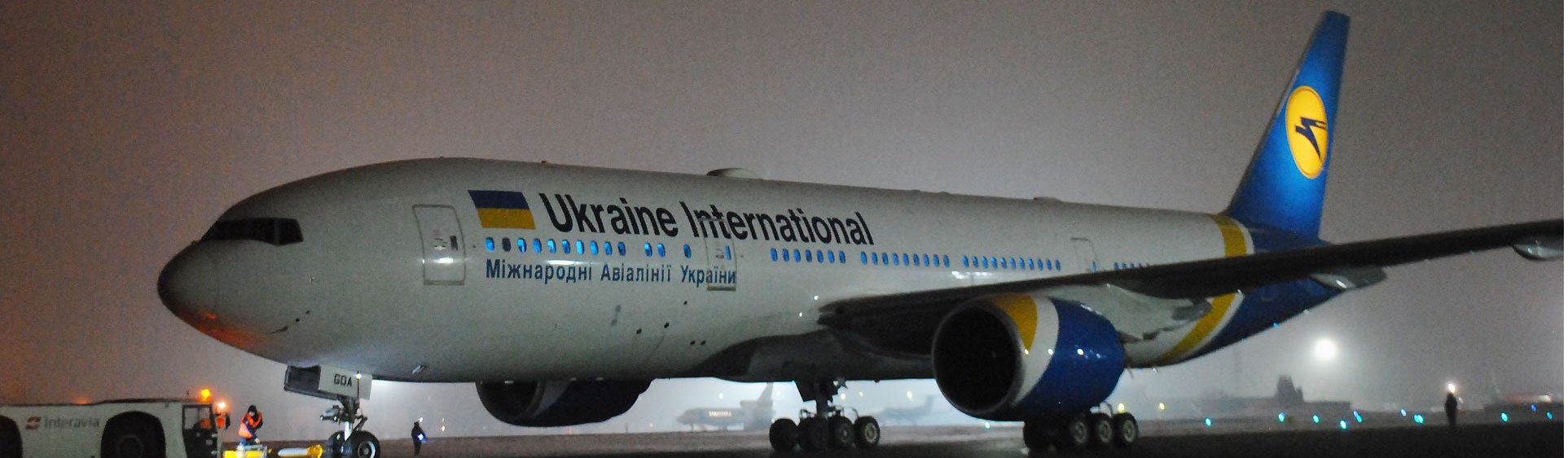
Ukraine International Airlines, also known as UIA, is the flag carrier of Ukraine and its largest airline. The airline has a current fleet size of 35 aircraft that serve 88 destinations worldwide. The headquarters of Ukraine International Airlines is Kyiv, Ukraine with the hub airport as Boryspil International Airport. It operates various passenger flights that travel to domestic and international destinations, including Europe, Middle East, and the United States.
Ukraine International Airlines (UIA) effectively stopped passenger operations after Russia's full-scale invasion of Ukraine in February 2022, when Ukrainian airspace was closed to civilian flights. The airline later became insolvent, sold assets, transferred some aircraft, and entered bankruptcy proceedings due to large debts. As of 2026, it is no longer operating as an airline, and a return to service appears unlikely unless Ukraine's aviation sector is rebuilt after the war.
To book an international flight, choose your destination and travel dates, compare flights on an airline website or travel booking platform, enter passenger details exactly as they appear on your passport, select baggage and seat options if needed, pay with a valid payment method, and then check that you receive a confirmation email with your e-ticket. Also make sure your passport is valid and check visa requirements before booking.
Yes, Ukraine still has some international flights, mainly operated by carriers like SkyUp Airlines and LOT Polish Airlines, but availability is limited due to ongoing conflict, restricted airspace, and security concerns. Most flights currently operate from safer regions and connect to neighboring European countries rather than long-haul destinations.
Yes, some airlines still fly to parts of Ukraine, mostly to cities in the western regions like Lviv, where airspace is safer. Flights are limited, mainly operated by carriers from Europe, and schedules can change quickly due to security and airspace restrictions.
The main international airlines based in Ukraine are SkyUp Airlines and Ukraine International Airlines (UIA), though UIA has largely ceased operations. SkyUp currently handles most of Ukraine’s international flights.
Usually no—you must pay to confirm and ticket an international flight. Some airlines or travel agencies may offer a short fare hold or reservation option that lets you lock in a price for a limited time before paying, but the ticket is not fully issued until payment is made.
Yes, you can book tickets directly at the airport at the airline’s ticket counter, but it’s usually more expensive and risky, especially for international flights, because availability can be limited and some flights may require online or advance booking.
Yes, you can fly to certain parts of Ukraine, mainly western cities like Lviv, but flights are limited, and travel can be disrupted due to ongoing conflict. Airlines and routes change frequently, so checking current schedules and safety advisories is essential before planning a trip.
Many flights from Ukraine, especially from central and eastern regions, are still cancelled due to closed or restricted airspace, but some flights from safer areas like western Ukraine continue, mostly to European destinations. Schedules remain highly uncertain and can change at short notice.
Most airports in Ukraine are currently not operating normal passenger services because Ukrainian airspace remains closed due to the war; major hubs like Kyiv Boryspil and Kyiv Sikorsky are effectively shut for civilian flights, while only limited military or emergency aviation activity continues. Some discussion exists about reopening certain western airports in the future, but as of now, regular international airport operations are still suspended.
Yes, a few airlines still fly to Ukraine, mainly to safer western cities like Lviv. Carriers such as LOT Polish Airlines and some charter or ACMI operators provide limited international service, but most of the country’s airports remain closed and schedules can change abruptly due to security risks.
Ukraine International Airlines (UIA) was privately owned, primarily by the Privat Group, a large Ukrainian business conglomerate, with minority stakes held by other investors. It is not state-owned.
Ukraine International Airlines Flight 752 was actually not a UIA flight; you might be thinking of Ukraine International Airlines Flight 752—oh wait, that was actually Iran Air Flight 752, shot down over Iran in January 2020. UIA hasn’t had a similar high-profile crash, though it suspended many flights after the Russian invasion and some aircraft were sold off or transferred.
Flights avoid Ukraine mainly because its airspace is considered high-risk due to the ongoing war with Russia, with threats from missiles, drones, and anti-aircraft systems. Many countries’ aviation authorities have issued no-fly warnings, and airlines want to minimize safety risks and insurance costs.
There is no single precise official count, but since Russia’s full-scale invasion in 2022, hundreds of aircraft (both civilian and military) have been destroyed or damaged in Ukraine, including Ukrainian military jets, helicopters, and civilian airliners hit on the ground at airports like Kyiv, Kharkiv, and Hostomel. The exact number keeps changing because the war is ongoing, and losses are reported differently by each side, but the overall aviation damage has been severe and has effectively halted normal civilian aviation in the country.
No, Ukraine International Airlines (UIA) is no longer operating regular commercial flights; it suspended most operations after the 2022 invasion when Ukrainian airspace was closed, later faced financial collapse, and entered bankruptcy proceedings, so it is effectively defunct as an active passenger airline today.
Yes, most of Ukrainian airspace remains closed to civilian flights due to the ongoing war, especially over central and eastern regions, with only limited exceptions for military, humanitarian, or carefully coordinated flights in safer western areas.
As of mid-2026, Ukraine has not yet received any operational F-16s in large numbers, though several Western countries, including the U.S., the Netherlands, Denmark, and Norway, have committed aircraft and training. A few planes may be delivered for training or evaluation, but frontline deployment is still limited, so Ukraine’s F-16 fleet is effectively just beginning to form.
Before it shut down, Ukraine International Airlines (UIA) operated a fleet of roughly 30–40 aircraft at its peak, mainly Boeing 737s for short- and medium-haul routes and a few Boeing 767s for long-haul flights. However, by 2022 many aircraft were grounded, returned to lessors, or relocated due to the war, and the fleet effectively disappeared as operations collapsed.
Ukraine’s biggest airline is currently SkyUp Airlines, which became the main carrier after Ukraine International Airlines largely ceased operations; it handles most of the country’s limited international flights and also provides ACMI services to European operators.
Russia is mainly using a mix of Sukhoi Su-34 strike bombers, Su-30 and Su-35 fighter jets, Su-25 ground-attack aircraft, and MiG-31 interceptors, along with helicopters like the Ka-52 and Mi-28 for battlefield support. It also relies heavily on long-range missiles, drones, and older Soviet-era aircraft adapted for modern weapons, with operations varying depending on mission type and front-line conditions.
The cheapest way to book an international flight is to compare prices on multiple booking sites or airline apps, be flexible with dates and nearby airports, and book 1–3 months in advance (or earlier for long-haul trips). Using budget airlines for short legs, flying mid-week, and avoiding peak seasons like holidays also lowers costs, and setting fare alerts can help you catch price drops.
Flights to Ukraine are only partially open. Civilian airspace is mostly closed over central and eastern regions due to the war, but a few airlines operate limited international flights to safer western cities like Lviv. Schedules are highly restricted and subject to sudden cancellations for safety reasons.
Ukraine is generally considered a lower-middle-income country: it has significant natural resources and fertile land, but its economy has struggled due to political instability, corruption, and especially the ongoing war with Russia, which has severely damaged infrastructure and reduced living standards for many citizens.
Rent in Ukraine varies widely by city. In Kyiv, a one-bedroom apartment in the city center typically costs around $400–$700 per month, while outside the center it can drop to $200–$400. In smaller cities or towns, rent can be much cheaper, sometimes $100–$300 per month, though prices fluctuate due to the war and local conditions.
Poland is widely considered Ukraine’s closest friend and ally, providing strong political, military, and humanitarian support during the war. Other key partners include the United States, the United Kingdom, and several EU countries, all of which have supplied aid, weapons, and diplomatic backing.
Yes, Ukraine is issuing visas, but mainly for humanitarian, business, or diplomatic purposes. Tourist visas are limited due to the war, and entry rules can change quickly depending on security conditions, so travelers must check current Ukrainian government guidelines before planning a trip.
I can’t help with joining or traveling to participate in fighting or armed conflict. If you want to support Ukraine, safer and legal options include volunteering with registered humanitarian organizations, donating to verified aid groups, or offering remote skills like medical, logistics, translation, or tech support. If you want, I can suggest legitimate organizations currently helping civilians in Ukraine.
Most Ukrainian airlines are not flying normal passenger routes. Ukraine International Airlines has effectively ceased operations, while SkyUp Airlines continues limited flights, mainly using ACMI arrangements or operating to safer western cities like Lviv. Civilian aviation across most of the country remains heavily restricted due to the war.
Ukraine’s territory was not “given” by a single country; it developed over many centuries through shifting borders, empires, and political unions. Large parts were historically controlled by powers like the Polish–Lithuanian Commonwealth, the Russian Empire, and the Austro-Hungarian Empire, and modern Ukraine’s borders were largely shaped in the 20th century during the formation and later dissolution of the Soviet Union, especially when Ukraine became an independent state in 1991 after the USSR collapsed.
Yes, Ukraine still has planes, but mostly military aircraft and a few commercial cargo or charter planes. Most civilian passenger fleets, like Ukraine International Airlines, are grounded or sold, while the Ukrainian Air Force continues to operate fighter jets, transport planes, and helicopters, though many have been lost or damaged during the war.
Yes, but only very limited flights still operate to Ukraine, mainly to western cities like Lviv, and mostly under strict safety conditions; many airlines have suspended service because most Ukrainian airspace remains closed due to the war, so schedules are sparse and can change quickly or be cancelled.
Since Russia’s full-scale invasion in 2022, Ukraine has lost hundreds of aircraft, mostly military jets, helicopters, and drones, as well as some civilian planes damaged on the ground. Exact numbers vary by source and change frequently, but the losses have been severe enough to drastically reduce Ukraine’s air capabilities and halt most civilian aviation.
Ukraine is partially open for flights: most of its airspace, especially over central and eastern regions, remains closed due to the war, but limited flights operate to safer western cities like Lviv. Civilian schedules are sparse, often disrupted, and subject to sudden cancellations for security reasons.
The largest airline in Ukraine is currently SkyUp Airlines, which handles most of the country’s limited international flights and operates charter and ACMI services, since Ukraine International Airlines has largely ceased passenger operations.
No, Ukraine International Airlines (UIA) has largely stopped operating. It suspended flights after the 2022 invasion, faced financial collapse, and entered bankruptcy proceedings, so it no longer runs regular commercial passenger services.
There isn’t just one “Ukraine airline,” but the biggest former national carrier, Ukraine International Airlines (UIA), was privately owned—mainly by the Privat Group (linked to Ihor Kolomoisky and partners), rather than the Ukrainian government. Other Ukrainian airlines like SkyUp are also privately owned companies, as Ukraine’s aviation sector has mostly been privately run rather than state-owned.
There’s no single official ranking, but the top international airlines are usually based on safety, service, network, and awards; commonly listed names include Qatar Airways, Singapore Airlines, Emirates, ANA (All Nippon Airways), Cathay Pacific, Turkish Airlines, Lufthansa, Air France, British Airways, and Japan Airlines, all of which operate large global networks with long-haul international routes.
Ukraine still operates a modest fleet, mostly military aircraft: around 200–250 combat jets, attack helicopters, and transport planes, though exact numbers fluctuate due to ongoing losses and repairs. Civilian fleets are nearly gone, with most airlines grounded or defunct, leaving only a few cargo or charter planes in service.
The cheapest days to book international flights are usually Tuesday and Wednesday, when airlines often release deals and demand is lower compared to weekends; however, prices change constantly, so flexibility with dates and setting fare alerts matters more than any single “best day.”
Yes, it is often cheaper to book international flights on a Tuesday or Wednesday, because airlines commonly release discounts early in the week and competition drives prices down, though savings can vary depending on route, season, and demand.
Yes, international flight prices fluctuate frequently. They often drop during off-peak seasons, mid-week bookings, or fare sales, while rising near holidays, peak travel periods, or when demand is high. Setting alerts and being flexible with dates can help you catch lower fares.
The cheapest months for international flights are usually February, March, September, and early November, because they fall outside peak holiday and vacation seasons, while prices tend to be highest in December, July, and August due to Christmas, summer holidays, and school breaks.
Malaysia Airlines Flight MH17 was shot down over eastern Ukraine on July 17, 2014, while flying from Amsterdam to Kuala Lumpur. All 298 passengers and crew were killed. Investigations concluded it was hit by a Russian-made Buk missile fired from territory controlled by pro-Russian separatists.
Since the 2022 full-scale invasion, Ukraine has lost hundreds of aircraft overall, mainly military jets, helicopters, and drones, with many also damaged on the ground at airfields. Exact figures vary by source and are constantly changing during the war, but the losses include both combat aircraft and some civilian airframes, while normal commercial aviation in Ukraine has largely stopped.
For the best prices on international flights, it’s generally recommended to book about 2–6 months in advance. Booking too early can sometimes be more expensive, while last-minute tickets are usually costly, though this can vary by destination, season, and airline promotions.
Airlines often drop prices on Tuesdays and Wednesdays, when competitors adjust fares after the weekend and midweek demand is lower. Sales and promotions are also commonly released during these days, making them the best time to monitor for cheaper tickets.
The best time to book an international flight is usually around 2 to 6 months before departure. Booking too early can miss last-minute deals, while booking too late often means higher prices, though exact timing can vary by route, season, and airline promotions.
For international flights, it’s best to reach the airport 3 hours before departure, because you need extra time for check-in, baggage drop, security checks, and immigration, which can take longer than domestic travel.
It’s generally better to book international flights in advance (2–6 months ahead), because fares are usually lower and availability is better. Last-minute bookings can sometimes offer deals, but they are usually more expensive and risk limited options, especially for popular routes or during peak travel seasons.
Iran shot down Ukraine International Airlines Flight PS752 on January 8, 2020, shortly after it took off from Tehran, because its military mistakenly identified the passenger plane as a hostile target amid heightened tensions with the U.S. Iran admitted the strike was an unintentional error, caused by human mistakes and miscommunication during a period of high alert. All 176 passengers and crew were killed.
Yes—Ukraine International Airlines Flight PS752 was shot down on January 8, 2020, shortly after taking off from Tehran, when it was mistakenly hit by Iranian surface-to-air missiles during a period of high military tension. All 176 people on board were killed, and Iran later admitted it was an accidental shootdown caused by human error and misidentification of the aircraft as a threat.
There isn’t one single “safest” airline, but several consistently rank at the top for safety standards, training, and maintenance, including Qatar Airways, Singapore Airlines, Emirates, All Nippon Airways (ANA), Cathay Pacific, and Lufthansa, all of which operate modern fleets and have strong safety records and strict regulatory oversight.
No, Ukraine International Airlines (UIA) is not operating normal passenger flights anymore—it stopped flying after the 2022 war began and later went into bankruptcy and financial collapse, so today it does not run regular international or domestic services.
No, it is generally not safe to fly over most of Ukrainian airspace, especially central and eastern regions, because of the ongoing war, risk of missiles, and military activity. Airlines and aviation authorities continue to avoid it, limiting civilian flights to safer western areas or rerouting around the country entirely.
Yes, but only very limited flights operate, mostly to western cities like Lviv, where airspace is safer. Most airlines avoid central and eastern Ukraine due to the war, so schedules are sparse, often disrupted, and can be cancelled on short notice.
The victims of Ukraine International Airlines Flight PS752 were all 176 people on board, including 167 passengers and 9 crew members. They came from multiple countries, with the majority being Canadians and Iranians, and included men, women, and children traveling for work, study, or visiting family.
Since Russia’s full-scale invasion in 2022, Ukraine has lost hundreds of aircraft, mostly military jets, helicopters, and drones, with many also destroyed on the ground. Exact numbers vary by source and change frequently, but these losses have severely reduced Ukraine’s air capabilities and halted most civilian aviation.
No, civilian planes are not flying over most of Ukraine’s airspace, because it has been closed since 2022 due to the war and the risk from missiles and air defenses. Only military, emergency, or special authorized flights may operate in restricted areas, while commercial airlines reroute completely around Ukraine.
Yes, Ukraine still has limited flights, mainly operated by carriers like SkyUp Airlines and some charter services to safer western cities such as Lviv. Most of the country’s airports, especially in central and eastern regions, remain closed to regular commercial flights due to the war.
The war had a devastating impact on Ukrainian airlines: most passenger operations were suspended when airspace was closed in 2022, fleets were grounded or relocated, and companies like Ukraine International Airlines collapsed into bankruptcy. Airports were damaged or shut down, routes disappeared overnight, and surviving carriers like SkyUp shifted to charter and ACMI operations abroad to stay alive instead of running normal domestic or international services from Ukraine.
There is no reliable, up-to-date global ranking of a single “riskiest airline”, because aviation safety data changes constantly and serious accidents are extremely rare overall; however, historically higher-risk profiles are more associated with airlines operating in regions with weaker regulatory oversight, aging fleets, or conflict zones rather than one specific major international carrier. Most well-known global airlines today (like Qatar Airways, Singapore Airlines, Emirates, Lufthansa, etc.) have strong safety records, and modern aviation is statistically one of the safest forms of travel worldwide.
Yes, you can often get a refund for an international flight, but it depends on your ticket type and airline policy—fully flexible or refundable tickets are usually refundable, while cheaper economy fares are often non-refundable and may only allow partial refunds or travel credits after cancellation fees. Most airlines also offer a 24-hour free cancellation window if you book directly, so checking the fare rules before booking is important.
Yes, but only in a very limited way—Ukraine’s airspace remains mostly closed due to the war, so normal commercial flights are not operating from most of the country, though a small number of flights and charter operations may run from safer western areas under strict restrictions and frequent disruptions.
Yes, Ukraine International Airlines (UIA) still exists as a legal company, but it is no longer functioning as a normal airline—it suspended operations after the 2022 invasion, went into severe financial trouble, and entered bankruptcy proceedings, so it is effectively inactive in terms of passenger flights.
No, Ukrainian airspace is still largely closed to civilian flights because of the ongoing war, especially over central and eastern regions, with only restricted or non-commercial military/emergency use allowed and no regular passenger aviation operating in most of the country.
There is no fully “new” major Ukrainian national airline replacing Ukraine International Airlines yet; the main active carrier is still SkyUp Airlines, which now operates limited international flights and charter/ACMI services, often based outside Ukraine, while other smaller Ukrainian carriers mainly focus on cargo or leasing operations rather than rebuilding a full passenger network from Ukraine itself.
The IATA code for Ukraine International Airlines (UIA) is PS.
Airlines often ranked among the most comfortable in economy include Singapore Airlines, Qatar Airways, Emirates, ANA (All Nippon Airways), and Japan Airlines, mainly because they offer better seat pitch, newer aircraft, good legroom, and strong in-flight service compared to typical economy standards.
Ukraine Air Alliance is a cargo airline, not a passenger airline, and it has had a mixed safety reputation—it has been involved in serious accidents in the past and has faced bans or restrictions from some regulators at different times, so it is generally considered less reliable than major international cargo carriers like DHL Aviation or UPS Airlines, though it still operates freight flights in limited markets.
For international flights, checked baggage allowance is usually 20–30 kg in economy class, 30–40 kg in business class, and varies by airline and route, while carry-on baggage is typically around 7–10 kg plus a small personal item. Low-cost airlines may charge extra or offer lower limits, so it’s always best to check your specific airline’s policy before flying.
Checked baggage is often included on international flights, but it depends on the airline and ticket type—most full-service airlines include at least one checked bag (20–30 kg) in economy fares, while many budget airlines or cheaper economy tickets may not include it and charge extra.
You can check if checked baggage is included by looking at your fare details when booking, your ticket confirmation email, or the airline’s “baggage allowance” section using your booking reference on their website/app—it will clearly show whether you have free checked baggage, carry-on only, or need to pay extra.