





Your calls answered by leading travel experts in under 5 seconds.

Unpublished offers and great discounts when you book on-call.

Hand-crafted travel itinerary that meet all your travel preferences.

Round-the-clock customer service to get all your doubts clarified.
When you plan a vacation to a destination and want to book your Vueling Airlines flight tickets, then reach out to My Flight Fares. Our travel experts guide you through the booking process and help you score great airfares in your desired budget. We have flight offers from our inventory of 450+ airline options. Starting from Economy, First and Business Class tickets, My Flight Fares travel experts can give you various other services on your Vueling Airlines bookings like extra luggage, priority check-in, in-flight meals, and more.
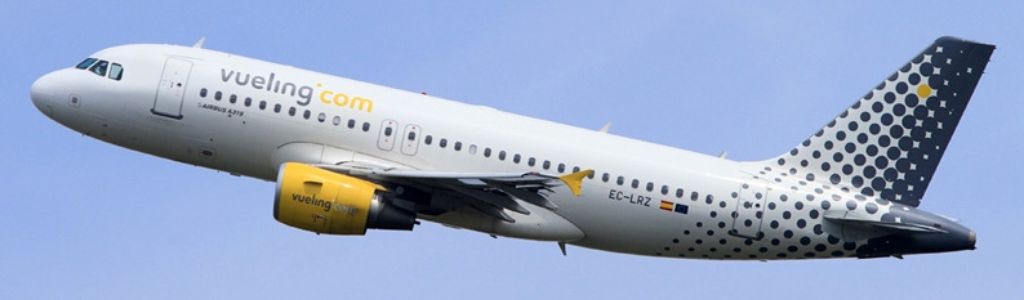
Vueling Airlines is a low-cost carrier of Spain headquartered in Barcelona. It has a fleet size of 126 in-service aircraft that fly to 148 destinations worldwide. It is the largest airline in Spain in terms of fleet size and destinations covered.
You can manage your Vueling booking by going to the “My Trips / Manage Booking” section on the website or app, where you enter your booking reference (PNR) and last name to access your reservation; from there you can change or cancel flights (if your fare allows it), select or change seats, add baggage or extras, download boarding passes, and request invoices, and most changes can be made online up to a few hours before departure depending on your ticket rules.
To manage your flight booking, go to the airline’s official website or mobile app and open the “Manage Booking” or “My Trips” section, then enter your booking reference (PNR) and last name to access your reservation where you can view or change flight details, select seats, add baggage or extras, download your itinerary or boarding pass, or request changes or cancellations depending on your ticket rules.
Common complaints about usually include flight delays and cancellations, long customer service response times, extra fees for services like seat selection or baggage, inconsistent baggage handling, and difficulty getting refunds or compensation, especially during disruptions; however, experiences vary, and many passengers still use it for its low fares and wide European route network despite these issues.
You can check your Vueling flight status by going to the “Flight status” or “Manage booking” section on the website or app, where you enter your flight number or route and date to see real-time updates like delays, gate changes, or cancellations, and you can also check your booking with your PNR for the latest trip information.
You can check the status of your flight booking by going to your airline’s official website or app and opening the “Manage Booking” or “My Trips” section, then entering your booking reference (PNR) and last name to see whether your ticket is confirmed, changed, delayed, or cancelled, and you can also track updates through your confirmation email or by contacting the airline or travel agent if anything looks unclear.
To check in for a flight, go to their website or app and open the “Check-in” section, then enter your booking reference (PNR) and last name, select your seat if needed, and download your boarding pass (mobile or PDF); online check-in usually opens 7 days before departure (if you have a seat or seat selection) or 24 hours before if you haven’t chosen a seat, and closes a few hours before the flight, while airport check-in counters are also available if needed.
Yes, you can generally trust as a legitimate and safe low-cost airline—it is part of the International Airlines Group (IAG), the same parent company as British Airways, and operates under European aviation safety regulations, so it is considered safe; however, its reliability and customer experience are mixed, with frequent complaints about delays, extra fees, and customer service responsiveness, so it’s trustworthy for basic travel but not known for premium service or strong disruption handling.
Yes, it is safe to fly with because it is an EU-based airline operating under strict European aviation safety regulations and is part of the International Airlines Group (IAG), which also owns British Airways and Iberia, so its aircraft maintenance and pilot standards are fully regulated and considered safe, even though it is a low-cost carrier with mixed reviews on delays and customer service rather than safety issues.
Your Vueling booking code (PNR) is usually in the confirmation email you received after booking, often labeled as “Booking reference” or “Locator,” and it’s also available in the app or website under “My Trips / Manage Booking” once you log in with your email or details, and you’ll need this code along with your last name to check in or manage your flight.
To complete Advanced Passenger Information (API) on , go to their website or app and open “Manage Booking”, enter your booking reference (PNR) and last name, then look for the section called “Passenger details” or “API details” where you enter passport information (full name, date of birth, passport number, expiry date, and nationality) exactly as shown on your passport, and once saved it will be linked to your booking and required for check-in on certain international routes.
You may not be able to check in online for a flight because online check-in can be restricted if your passport/advanced passenger information (API) isn’t completed, you’re flying from certain airports or international routes requiring document verification, you booked through a third party with pending details, or there’s a booking issue (like unpaid extras or schedule changes); in these cases, you usually need to check in at the airport counter where staff verify your documents and issue your boarding pass.
Yes, has a mobile app for both iOS and Android where you can manage bookings and check real-time flight status, including delays, gate changes, and cancellations, by entering your flight details or accessing your trip under “My bookings,” and it also lets you do online check-in, download boarding passes, and receive notifications about your flight.
Yes, is a legitimate and generally trusted airline—it is part of the International Airlines Group (IAG), the same parent company as British Airways, and operates under strict European aviation safety standards, so it is safe to fly with; however, it has a mixed reputation for reliability and customer service, with common complaints about delays, extra fees, and support responsiveness, so it is trusted as a low-cost carrier but not known for premium service or consistently smooth disruptions.
You can contact through their official website “Help Centre” or “Contact us” section, where you can find options for live chat, phone support (numbers vary by country), and social media assistance, and for most booking issues they encourage using the Manage Booking tool or app first, since it provides the fastest way to change flights, add services, or request refunds.
Seats on are typical of a low-cost airline—standard Economy seats with limited legroom (around 28–30 inches), basic padding, and no built-in entertainment or extra recline, so they are fine for short flights within Europe but can feel tight on longer journeys unless you pay extra for “Space” or priority seats, which offer more legroom and a slightly more comfortable experience.
When you check in online, you confirm your flight details in advance, choose or get assigned a seat, enter any required travel document details, and receive a digital boarding pass on your phone or as a PDF, which lets you skip the main check-in counter at the airport (unless you have checked baggage, which you still drop off), making airport processing faster and smoother.
Yes, you can get a refund from , but it depends on your fare type—most low-cost tickets are non-refundable, meaning you may only get taxes back or a travel credit, while more flexible fares allow partial or full refunds, and you are also eligible for a refund if the airline cancels your flight or makes a major schedule change.
Yes, is still operating normally, but like many European airlines it does sometimes have occasional cancellations and delays, usually due to operational issues, weather, air traffic control restrictions, or seasonal disruptions; recent data shows it has had some flight cancellations and delays in Europe, but also periods where operations are stable with most flights running on time, so there is no ongoing system-wide cancellation problem—just routine airline disruptions that are common in low-cost carriers.
Vueling mainly operates from Terminal 1 (T1) at its biggest base, Barcelona–El Prat Airport (Barcelona–El Prat Airport), which is also its primary hub; however, at other airports the terminal can vary—some airports use T1, others T2 or different terminals depending on the city and whether the flight is domestic, international, or codeshare, so it’s always best to check your booking or airport info for your specific departure airport.
It depends on what you value: is generally better in comfort, service, baggage inclusion, and long-haul experience, with more legroom, free cabin service on most routes, and a stronger premium product, while is a low-cost airline focused on cheaper fares within Europe, but you pay extra for seats, baggage, and extras; in short, British Airways is better for comfort and reliability, while Vueling is better if your priority is the lowest ticket price for short flights.
Vueling flight schedule reliability is moderate but not top-tier, meaning most flights do operate, but delays are fairly common compared to full-service airlines; recent data shows around 80–85% of flights arrive on time over a year, which is decent but still leaves a noticeable share of delayed services, and some routes can experience longer delays or occasional cancellations depending on airport congestion, weather, and peak travel periods.
You may not be able to check in for your flight because of common issues like missing or incorrect passport/Advanced Passenger Information (API), booking made through a travel agent that hasn’t fully transmitted details, flying from certain airports or international routes that require airport document verification, unpaid extras or schedule changes, or check-in not yet opened for your fare type; in these cases, you usually need to complete your passenger details in “Manage Booking” or finish check-in at the airport counter where staff verify your documents and issue your boarding pass.
Vueling baggage fees depend on the weight, route, and when you buy it, but based on their official pricing, a checked bag usually costs about €10–€95 for 15–20 kg online, €18–€120 for 25–30 kg online, and can rise to about €50–€160 at the airport, with excess weight charged at around €12 per extra kg (up to 32 kg max per bag), and cabin bags (if not included in your fare) typically cost extra starting from about €10–€40 depending on the bundle or seat option.
Vueling is fairly strict with baggage, especially compared to full-service airlines, because it’s a low-cost carrier and actively enforces baggage rules at the gate; according to recent passenger reports and airline policies, staff often check both size and weight using sizers, and if your bag exceeds limits—even slightly—you can be charged extra or forced to gate-check it, sometimes for high fees (€20–€140 or more depending on route), and enforcement can vary by airport but is common on busy routes like Barcelona and London.
Vueling Airlines is generally ranked as a mid-tier low-cost airline rather than a premium carrier. In major industry rankings for 2026, it appears around 19th among global low-cost airlines and is usually placed in the middle range of European carriers, while Skytrax classifies it as a 4-Star Low-Cost Airline, meaning it meets solid standards for safety, operations, and basic service but is not considered a premium airline.
If you don’t check in online for a flight, you’ll usually need to check in at the airport counter instead, and you may have to pay an airport check-in fee (often around €30–€40 depending on the route), plus you risk longer queues and delays at the airport, but you can still travel as long as you arrive early and complete check-in before the counter closes; if you miss both online and airport check-in deadlines, you won’t be allowed to board.
Yes, planes are considered safe to fly on, as the airline operates under strict European Union aviation safety regulations and is part of the International Airlines Group (IAG), which also owns British Airways and Iberia, meaning its aircraft maintenance, pilot training, and operational standards meet high safety requirements, so while it’s a low-cost carrier with mixed service reviews, there are no widespread safety concerns about its fleet or operations.
Customer service for is generally available 24/7 by phone and chat for basic support, but live agents (real human support) typically work from 9:00 AM to 10:00 PM Spanish time (every day), so outside those hours you can still access automated help or manage bookings online, but direct personalised assistance starts at 9 AM.
Vueling is owned by the International Airlines Group (IAG), a large airline holding company that also owns British Airways, Iberia, and Aer Lingus, and IAG has controlled a majority stake in Vueling since 2013, making it part of the group but still operating under its own brand and management structure.
The most common email format for is [email protected], which is used by the majority of employees (roughly 80–90% in most corporate directories), and other variations include [email protected] or [email protected] depending on the department or role, but for customer support or official contact you should not rely on guessing employee emails—instead, Vueling mainly handles queries through its official contact form and support channels on their website.
Yes, is quite strict on cabin bags compared to full-service airlines, and staff often check both size and weight at the gate using sizers, especially on busy routes; if your bag exceeds the allowed limits (typically small cabin bag around 40×30×20 cm for basic fares, or larger cabin bag if included in your fare), you may be charged a significant fee or forced to check it in, so it’s best to follow the exact dimensions and weight rules to avoid extra costs or delays.
Yes, offers a 24-hour cancellation window where you can cancel your booking within 24 hours of purchase without a penalty (as long as the booking was made directly with the airline and meets their conditions, such as advance purchase before departure), but after that period most low-cost fares become non-refundable or subject to fees, depending on the ticket type.
Vueling Airlines is based in Spain, with its main hub at Barcelona–El Prat Airport, and it is a Spanish low-cost airline that operates flights mainly across Europe, North Africa, and parts of the Middle East as part of the International Airlines Group (IAG).
No, you usually do **not need to print a boarding pass for ** because they accept mobile boarding passes on your phone in most airports, but you must still have a valid digital boarding pass (or printed copy if your phone battery or airport requires it), and if mobile boarding is not available for your route, you may need to print it or collect it at the airport check-in counter.
For Vueling, online check-in usually opens 7 days before departure if you have selected a seat or purchased a fare that includes seat selection, and otherwise it typically opens 24 hours before departure for standard Economy fares, while airport check-in opens only on the day of travel (usually 2–3 hours before the flight), depending on the airport.
Generally, you cannot change a flight for free unless you have a flexible fare or specific bundle that includes free changes; most low-cost tickets require you to pay a change fee plus any fare difference, though Vueling sometimes offers limited free changes during special disruptions, schedule changes, or promotional flexible options if included in your booking.
On Vueling, the standard cabin baggage allowance is a total weight of up to 10 kg for the overhead cabin bag, which must not exceed 55 × 40 × 20 cm, plus a separate small under-seat personal item (40 × 30 × 20 cm) that is included for all passengers.
Yes, allows two pieces of cabin baggage, but not for every fare: you can bring 1 small under-seat bag (40×30×20 cm) included for all passengers, and a second larger cabin bag (up to 10 kg, 55×40×20 cm) only if it’s included in your fare (like Optima, Family, or Priority boarding); basic fares usually only include the small personal item unless you pay extra for the larger cabin bag.
Checked baggage on usually costs about €10–€95 for a 15–20 kg bag, €18–€99 for a 25 kg bag, and €25–€120 for a 30 kg bag when booked online, while paying at the airport is much more expensive—typically around €50–€160 per bag depending on weight and route, and excess weight beyond your allowance is charged at about €12 per extra kg (up to 32 kg max per bag).
No — Vueling is not currently experiencing a system-wide wave of cancellations, and most flights continue to operate normally, but like many European airlines it does have occasional delays and isolated cancellations due to weather, air traffic control, strikes, or operational issues.
On Vueling, sitting together is not guaranteed by default, especially on the cheapest fares, because seats are assigned automatically unless you select them in advance; if you want to sit together, you usually need to pay to choose seats during booking or in “Manage Booking”, otherwise the system may assign seats randomly at check-in and you could be separated, though families traveling with small children are often seated together when possible.
On Vueling, a full name change typically costs about €50 per passenger, per flight (plus any fare difference if your ticket price has increased) for Basic fares.
Vueling flights are on time about 80%–88% of the time, meaning roughly 12%–20% of flights are delayed, with most delays being short (around 15–30 minutes on average), though busy airports and peak travel periods can have more disruption, so it’s a moderately reliable airline but not highly punctual compared to full-service carriers.
Yes, Vueling is quite strict with hand luggage, especially on basic fares, and staff often check both size and weight at the gate using sizers; if your bag exceeds limits (even slightly), you may be forced to check it in and pay extra fees, so it’s important to stick closely to their rules to avoid charges or delays.
Yes — Vueling on you always get 1 free under-seat personal item (40×30×20 cm), but a larger overhead cabin bag (up to 10 kg, 55×40×20 cm) is only free if it’s included in your fare (like certain bundles or seats), otherwise you have to pay extra to bring it onboard.
Yes, you can take a backpack as hand luggage on as long as it fits their size rules—usually it counts as the free under-seat item (40×30×20 cm) if it’s small, or it can be used as your larger cabin bag (55×40×20 cm, up to 10 kg) if your fare includes that option or you’ve paid for it, but larger backpacks may need to be checked in if they exceed the limits.
Yes, on you can take two pieces of hand luggage only in certain fares: everyone gets 1 small under-seat item (40×30×20 cm), and a second larger cabin bag (up to 10 kg, 55×40×20 cm) is included only if your ticket or bundle includes it (like Optima, Family, or Priority boarding), otherwise you must pay extra for the second bag.
If your carry-on is too big on , staff will usually ask you to place it in a size sizer at check-in or the gate, and if it doesn’t fit the limits, it will be forced to go in the hold as checked baggage, and you’ll likely have to pay a gate or airport baggage fee (which is much higher than pre-booked baggage), so it’s best to stay within their size rules to avoid extra charges.
Vueling is quite strict with cabin bags, especially on basic fares, and staff regularly check both size and weight at the gate using bag sizers, so if your bag is even slightly over the allowed dimensions or weight it can be sent to the hold with a high last-minute fee, making it important to follow their exact limits rather than “roughly” fitting the rules.
A checked bag on typically costs about €10–€95 for 15–20 kg, €18–€99 for 25 kg, and €25–€120 for 30 kg when booked online, but if you pay at the airport it can rise to around €50–€160 per bag depending on weight and route, and excess baggage is charged at about €12 per extra kg (up to 32 kg max per bag), so it’s always much cheaper to add it online in advance rather than at the airport.
For Vueling, you can usually check in your baggage at the airport about 2–3 hours before departure (depending on the airport), and the check-in desk typically closes about 40–60 minutes before the flight for European routes, so you should arrive early enough to drop bags, pass security, and reach your gate without rushing.
Vueling does not always weigh carry-on bags, but it does random or targeted checks at check-in, security, or boarding—especially if your cabin bag looks large or the flight is busy. If your bag exceeds their size/weight limits, they can make you pay gate fees or send it to the hold, so while it’s not guaranteed, it’s definitely possible and happens often enough that you shouldn’t risk going over the allowance.
Vueling does not give a fixed free checked-bag allowance for all passengers; instead, checked luggage is usually paid and you can add 1 bag (typically 15 kg, 20 kg, 25 kg, or 30 kg) per passenger, depending on your ticket and what you buy, while some fares like Fly or Fly Grande may include 1 checked bag up to 25 kg, so the exact number is usually “0 or 1 included” and any extra bags must be purchased.
Vueling generally allows one small personal item (like a handbag, backpack, or laptop bag) for all passengers, and depending on your fare you may also bring a larger cabin bag as hand luggage, but the key rule is that you can’t exceed your allowance of “personal item + cabin bag” unless your ticket includes it or you’ve paid for it; if you only have the basic fare, you usually get just the small under-seat item, not both.
Yes, with Vueling it’s usually cheaper to add checked baggage online during booking or before you check in, because prices go up if you add it later or at the airport/gate, sometimes significantly, so it’s best to pre-book your baggage in advance if you already know you’ll need it.
Yes, with Vueling you can bring food in your carry-on as long as it’s solid (like sandwiches, snacks, fruits, biscuits), but liquids or gels over 100 ml (like soups, yogurt, sauces) are restricted by airport security rules, and anything you carry must still fit within your cabin baggage allowance.
With Vueling you usually cannot add or change a checked bag once you’ve already completed online check-in, but in many cases you can still purchase extra baggage at the airport or at the gate—though it will be more expensive and subject to space/acceptance, so it’s better to add it before check-in whenever possible.
Yes, on international flights you can generally carry an umbrella in hand luggage, including with airlines like Vueling, as long as it’s a normal folding or small umbrella and doesn’t have any sharp or prohibited parts; security may just ask you to place it in your cabin bag or scan it separately, but it’s usually allowed without issue.
With Vueling you can usually take a small personal item like a handbag plus a larger cabin bag only if your fare includes cabin baggage or you’ve paid for it; otherwise the basic fare typically allows just one small under-seat item, so whether you can bring both depends entirely on your ticket type and purchased extras.
With Vueling, seat selection is often an extra paid service because many of their lower fares don’t include assigned seating, so if you don’t pay, you’re usually assigned a random seat at check-in for free, while paying lets you choose specific seats (like window, aisle, or together seats), especially for groups or preferred locations.
On Vueling flights you do not get free drinks as standard; instead it’s a buy-on-board service where you can purchase water, soft drinks, coffee, snacks, and meals during the flight, with only very limited exceptions like some premium fares or special promotions.
Yes, Vueling allows cancellations, but most low-cost fares are non-refundable, so you usually only get a refund if you bought a flexible fare, added cancellation protection, or qualify for a specific refund situation (like flight cancellation by the airline), and otherwise you may only get a credit voucher or nothing back depending on your ticket conditions.
Vueling refund policy is generally that standard low-cost tickets are non-refundable, so if you cancel voluntarily you usually don’t get cash back unless you booked a flexible fare or added cancellation cover, but you may receive taxes back in some cases and a credit voucher depending on conditions, while full cash refunds are mainly given when the airline cancels or significantly changes your flight schedule.
For Vueling, refunds typically take about 7–30 days once approved, but in busy periods it can stretch to 6–8 weeks depending on your bank, payment method, and the reason for the refund, with faster processing usually for airline-initiated cancellations and slower timelines for voluntary refund requests or vouchers converted to cash.
Vueling does not offer free cancellation on most basic fares, so standard tickets are usually non-refundable if you change your mind, but you may get flexibility only if you book a higher “Flex” type fare, add cancellation protection, or cancel within specific limited conditions like airline-initiated changes or legal cooling-off exceptions in certain countries.
To cancel a flight with Vueling online, you need to log in to the “Manage your booking” section on their website or app, enter your reservation code and surname, open your trip, and select the cancel option if it’s available for your fare; after confirming, the system will show whether you’re eligible for a refund, credit voucher, or no compensation depending on your ticket type and conditions.
No, Vueling is not owned by Ryanair; it is actually part of the IAG (International Airlines Group), the same parent company that owns airlines like Iberia and British Airways, while Ryanair is a completely separate Irish low-cost airline group.
Vueling does not consistently offer a universal 24-hour free cancellation policy like some airlines in the US; in most cases, cancellations depend on your fare type, and even if you cancel shortly after booking you usually only get flexibility or refunds if your ticket specifically includes it or if local consumer rules apply in your country of purchase.
To make a complaint to Vueling, you can submit it through their official website or app using the “Customer Service” or “Help/Contact us” section, where you’ll find a complaints form for issues like delays, baggage, refunds, or service problems; you can also contact them via social media or call their support line, but the online form is usually the most effective way because it creates a case reference number for tracking your complaint.
Vueling is a European low-cost airline based in Spain that mainly serves destinations across Spain, France, Italy, the UK, and much of Europe, plus some North African cities and a few Middle Eastern routes, operating a large network from hubs like Barcelona and Rome with flights focused on short- and medium-haul travel within and around Europe.
Vueling customer service doesn’t have one fixed closing time everywhere because it depends on the country and channel, but phone support is typically available only during limited daytime hours (not 24/7), while their online help center and chat/forms are accessible anytime for submitting requests, with responses handled during working hours on the next available cycle.
Vueling does not usually provide a general public customer service email address; instead, they handle support through their website contact forms, app, and phone lines, so if you need help or want to send documents or complaints, you’re typically required to use the “Help/Contact us” section online rather than emailing directly.
Vueling is owned by International Airlines Group (IAG), the same parent company that owns airlines like Iberia and British Airways, so it is not an independent airline but part of that larger aviation group.
Yes, with Vueling you can choose your seat during booking or later in “Manage your booking,” but it’s usually a paid option unless your fare includes seat selection or you’re traveling on a higher-tier ticket; if you don’t pay, you’ll be automatically assigned a seat at check-in for free.
Vueling prompts you to choose a seat because many of its fares don’t include free seat selection, so it offers it as an optional paid add-on to let you pick where you sit or ensure you’re seated with companions, while otherwise it will automatically assign you a seat at check-in for free.
Yes, with Vueling you can usually choose or change your seat after booking by going to “Manage your booking” on their website or app, but it will typically be a paid option unless your fare includes seat selection, and prices can increase closer to departure or for preferred seats.
Vueling offers several paid seat options such as standard seats (regular location anywhere in the cabin), front seats (near the front for quicker exit), extra legroom seats (more space, usually near exits), and “Space” or preferred seats (more comfort and better location), while passengers who don’t pay are automatically assigned a random standard seat at check-in for free.
Yes, Vueling can overbook flights like many airlines, meaning they may sell more tickets than available seats because they expect some no-shows, and if everyone shows up you could be asked to volunteer for another flight or, in rare cases, be denied boarding with compensation offered under EU rules.
Yes, booking directly with Vueling is safe, as it’s a legitimate EU-based airline with standard payment security, but like any low-cost carrier you should carefully check fare conditions (baggage, seats, changes) before confirming because extras are often not included and can be costly if added later.
With Vueling, the standard cabin bag allowance is usually up to 10 kg for the larger carry-on (plus a small personal item like a handbag under the seat), but the exact allowance depends on your fare—basic fares often include only the small item, while higher fares or add-ons include the 10 kg cabin trolley bag.