





Your calls answered by leading travel experts in under 5 seconds.

Unpublished offers and great discounts when you book on-call.

Hand-crafted travel itinerary that meet all your travel preferences.

Round-the-clock customer service to get all your doubts clarified.
When you plan a vacation to a destination and want to book your Wizzair flight tickets, then reach out to My Flight Fares. Our travel experts guide you through the booking process and help you score great airfares in your desired budget. We have flight offers from our inventory of 450+ airline options. Starting from Economy, First and Business Class tickets, My Flight Fares travel experts can give you various other services on your Wizzair bookings like extra luggage, priority check-in, in-flight meals, and more.
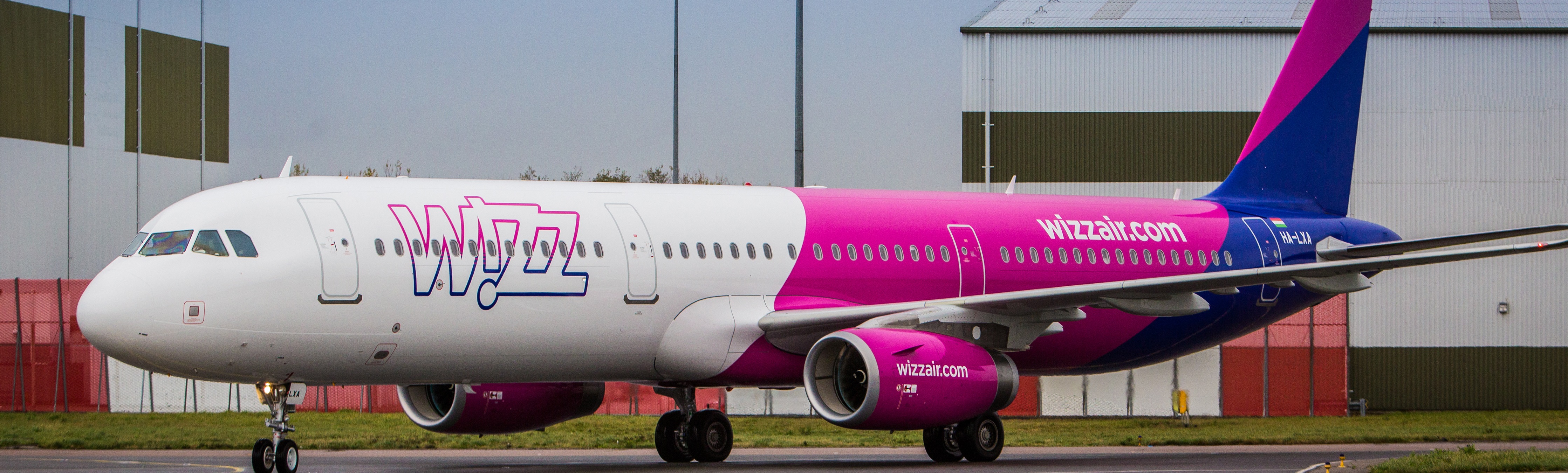
Wizzair is an ultra-low-cost airline of Hungary, headquartered in Budapest, Hungary. Wizzair has several hubs, and its primary bases are Budapest Airport and Luton Airport. It flies to over 150 destinations and commands a fleet of 141 aircraft. Though it's not a national flag carrier of Hungary, it has the largest fleet.
Go to Wizz Air's official website or use the Wizz Air app, enter your departure and destination cities, travel dates, and passenger details, select a flight, choose any extras (baggage, seat, insurance), then pay to confirm the booking. After payment, you'll receive a booking reference and itinerary by email, and you can later check in online through the website or app before your flight.
To check your Wizz Air flight reservation status, visit Wizz Air Manage Booking and enter your booking confirmation code (PNR) and last name. You can view your booking details, flight status, check-in availability, and any schedule changes associated with your reservation.
You can get a flight reservation by booking a ticket directly with an airline through its website or app, or by using a travel agency. Once the booking is completed, you'll receive a reservation confirmation containing a booking reference (PNR) and itinerary. If you need a temporary reservation for a visa application, some travel agencies and airlines offer hold-booking or reservation services without requiring a fully paid ticket.
Yes, Wizz Air has expressed interest in starting flights to India and has held discussions with Indian authorities. The airline said its long-range Airbus A321XLR aircraft could make direct Europe–India routes possible, and it has previously mentioned potential routes such as Budapest–Mumbai and possibly Delhi. However, as of June 2026, Wizz Air has not yet launched flights to India or announced a confirmed start date.
Wizz Air seat reservation prices vary by route, demand, and seat type. Standard seats typically cost around €5–€15, while front-row or extra-legroom seats can cost €20–€50 or more per flight segment. If you don't reserve a seat, Wizz Air will assign one for free during online check-in.
Yes, Wizz Air offers refunds in certain situations. If Wizz Air cancels your flight or makes a significant schedule change, you may be eligible for a refund. If you cancel your own booking, refunds are generally limited and usually subject to fees, depending on your fare type and whether you purchased additional flexibility options. You can check your eligibility and request a refund through Wizz Air Customer Support and Refund Information.
No, Wizz Air is not a Turkish airline. Wizz Air is a low-cost airline based in Budapest and headquartered in Hungary. It operates flights across Europe, the Middle East, and parts of Africa and Asia through Wizz Air. It is a Hungarian airline, although it also has subsidiaries in countries such as United Kingdom, Malta, and United Arab Emirates.
Yes. Wizz Air assigns a seat free of charge when you check in if you do not purchase seat selection. However, you cannot choose the specific seat for free; selecting a preferred seat usually requires paying a seat reservation fee.
Wizz Air baggage fees depend on the route, season, and whether you buy baggage online or at the airport. A small personal item is included for free, while a carry-on trolley bag and checked baggage are charged separately. Checked baggage fees typically start at around €10–€40 online for smaller bags and can be significantly higher for larger bags or airport purchases.
Wizz Air is a low-cost airline, so it charges separately for extras like seat selection instead of including them in the ticket price; when you’re being charged for a seat, it’s usually because you’re choosing a specific seat (like extra legroom or front rows) instead of accepting a free automatically assigned seat during check-in, or because seat selection was added by default during booking and can be deselected before payment.
Most Wizz Air aircraft, especially the Airbus A320 and A321 used on its main routes, typically have about 180 seats on the A320 and around 230–239 seats on the A321, depending on the exact configuration, since the airline uses a high-density seating layout for its low-cost model.
Wizz Air is generally considered a safe and operationally solid low-cost airline with a strong safety record and modern fleet, but its reliability in terms of delays, cancellations, and customer service is often rated as average to below some major European carriers, which is typical for ultra-low-cost airlines that prioritize low fares over extra flexibility and service.
Wizz Air does not cancel flights “often” in an unusual sense, but like many ultra-low-cost airlines it can have more schedule changes, delays, or occasional cancellations than full-service airlines, especially on less busy routes or during operational disruptions; most flights still operate as planned, but flexibility and backup options can be limited, so it’s best to avoid tight connections when flying with them.
Wizz Air is an Airbus-only airline, operating a fleet made up entirely of Airbus A320 family aircraft, mainly the Airbus A320 and Airbus A321 models, and it does not operate any Boeing planes.
Wizz Air has announced multiple new routes for Summer 2026, but there is no single official list of exactly “6 new routes” universally agreed across all regions—different bases are launching different sets; however, a commonly reported group of six includes routes like Varna–Katowice, Sofia–Santander, Milan–Bilbao, Naples–Palma de Mallorca, Katowice–Comiso, and Radom–Burgas as part of the wider Summer 2026 expansion schedule.
Wizz Air’s 20 kg checked baggage refers to the weight allowance, not a fixed size, but the standard maximum dimensions for each checked bag are usually up to 149 × 119 × 171 cm, and the bag must not exceed 20 kg total weight; as long as your luggage fits within these size limits and stays under 20 kg, you can check it in on your flight.
A typical Wizz Air aircraft like the Airbus A320 has about 30–32 rows, while the larger Airbus A321 usually has around 40–43 rows, depending on the exact seat configuration, since Wizz Air uses a high-density layout to maximize passenger capacity.
Wizz Air seat selection usually costs about €5–€15 for standard seats and around €20–€50 (or more) for preferred seats like extra legroom or front-row seats, depending on the route, timing, and demand; if you don’t choose a seat, you can still get a free automatically assigned seat during check-in.
Yes—Wizz Air is currently facing some ongoing issues, mainly around flight delays and cancellations, which have been linked to operational challenges like aircraft engine maintenance and a number of planes being grounded, as well as broader pressures in the aviation industry; recent reports also show it has had financial losses and schedule disruptions, though most flights still operate normally and the airline continues to expand routes despite these problems.
The best seats on a Wizz Air flight are usually the front row seats (Row 1) because they have the most legroom and you board/deplane faster, and the exit row seats (like Rows 18–19 on A321 aircraft) because they offer the most extra legroom for free or lower cost, while the window seats in the front half of the plane (around Rows 5–7) are also good if you want a quieter ride and quick exit; in general, avoid the last rows near the toilets because they’re noisier and more cramped.
Yes, with Wizz Air you can check in without paying for seat selection, and the airline will automatically assign you a free seat during online check-in, but you won’t get to choose where you sit and group members may not be seated together unless you purchase seat selection.
The longest Wizz Air flights are currently around 6.5 to 7 hours, mainly operated with the Airbus A321XLR, with routes like London Gatwick → Jeddah and London Gatwick → Medina being among the longest in the network. In terms of distance, these are roughly 2,400–2,550 nautical miles, making them the airline’s longest scheduled routes as of 2026.
Wizz Air is generally quite strict with cabin baggage, especially at busy airports, and if your bag exceeds the allowed size or weight, they may charge an extra fee and require it to be checked in; small personal items must fit under the seat (around 40 × 30 × 20 cm), and larger cabin bags have strict dimensions, so it’s best to measure carefully because gate checks are common and can be expensive.
Both Wizz Air and Ryanair are considered very safe, with modern fleets, strict European safety regulation, and strong safety records, so there’s no meaningful difference in safety between them; the real differences are in comfort, pricing structure, and service rather than safety.
No, Wizz Air has never had a fatal crash since it started operations in 2004, and there are no records of any Wizz Air passenger aircraft crashes causing deaths; like other airlines it has had some minor incidents, emergency landings, and technical issues, but nothing classified as a crash with loss of life, which is why it is still considered one of the safe European low-cost carriers.
Yes, Wizz Air does provide food, but it is not free—you can buy snacks, sandwiches, and drinks from the onboard menu called the Wizz Café, so you’ll need to purchase anything you want during the flight, as only basic water is not included as a complimentary service.
Wizz Air has been facing challenges mainly due to engine reliability issues with its Pratt & Whitney-powered Airbus A320neo family aircraft, which has forced parts of its fleet to be grounded for inspections and repairs, reducing capacity and causing delays and cancellations; at the same time, the airline is also dealing with higher operating costs, fuel price pressure, and weaker profitability on some routes, which together have made its operations tighter even though demand for low-cost travel remains strong.
Wizz Air operates one of the younger fleets in Europe, with most of its Airbus A320 and Airbus A321 aircraft typically averaging around 5–8 years old overall, as the airline continuously adds new deliveries while retiring older planes to keep its fleet modern and fuel-efficient.
Wizz Air has average punctuality rather than top-tier performance—it often performs reasonably on major routes, but it tends to have more delays than full-service airlines, especially during peak travel seasons or operational disruptions like aircraft shortages; overall, it’s acceptable for short-haul budget travel, but not the most reliable if strict on-time arrival is important.
No, Wizz Air has not shut down—it is still operating and actively flying across Europe, the Middle East, and parts of Asia, though it has recently faced operational challenges like engine-related aircraft groundings and financial pressure, it remains a functioning low-cost airline and continues to expand routes.
Wizz Air’s longest scheduled flights are around 6.5–7 hours, typically operated with the Airbus A321XLR, on routes such as London Gatwick → Jeddah and London Gatwick → Medina, which are currently among its longest nonstop services in terms of flight time and distance.
Wizz Air flies to around 50+ countries, mainly across Europe, but also extending into the Middle East, North Africa, and parts of Asia, with a network of over 190 airports and hundreds of routes that keep expanding as it adds new bases and destinations.
Wizz Air baggage fees depend on route, season, and when you book, but in general a 10 kg checked bag costs about €5–€70, a 20 kg bag about €13–€90, and a 32 kg bag about €25–€120+, with airport prices usually much higher than online; extra charges like overweight bags are around €10–€13 per kg, and it’s cheapest to add baggage during booking rather than later.
Seat selection on Wizz Air usually costs about €5–€15 for standard seats and around €20–€50+ for preferred seats like extra legroom or front rows, depending on the route, demand, and when you book; if you don’t pay, you still get a free randomly assigned seat during check-in.
To get the best seats on Wizz Air, you should select seats early during booking or manage booking as soon as possible, aiming for front rows for fastest exit, exit rows for extra legroom, or window seats near the front half of the cabin for a quieter ride; avoid waiting for free seat assignment at check-in if you care about sitting together or choosing specific comfort spots.
Wizz Air is a low-cost airline, so the base ticket price only includes the flight and a randomly assigned seat at check-in; you’re being charged because you’re choosing a specific seat (like extra legroom, front rows, or sitting together), which is treated as an optional add-on, similar to baggage or meals, while the free option is still available if you let the system assign your seat automatically.
No, Wizz Air has never had a fatal crash since it began operations in 2004, and there are no recorded passenger aircraft crashes involving loss of life; it has had some minor technical incidents and emergency landings like most airlines, but nothing classified as a crash.
Wizz Air is generally good for low fares and direct routes, but average to mixed for comfort and reliability—it offers very cheap tickets and a modern fleet, which is great for budget travel, but it charges for extras like seats and baggage and can have delays or schedule changes more often than full-service airlines, so it’s good if saving money matters most, but not ideal if you want maximum comfort or flexibility.
Wizz Air is not closing—it is still operating flights and expanding routes; confusion usually comes from news about it cutting some unprofitable routes, temporarily reducing capacity on certain aircraft due to engine maintenance issues, and adjusting its network for profitability, but none of this means the airline itself is shutting down.
Wizz Air is not ranked as a top global full-service airline, but among low-cost carriers it is usually placed in the middle to upper-middle tier worldwide, often recognized for having a very modern fleet and low fares, while scoring lower on comfort and punctuality compared to leading budget competitors like Ryanair or easyJet depending on the ranking system used.
Yes, Wizz Air is generally considered a trusted and safe airline because it is fully regulated under European aviation safety standards and operates a modern fleet with a strong safety record, but “trusted” in terms of customer experience is more mixed since passengers often report extra charges, delays, or service limitations typical of low-cost airlines, so it’s reliable for safety but more basic for comfort and flexibility.
On Wizz Air flights, you are not allowed to carry dangerous or restricted items such as sharp weapons (knives, scissors over limits), flammable liquids, explosives, toxic substances, or oversized liquids above 100 ml in hand luggage, and checked baggage also prohibits items like lithium batteries beyond limits, gas canisters, and other hazardous materials; additionally, items like drugs, illegal goods, or anything that could endanger passengers or the aircraft are strictly forbidden.
Yes, Wizz Air is considered safe to fly with, as it operates under strict European aviation safety regulations, uses a modern fleet mainly of Airbus A320 and Airbus A321 aircraft, and has a strong safety record with no fatal crashes since its launch, so while it may be basic in service and sometimes less reliable with delays, its safety standards are on par with other major European airlines.
The salary of a Wizz Air pilot varies by experience and rank, but generally a First Officer earns about €30,000–€100,000 per year, while a Captain earns around €105,000–€210,000 per year, depending on base, flying hours, and bonuses; top captains in high-paying bases can reach even higher total earnings with allowances and incentives.
Wizz Air is a good airline if your priority is low cost and direct short-haul flights, because it offers very cheap fares and a modern fleet, but it’s less strong on comfort, flexibility, and punctuality since you pay extra for seats, baggage, and onboard services and may experience delays or schedule changes more often than full-service airlines, so it’s “good” for budget travel but not the best choice if you want a premium or highly reliable experience.
Wizz Air is a good low-cost airline if your main goal is cheap fares and point-to-point travel, with a modern fleet and strong safety standards, but it’s not considered premium because you pay extra for seats, baggage, and food, and it can have more delays or schedule changes than full-service airlines—so it’s good for budget trips, but not ideal if comfort, flexibility, or service quality are your top priorities.
Yes, on Wizz Air you can get a free seat, but you cannot choose it—if you don’t pay for seat selection, the system will automatically assign you a seat during online check-in, and only paid seat selection lets you pick specific seats like window, aisle, or extra legroom.
Wizz Air does not cancel “many” flights in a general sense, but it can have more cancellations and disruptions than full-service airlines at times, mainly due to operational issues like aircraft maintenance (especially engine-related groundings), schedule adjustments, or peak-season strain; most flights still operate as planned, but the risk of changes is a bit higher than on traditional carriers.
Wizz Air checked baggage typically costs around €10–€70 for a 10 kg bag, €13–€90 for a 20 kg bag, and up to €25–€120+ for larger 32 kg bags, depending on your route, travel season, and especially when you buy it (online during booking is cheapest, airport purchase is much more expensive).
A 20 kg checked bag on Wizz Air usually costs about €13–€90 when booked online, depending on the route, season, and how early you buy it, but if you pay at the airport it can go up to around €60–€120 or more, so it’s always cheaper to add it during booking or in advance online.
Wizz Air is not usually given a fixed global “safety rank” like a scorecard airline, but it is consistently considered a safe airline by industry standards, operating under strict European aviation regulations and a modern Airbus fleet, and it is not flagged as a high-risk carrier by major aviation safety assessments; in short, it sits in the same safety category as most large European low-cost airlines, where differences are minimal and safety is very high overall.
Pilots working for or familiar with Wizz Air generally describe it as a modern but demanding low-cost airline to work for, with good new aircraft and structured operations, but also a highly performance-driven environment with tight scheduling, cost-focused management, and a heavy emphasis on efficiency; many say it offers good flying experience and fleet quality, but the workload, roster changes, and operational pressure can be tougher than at traditional full-service airlines.
Yes, Wizz Air is generally strict with luggage rules, especially for cabin bags, and staff may check size and weight at the gate; if your bag is even slightly over the allowed dimensions or weight, you can be charged extra or required to check it in, so it’s important to follow their limits closely to avoid fees.
Wizz Air rules are fairly strict and clearly structured: you are allowed one small personal bag for free (40×30×20 cm, under 10 kg) that must fit under the seat, and larger cabin bags or checked luggage must be purchased as add-ons; liquids in hand luggage must be under 100 ml in a 1-litre clear bag, and items like weapons, sharp objects, flammable or toxic materials are strictly prohibited, while checked baggage can range from 10 kg to 32 kg depending on what you buy, and anything oversized or overweight can lead to extra charges at the airport.
On Wizz Air flights, you are not allowed to carry dangerous or restricted items such as weapons (knives, scissors above limits, firearms), explosives, flammable liquids, toxic or corrosive substances, or oversized liquids over 100 ml in hand luggage, and checked baggage also bans items like gas canisters, lithium batteries beyond limits, and other hazardous materials; illegal goods, drugs, or anything that could threaten passenger or aircraft safety are strictly forbidden.
On Wizz Air, adding a 20 kg checked bag usually costs about €13–€90 online, depending on your route and travel date, but if you add it later or at the airport it can rise to roughly €60–€120 or more, so it’s always cheapest to include it during booking or add it early in the “Manage booking” section.
On Wizz Air, the standard free carry-on (small personal bag) can weigh up to 10 kg, and there’s no strict separate weight limit for larger paid cabin bags in many cases, but you must still be able to lift and store them in the overhead bin safely; size limits matter more than weight, especially for the free under-seat bag.
No, Wizz Air has never had a fatal crash since it started operations in 2004, and there are no recorded passenger plane crashes with loss of life; it has only had some minor incidents and emergency landings, like technical issues, turbulence events, or precautionary diversions, which are common across all airlines and do not count as crashes.
Wizz Air operates a fleet of roughly 220–230 aircraft, mainly modern Airbus A320 and Airbus A321 family planes, and it continues to expand with new deliveries as part of its growth strategy.
On Wizz Air, baggage prices vary by route and timing, but typically a 10 kg checked bag costs about €10–€70, a 20 kg checked bag about €13–€90 online, and can go up to €60–€120+ if added late or at the airport, while overweight bags are charged extra per kg and cabin bag upgrades (like Priority) can cost around €10–€60 depending on the flight—so the earlier you add baggage, the cheaper it usually is.
On Wizz Air, you can take 1 free bag only, which is a small under-seat personal item (like a backpack or handbag) with a maximum size of 40 × 30 × 20 cm and up to 10 kg; if you want a second cabin trolley bag or checked luggage, you have to pay extra for it.
Yes, on Wizz Air you can bring a 20 kg checked bag, but it is not free—you must add it when booking or later in “Manage booking” and pay a fee; once purchased, your bag must stay within the allowed weight (20 kg) and standard size limits, and if it goes over the limit at the airport you’ll be charged extra.
Wizz Air is very strict with carry-on baggage, especially compared to full-service airlines, because staff often check size at the gate using sizers, and if your bag is even slightly over the allowed limit (40 × 30 × 20 cm for the free item), you may be charged extra or forced to check it in; enforcement can vary by airport and flight, but overall it’s safest to assume the rules will be checked and follow them closely to avoid fees.
On Wizz Air, you cannot take both a separate handbag and a standard hand luggage bag for free unless you have a Priority/Plus option—normally you are allowed only one free small personal item (like a handbag or small backpack) that fits under the seat (40 × 30 × 20 cm), and if you want an extra cabin trolley bag, you must pay for a baggage upgrade or priority service.
On Wizz Air, checked baggage cannot include dangerous or restricted items such as explosives, flammable liquids, gases (like camping gas), corrosive or toxic substances, fireworks, or illegal drugs; items like lithium batteries, power banks, and electronic cigarettes are also generally not allowed in checked bags and must be carried in cabin baggage under safety rules, while sharp or valuable items are discouraged in checked luggage even if not strictly banned.
To measure baggage for Wizz Air, use a tape measure to check height, width, and depth including wheels and handles, then compare it to the limits (40 × 30 × 20 cm for free cabin bag or larger limits for paid bags), and weigh it on a home scale or luggage scale to ensure it’s under the allowed weight; it’s important to measure carefully because even small excess can lead to extra charges at the airport.
On Wizz Air, the free luggage size is 40 × 30 × 20 cm, and it must be a small personal item like a backpack or handbag that fits under the seat in front of you, with a maximum weight of 10 kg; anything larger (like a cabin trolley bag) requires paying extra for priority or a baggage upgrade.
No, Wizz Air does not have seat-back screens or in-flight entertainment in Economy; instead, passengers use their own phones, tablets, or laptops, and can access onboard Wi-Fi on some aircraft to stream content or browse services, but everything is bring-your-own-device rather than built-in screens.
Yes, Wizz Air offers food and drinks on board through its paid “Wizz Café” menu, including snacks, sandwiches, and beverages, but nothing is free except basic water in some cases; you can buy items during the flight using card or contactless payment depending on the aircraft.
On Wizz Air, online check-in usually opens 24 hours before departure if you didn’t buy a seat, and can open up to 30 days before departure if you paid for seat selection, and it closes 3 hours before the flight, so you must check in within that window to get your boarding pass.
Wizz Air may not let you check in online if your booking isn’t eligible yet (too early or already past the 3-hour cutoff), if there’s a payment or booking issue, if you haven’t completed required travel details (like passport or visa info), or if the system has flagged your booking for manual airport verification; in most cases, you’ll need to check your booking status in “Manage booking” or complete check-in at the airport counter.
No, on Wizz Air you don’t need to print your boarding pass—you can show it digitally on your phone through the app or a PDF, and it’s usually accepted at security and boarding; however, in some airports (especially outside the EU or at certain local regulations), they may still require a printed boarding pass, so it’s good to have a backup just in case.
No, Wizz Air does not automatically check you in—you must do online check-in yourself (or at the airport if needed), otherwise you may be charged a fee for airport check-in and you won’t get a boarding pass in advance; once you check in, your boarding pass is generated automatically, but the initial check-in step is always your responsibility.
For Wizz Air, you should arrive at the airport about 2–3 hours before a short-haul flight, and ideally 3 hours before departure for busy airports or international routes, because check-in and bag drop usually close around 40–60 minutes before departure and boarding gates close earlier, so arriving early helps avoid missing cutoffs.
On Wizz Air, you can only take one free cabin item (a small personal bag like a handbag or backpack up to 40 × 30 × 20 cm) unless you pay for Priority or a larger cabin bag option, so a handbag and a separate trolley bag together are only allowed if you’ve purchased an upgrade that includes extra cabin baggage.
Wizz Air is very strict on hand luggage, especially at boarding gates, where staff often use sizing frames to check bags; if your bag is even slightly over the allowed 40 × 30 × 20 cm limit or you exceed your baggage allowance, you can be charged a significant fee or forced to check it in, so it’s best to follow the limits closely and not rely on flexibility.
With Wizz Air, you usually cannot get a refund if you cancel your own flight, because most fares are non-refundable, but you may get money back only in specific cases like flight cancellation or major schedule changes by the airline, or if you bought a flexible fare or add-on that allows changes or refunds, and in other cases you might receive Wizz credits instead of cash.
Wizz Air response times vary depending on how you contact them: live chat or app support can respond within minutes to a few hours, while email or complaint requests usually take several days to a few weeks, especially during busy travel periods or for refund and compensation cases.